

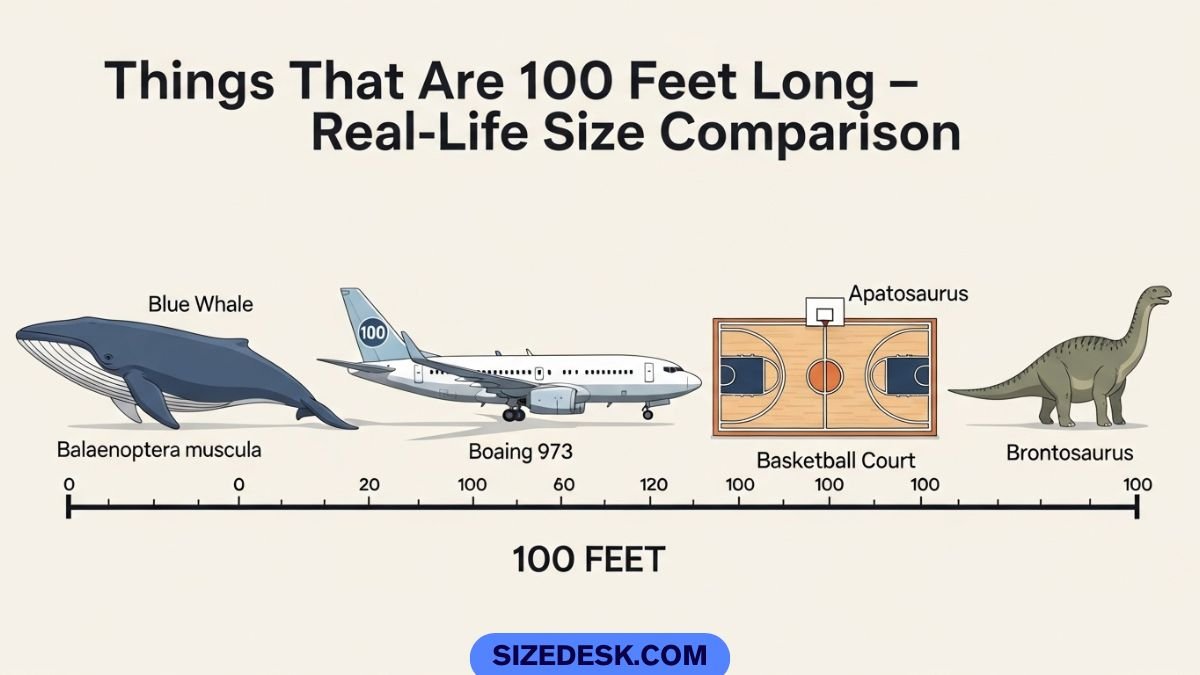
Understanding things that are 100 feet long becomes much easier when you connect the number to real objects. A 100 foot measurement can sound large, but without context, it is hard to picture. Is it the length of a house? A plane? A sports field?
This guide explains how long 100 feet is in simple terms. You’ll see clear conversions, everyday comparisons, and real-world examples that help you understand this distance step by step. By the end, you’ll have a strong mental image of what 100 feet really looks like in daily life.
How Long Is 100 Feet in Meters, Inches, and Yards?
Different places use different units of length, so knowing the conversions helps. If you are used to metric measurements, 100 feet might not immediately make sense.
The foot is part of the imperial system of measurement and is commonly used in the United States.
Here is a clean and simple 100 feet conversion chart:
100 Feet Conversion Chart
| Unit of Length | Equivalent to 100 Feet |
| Meters | 30.48 meters |
| Inches | 1,200 inches |
| Yards | 33.33 yards |
So, how long is 100 feet in meters? It equals 30.48 meters.
How long is 100 feet in inches? It equals 1,200 inches.
And in yards, it is just over 33 yards.
This imperial to metric conversion makes it easier to compare distances across systems. When someone mentions a 100 foot building height or a 100 feet distance example, you now know it is roughly 30 meters long or tall.
How Big Is 100 Feet on a Football Field?
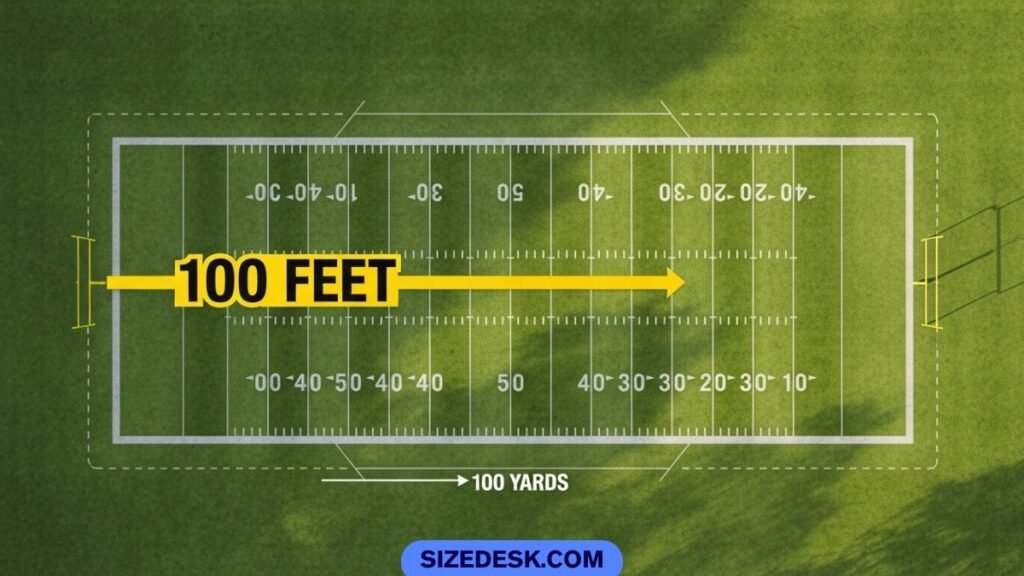
A football field is one of the best ways to understand this measurement. From goal line to goal line, the field measures 300 feet. That means 100 feet is exactly one-third of the playing field.
If you stand at one end zone and walk forward, you would reach about the 33-yard line after walking 100 feet. This football field comparison gives a strong visual reference because most people have seen or watched a game at some point.
When thinking about how big 100 feet is, imagine dividing the field into three equal sections. One of those sections equals 100 feet.
What Does 100 Feet Look Like in Real Life?
It is easier to understand distance when you connect it to familiar objects. Below are simple 100 feet visual comparisons that make the number feel more real.
Comparing 100 Feet to a 10-Story Building
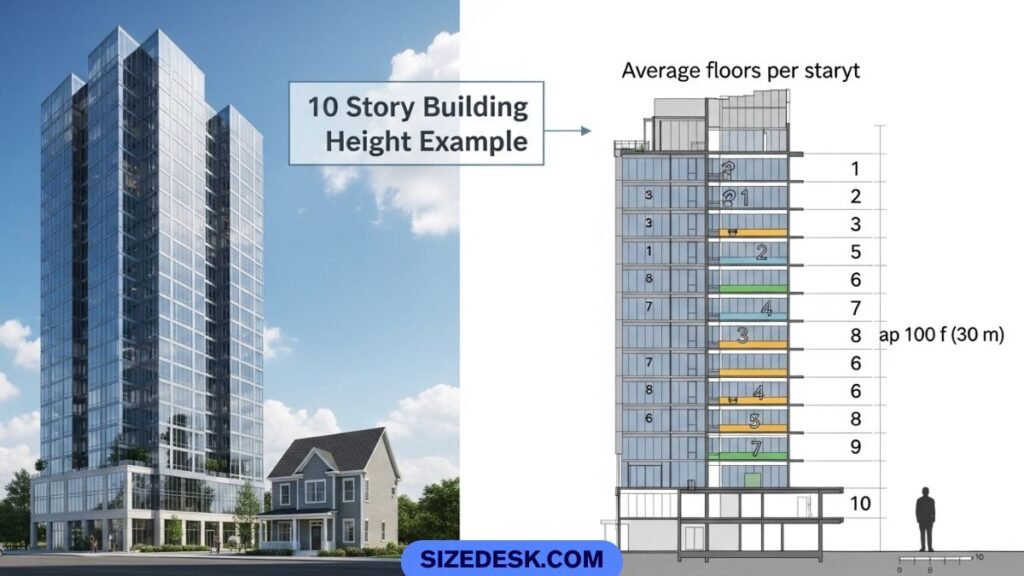
Most commercial buildings have floors that are about 10 feet tall. Multiply that by 10 floors, and you get roughly 100 feet.
So when you look at a 10 story building height, you are usually looking at about 100 feet. This is one of the most common structures around 100 feet in cities.
This comparison works well because people naturally understand building floors. Instead of thinking about numbers, you just count stories.
Comparing 100 Feet to a Basketball Court
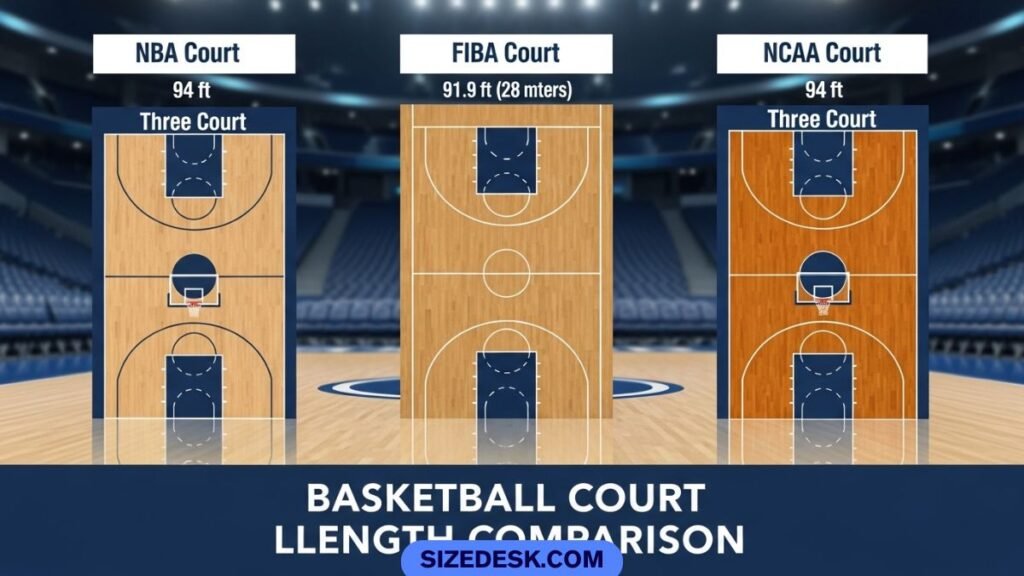
An official basketball court is 94 feet long. That means 100 feet is slightly longer than a full court.
If you have watched a basketball game, you have already seen something very close to exactly 100 feet. Add just a few more steps past the baseline, and you reach 100 feet.
This 100 feet scale comparison is helpful because courts are standard sizes across many schools and arenas.
Comparing 100 Feet to a Semi-Truck
A standard semi-trailer is around 48 to 53 feet long. Two semi-trailers placed end to end measure close to 100 feet.
This example works well on highways. When you see two long trucks lined up, you are looking at roughly a 100 foot length reference.
It also helps when estimating distance without tools. If you know one trailer’s length, you can double it to imagine 100 feet.
The following examples make it easier to visualize the measurement instantly.
18 Real-Life Objects That Measure Around 100 Feet
To better understand a 100 foot measurement, it helps to look at grouped, real-world examples. Below, each category includes common things 100 feet long or close to that size. These explanations give you a stronger visual reference instead of just a number.
🔹 Buildings & Structures
10-Story Building
A typical commercial building floor is around 10 feet tall, sometimes slightly more to allow space for ceilings and utilities. When you stack 10 floors, the total height reaches close to 100 feet.
This makes a 10 story building height one of the most reliable 100 feet size examples in urban areas. When you see a mid-rise office building downtown, you are often looking at something close to 100 feet tall. It is tall enough to stand out but not as towering as a skyscraper.
Section of a Suspension Bridge
Large suspension bridges stretch for thousands of feet, but individual sections between support towers often measure around 100 feet. These segments help distribute weight evenly and maintain stability.
If you focus on one span between structural supports, you can imagine a straight 100 feet distance comparison. Engineers commonly use 100-foot planning segments in bridge construction because it is a manageable and practical unit of length.
Large Construction Crane
Many construction cranes used for mid-rise buildings extend close to or beyond 100 feet when fully raised. The boom arm alone can measure near that length.
When you see a crane lifting materials high above the ground, it provides a strong vertical 100 feet visual guide. This example is especially useful in cities where cranes are frequently used for new developments.
🔹 Transportation
Boeing 737-500
The Boeing 737-500 measures just over 100 feet in length. When you stand near one at an airport, the full body of the plane gives a clear idea of how long 100 feet looks in real life.
This is one of the best real world 100 foot examples because aircraft dimensions are precise. From nose to tail, the length closely matches the 100 feet dimensions we are discussing.
Two Semi-Trailers
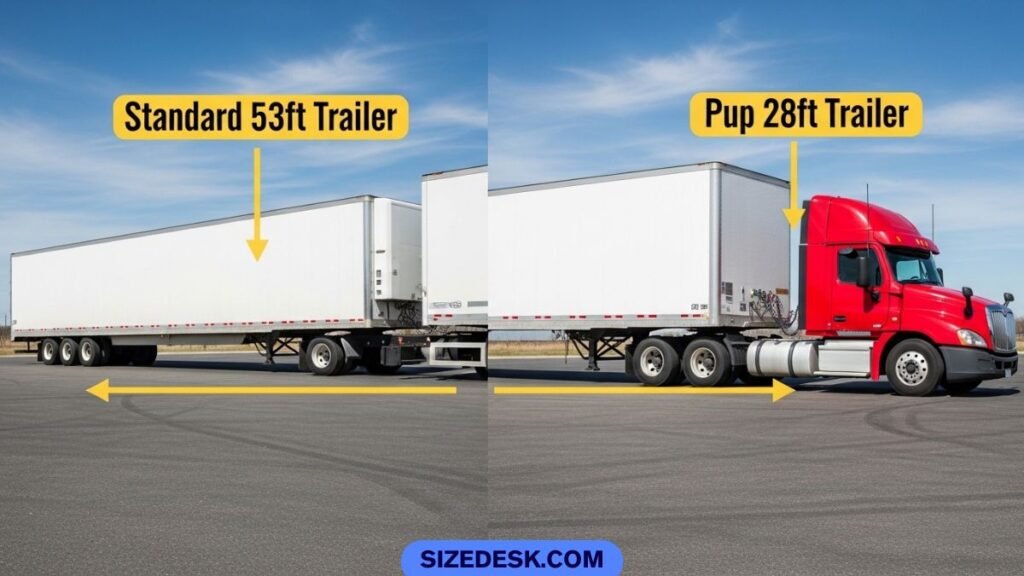
A standard semi-trailer is usually between 48 and 53 feet long. If you park two of them end to end, you get very close to exactly 100 feet.
On highways, this comparison works well because trailers are common and easy to recognize. Seeing two long trucks lined up gives you a realistic 100 foot length reference without any measuring tools.
10 Kayaks Lined Up
Most recreational kayaks are about 10 feet long. If you place ten of them in a straight line, the total length becomes 100 feet.
This example is helpful in outdoor settings such as lakes or rivers. It shows how multiple smaller items can combine to form a significant distance. It also makes the 100 feet distance example feel practical and easy to visualize.
🔹 Sports & Fields
1/3 of a Football Field
A football field measures 300 feet from goal line to goal line. Dividing that into three equal parts gives you 100 feet.
This football field comparison is one of the clearest 100 feet visual comparisons available. If you have ever watched a game or stood on a field, you can easily imagine one-third of its length.
2/3 of an Olympic Pool
An Olympic swimming pool measures 164 feet long. Two-thirds of that distance equals a little over 100 feet.
When swimmers complete two lengths of a standard 50-meter pool, they cover slightly more than 100 feet in each stretch. This example connects 100 feet to competitive sports environments and standard pool measurements.
1.5 Cricket Pitches
A cricket pitch is 66 feet long. One and a half pitches equal approximately 99 feet, which is nearly 100 feet.
This example works well in regions where cricket is popular. It provides a precise and easy 100 feet scale comparison using a standard sports measurement.
🔹 Nature
Blue Whale (Maximum Length)
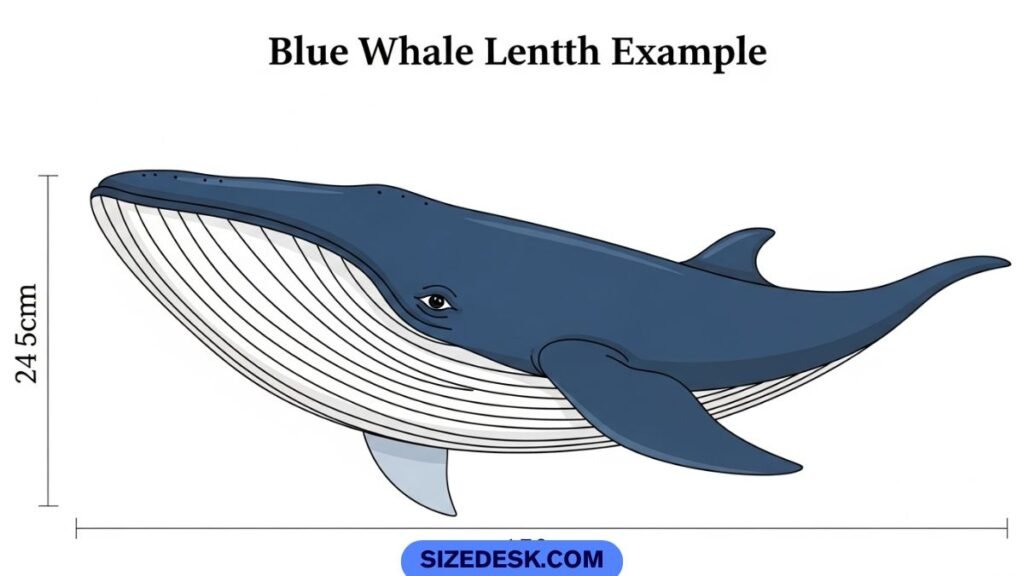
The blue whale is the largest animal known to exist, and some individuals can grow close to 100 feet long. Seeing images of a full-grown blue whale gives a powerful natural example of 100 feet length explained in biological terms.
This comparison highlights just how massive 100 feet can be when applied to living creatures. It turns an abstract measurement into something extraordinary yet real.
Seeing a whale of that size next to a boat completely changes your sense of scale.
Eastern Cottonwood Tree
Under the right conditions, an Eastern Cottonwood tree can grow near 100 feet tall. Standing beside one gives you a strong vertical sense of scale.
Trees of this size often dominate open landscapes. They provide a clear example of natural things 100 feet long or tall in the real world.
10 Alligators Head to Tail
An adult alligator can measure around 10 feet in length. If you placed ten of them in a straight line, nose to tail, the total distance would reach 100 feet.
This simple multiplication example helps you understand how far 100 feet stretches on the ground. It is a practical mental exercise and a memorable 100 foot reference object comparison.
Is 100 Feet Considered Long?
The answer depends on context.
In a backyard, 100 feet feels very large. Many residential lots are not even 100 feet deep. In that setting, it seems long and spacious.
On a highway, 100 feet feels shorter. Cars traveling at high speed cover 100 feet in less than a second. In that environment, the distance appears modest.
Compared to a skyscraper, 100 feet is small. Compared to a single-family home, it is quite tall. This shows why 100 feet length explained through context matters more than the number alone.
Why 100 Feet Is a Common Measurement in Construction
The 100 foot measurement appears often in planning and development. There are practical reasons for this.
Building height limits
Many cities set height limits around 100 feet for mid-rise buildings. This keeps structures balanced within neighborhoods.
Crane measurements
Cranes used in mid-level construction projects often operate at around or above 100 feet.
Zoning rules
Urban zoning categories sometimes divide buildings into groups like under 100 feet or above 100 feet.
Shipping dimensions
Transport planners sometimes use 100 feet as a planning benchmark when calculating long loads.
Infrastructure planning
Engineers use 100-foot segments when designing roads, bridges, and utility systems. It serves as a convenient planning unit.
Because it is large but still manageable, 100 feet works well as a structural reference.
Quick Comparison Table of 100-Foot Examples
Here is a simple 100 foot comparison chart for quick reference:
| Example | Category | Approximate Match |
| 10-Story Building | Structure | About 100 feet tall |
| Boeing 737-500 | Transportation | Just over 100 feet long |
| 1/3 Football Field | Sports | Equal to 100 feet |
| Blue Whale | Nature | Up to 100 feet |
| Two Semi-Trailers | Transport | Around 100 feet |
This table works as a fast 100 foot reference objects guide.
Frequently Asked Questions About 100 Feet
How far is 100 feet in steps?
An adult usually takes about 30 to 40 steps to walk 100 feet. It takes only a few seconds at a normal pace.
Is 100 feet longer than a basketball court?
Yes. A basketball court is 94 feet long. So 100 feet is slightly longer than one full court.
How many stories equal 100 feet?
About 10 stories in a standard commercial building. Residential floors may vary slightly.
Is 100 feet tall for a building?
It is considered mid-rise. It is taller than most houses but much shorter than skyscrapers.
Can animals really reach 100 feet in length?
Yes. The blue whale can grow close to 100 feet, making it one of the largest animals on Earth.
If you are curious about smaller measurements too, you may find it helpful to explore comparisons of everyday objects that are 6 inches long. Seeing both large and small scales improves your sense of real-world measurement.
Conclusion
Understanding things that are 100 feet long becomes much easier when you use clear comparisons. Whether it is a 10 story building height, one-third of a football field, or a Boeing aircraft, these examples give shape to the number.
A 100 foot measurement is large enough to matter but small enough to visualize with the right references. Once you connect it to everyday objects, the scale feels practical and understandable.
With these comparisons in mind, you now have a simple mental toolkit for estimating distance and height in real life.

