

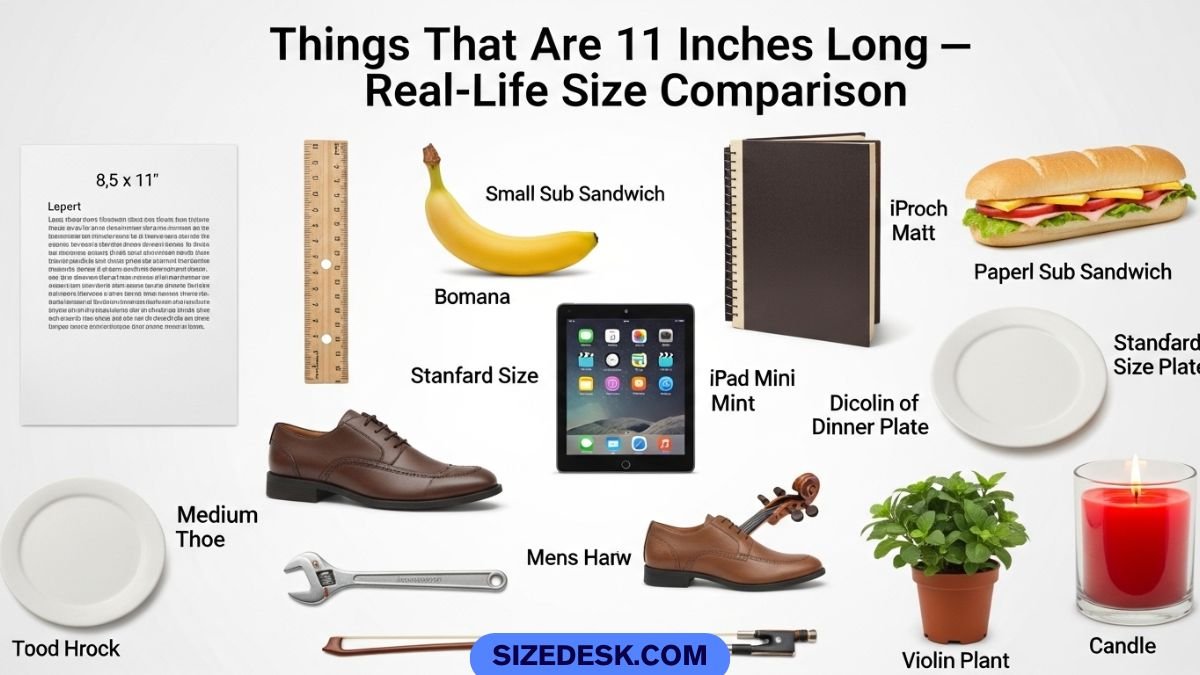
Understanding measurements is easier when you can picture them clearly. Many people wonder how long 11 inches really is and try to imagine its actual size. Instead of relying only on numbers, it helps to compare it with real objects you see every day.
In this article, we’ll explore things that are 11 inches long, look at simple unit conversions, and use practical examples to build a clear visual understanding. By the end, you’ll have a strong sense of what this measurement looks like in real life.
How Long Is 11 Inches in CM, MM, and Feet?
Measurements can look different depending on which unit system you use. Inches belong to the imperial system, while centimeters and millimeters belong to the metric system. Understanding both makes everyday tasks easier.
Here is a clean measurement conversion chart:
| Unit of Length | Value |
| 11 inches in cm | 27.94 cm |
| 11 inches in millimeters | 279.4 mm |
| 11 inches in feet | 0.92 ft |
So, 11 inches equals 27.94 centimeters. In millimeters, that becomes 279.4 mm. When converted to feet, it equals 0.92 feet.
Since one foot equals 12 inches, this measurement is almost one foot long. It is exactly 11 inches, just one inch shorter than a full foot. Knowing this makes size comparisons much easier when switching between imperial vs metric units.
How Big Is 11 Inches on a Ruler?
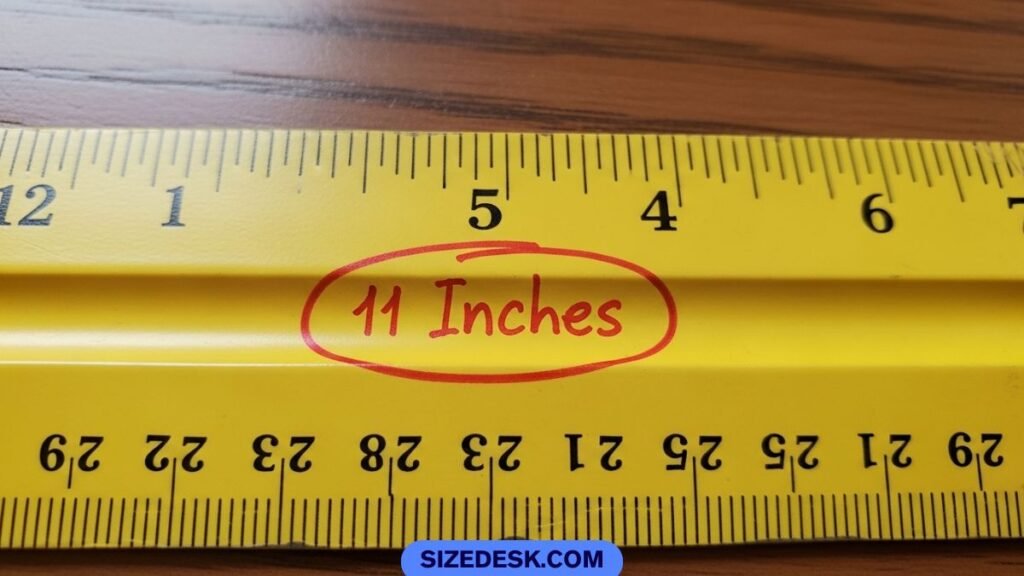
If you look at a standard ruler measurement, you will see markings from 1 to 12 inches. The 11-inch mark sits just before the end of the ruler.
Visually, it is the second-to-last large number on a 12-inch ruler. The final marking represents 12 inches or one foot.
This makes this length easy to spot. Simply measure from zero to the 11 mark. That gives you an exact visual reference for this length.
Because it is so close to one foot, it feels slightly shorter but still substantial. This is why many medium length objects fall within this range.
What Does 11 Inches Look Like in Real Life?
Numbers alone don’t always help. To understand what does this length look like, you need real comparisons.
Let’s explore simple ways to picture it without tools.
Using Your Hand as an 11-Inch Reference
An adult hand span, measured from the tip of the thumb to the tip of the pinky when stretched wide, is usually between 8 and 9 inches.
If you imagine adding about two extra inches beyond that span, you are close to an 11 inch size reference. It is not exact, but it works as a rough visual guide.
For quick estimates, your hand can serve as a helpful starting point.
Measuring 11 Inches Without a Ruler
You can estimate this length using everyday objects. A sheet of letter-size paper measures exactly 11 inches on its long side. A standard magazine is also very close to this measurement.
These real life 11 inch examples make it easy to measure this size without a ruler.
Comparing 11 Inches to One Foot
Since one foot equals 12 inches, 11 inches is almost one foot.
Visually, the difference is small. That is why this measurement often feels larger than expected. It is close to a foot-long sub sandwich or a full ruler, just slightly shorter.
18 Real-Life Objects That Measure Around 11 Inches
The following examples make it easier to visualize the measurement instantly.
1. Letter-Size Paper (Long Side)
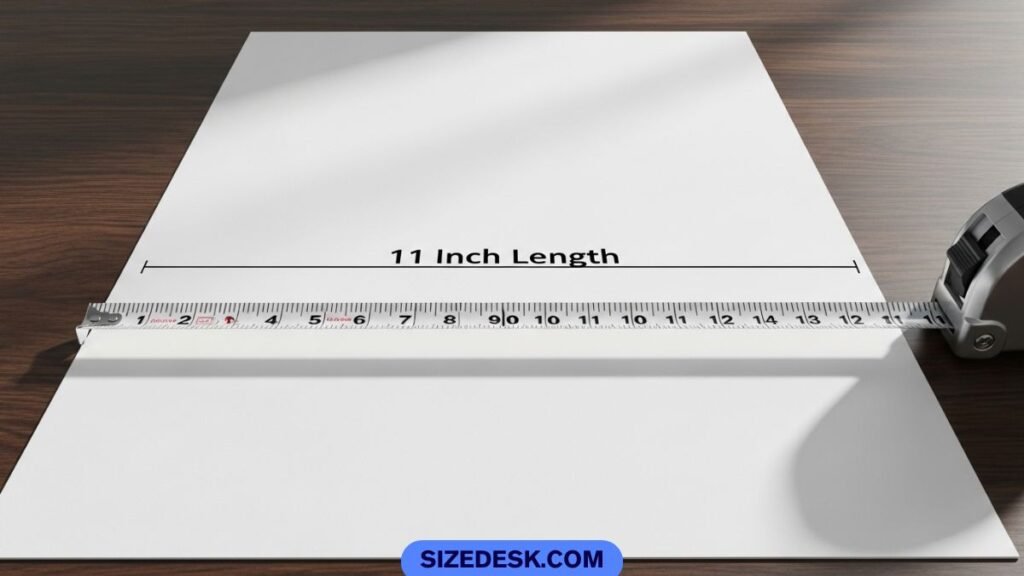
The long side of a standard sheet of letter paper measures exactly 11 inches. This makes it one of the most accurate and reliable 11 inch reference objects available in homes, offices, and schools.
If you hold a sheet of paper vertically, the top-to-bottom length gives you an exact visual of this size. Because paper is so common, this is often the easiest way to picture the measurement instantly without needing a ruler.
2. 11-Inch Tablet
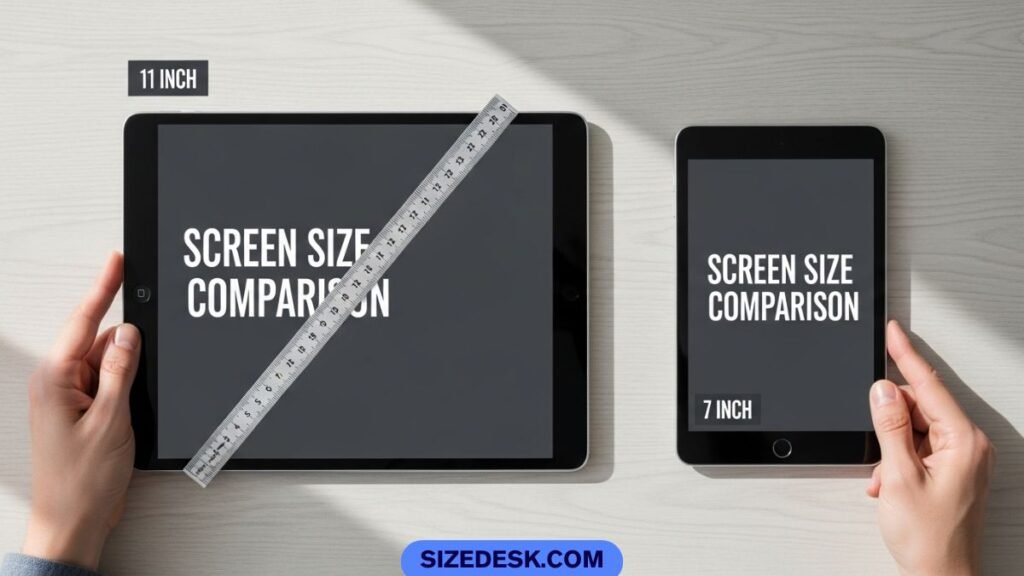
Many popular tablets are sold as 11-inch devices. The size usually refers to the diagonal measurement of the screen from one corner to the opposite corner.
Although the width and height are different from 11 inches, the diagonal still gives a strong sense of overall scale. When you hold an 11-inch tablet, it feels large enough for comfortable viewing but small enough to carry easily. It’s a great example of how this measurement balances portability and usability.
3. Standard Ruler (One Inch Short of Full Length)
A full ruler measures 12 inches, which equals one foot. Measuring up to the 11-inch mark shows you how close this length is to a complete foot.
Visually, the difference between 11 and 12 inches is small. That one-inch gap helps you understand that this measurement is almost one foot, making it feel longer than many people expect at first.
4. Two iPhone SE (End to End)
If you place two smaller smartphones like the iPhone SE end to end, the combined length comes close to 11 inches.
This comparison works well because most people are familiar with phone sizes. Seeing two phones lined up helps create a clear and relatable 11 inch length comparison using something you likely hold every day.
5. Four Tennis Balls
A single tennis ball measures around 2.6 to 2.7 inches in diameter. When you line up four tennis balls in a straight row, the total length reaches very close to 11 inches.
This example helps visualize how medium-sized round objects combine to create this measurement. It also shows how this measurement can be formed by stacking smaller repeated items together.
6. Five Pool Balls
Pool balls are slightly smaller than tennis balls, usually around 2.25 inches in diameter. When five are placed carefully side by side, they create a total length that is close to this measurement.
This comparison works especially well if you enjoy billiards. It demonstrates how even small objects can add up to a noticeable length when arranged properly.
7. Eleven Hockey Pucks (Stacked)
A hockey puck is approximately 1 inch thick. If you stack eleven pucks directly on top of each other, the total height reaches about 11 inches.
This is a very clean and simple visual example because each puck represents one inch. Stacking them makes the math easy and creates a clear picture of exactly this scale.
8. Eleven Paper Clips
A standard small paper clip measures roughly 1 inch in length. If you place eleven paper clips in a straight line end to end, you get close to this scale.
This example shows how everyday office supplies can help you measure length quickly. It’s a creative way to estimate size without any measuring tools.
9. Men’s Size 11 Shoe
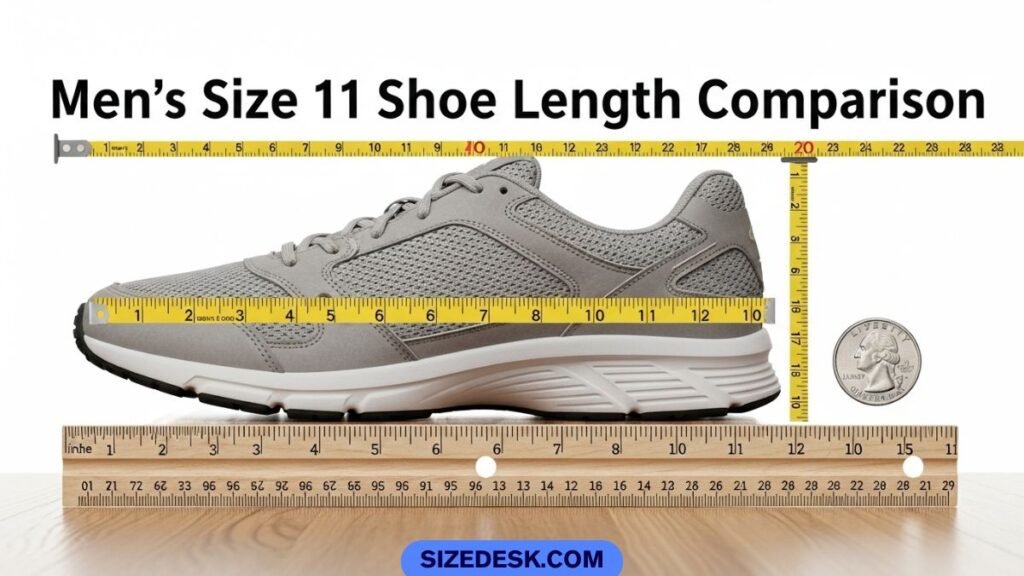
The sole length of a men’s size 11 shoe is often around 11 inches long. While shoe sizing varies slightly between brands, the overall foot length is typically close to this measurement.
Seeing a shoe helps put the length into perspective because it relates directly to the size of a human foot. This makes 11 inches feel more real and easier to imagine. Seeing a shoe laid flat on the floor gives you an immediate sense of how substantial this length really is.
10. Small Cutting Board
Many compact kitchen cutting boards measure between 10 and 12 inches in length. Smaller models are often right around 11 inches.
If you have a small cutting board used for fruits or vegetables, it likely matches this size. This comparison is helpful because it connects the measurement to something practical and familiar in daily cooking.
11. Compact Laptop Width
Some small laptops or mini notebooks measure around this scale across their width. When closed, the horizontal measurement can closely match this size.
This example works well because laptops are common household electronics. Seeing the width of a compact device helps you visualize 11 inch dimensions in a modern, everyday context.
12. Desk Drawer Depth
Standard desk drawers often measure around 11 inches deep from front to back. This is a common measurement used in furniture design.
If you pull out a drawer and measure the inside depth, you may find it close to this size. It’s a practical example that connects this scale to storage and home organization.
13. Medium Chef Knife
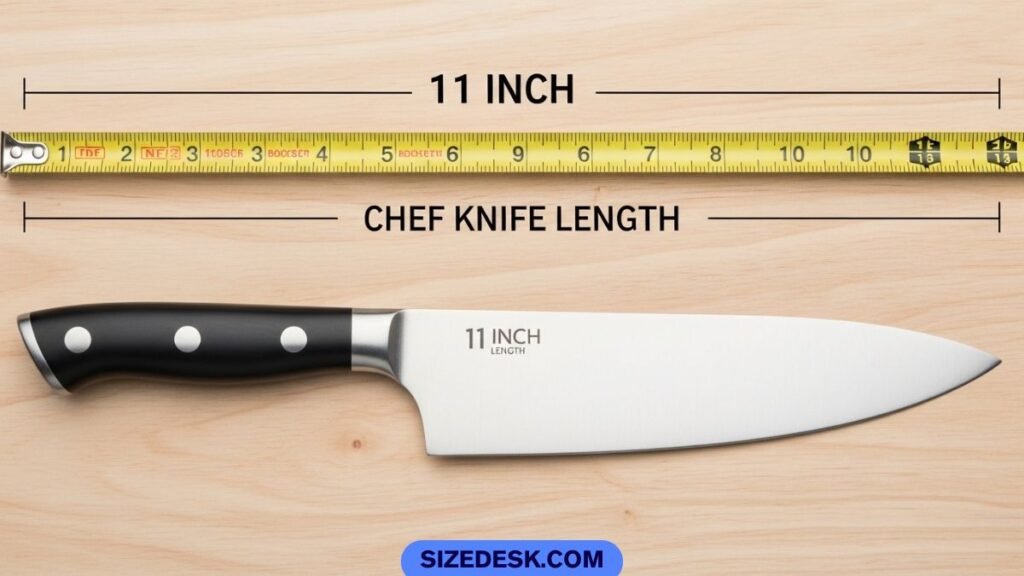
Chef knives come in different sizes, commonly 8, 10, or 11 inches in blade length. A medium to large chef knife often has a blade close to this measurement.
When you hold such a knife, you can feel how long this scale actually is. It gives a strong sense of scale because kitchen knives are long, straight, and easy to measure visually.
14. Standard Magazine Length
Most magazines measure around 10 to 11 inches tall. When you hold one upright, the height gives you a clear view of the measurement.
Magazines are common in homes, waiting rooms, and offices, making them one of the easiest real life 11 inch examples to recognize.
15. Two Soda Cans (Side by Side)
A standard soda can measures about 4.8 inches in height. When you place two cans side by side lengthwise, the combined length is close to 10 to this measurement.
This comparison helps people picture the length using something found in most kitchens. It may not be exact, but it provides a helpful visual guide.
16. Three Playing Cards (Lengthwise)
A standard playing card measures about 3.5 inches in length. If you carefully line up three cards end to end, the total length becomes slightly over 10 inches, approaching this size.
This example shows how smaller rectangular objects can combine to create a longer measurement. It’s especially helpful when estimating without tools.
17. Compact Travel Umbrella
Many foldable travel umbrellas measure between 10 and 12 inches when closed. Compact versions often fall very close to this measurement.
Holding a folded umbrella gives you a solid sense of this medium-length size. It feels long enough to grip comfortably but short enough to fit inside a backpack.
18. Eleven Bottle Caps
A typical bottle cap measures about 1 inch across. If you line up eleven caps side by side in a straight row, the total length becomes almost exactly 11 inches.
This is one of the simplest ways to visualize the measurement using small, repeatable items. It clearly shows how multiple one-inch objects add up to form a longer length.
When Is 11 Inches Considered Small or Large?
Whether 11 inches feels small or large depends on context.
For a smartphone, this measurement would be very large. For a television screen, it would feel small. For a tablet, cutting board, or kitchen knife, it feels standard.
In most situations, it fits into the medium size category. It is noticeable but not oversized.
Why 11 Inches Is a Common Product Size
Manufacturers often choose this length because it balances portability and usability.
It is large enough for comfortable viewing on tablets. It is small enough for compact kitchen tools and home storage products.
This balance explains why many everyday objects this size long appear in electronics, kitchen tools, and stationery items.
Quick Comparison Table of 11-Inch Objects
Here is a simple 11 inch comparison chart:
| Object | Approximate Length |
| Letter Paper (Long Side) | 11 inches |
| Magazine | Around 11 inches |
| Compact Umbrella | Around 11 inches |
| Small Cutting Board | Around 11 inches |
| Tablet (Diagonal) | 11 inches |
This table works as a quick 11 inch measurement guide for fast reference.
Frequently Asked Questions About 11 Inches
How long is 11 inches in real life?
It is almost one foot long. It matches the long side of letter-size paper and is close to the height of a magazine.
Is 11 inches close to 30 cm?
Yes. It equals 27.94 cm, which is just slightly under 28 centimeters.
How big is 11 inches compared to a foot?
It is one inch shorter than a foot. Visually, the difference is small.
What objects measure 11 inches exactly?
Letter-size paper is exactly 11 inches on its long side. Eleven stacked 1-inch items also equal 11 inches.
How can I estimate 11 inches quickly?
Use paper, magazines, or small 1-inch objects lined up together for a simple estimate.
If you want to explore more everyday size references, you may also find it helpful to read about other common measurement comparisons that make visual estimating easier.
Final Thoughts on 11-Inch Measurements
Understanding things that are 11 inches long becomes simple when you connect the number with real objects. Instead of thinking only in numbers, you can use paper, magazines, cutting boards, or small items to picture the size clearly.
Since 11 inches is almost one foot, it feels like a medium and practical measurement. Once you recognize a few familiar objects that match this size, estimating measurements in daily life becomes much easier. Once you recognize this size in everyday objects, estimating measurements becomes almost automatic.

