

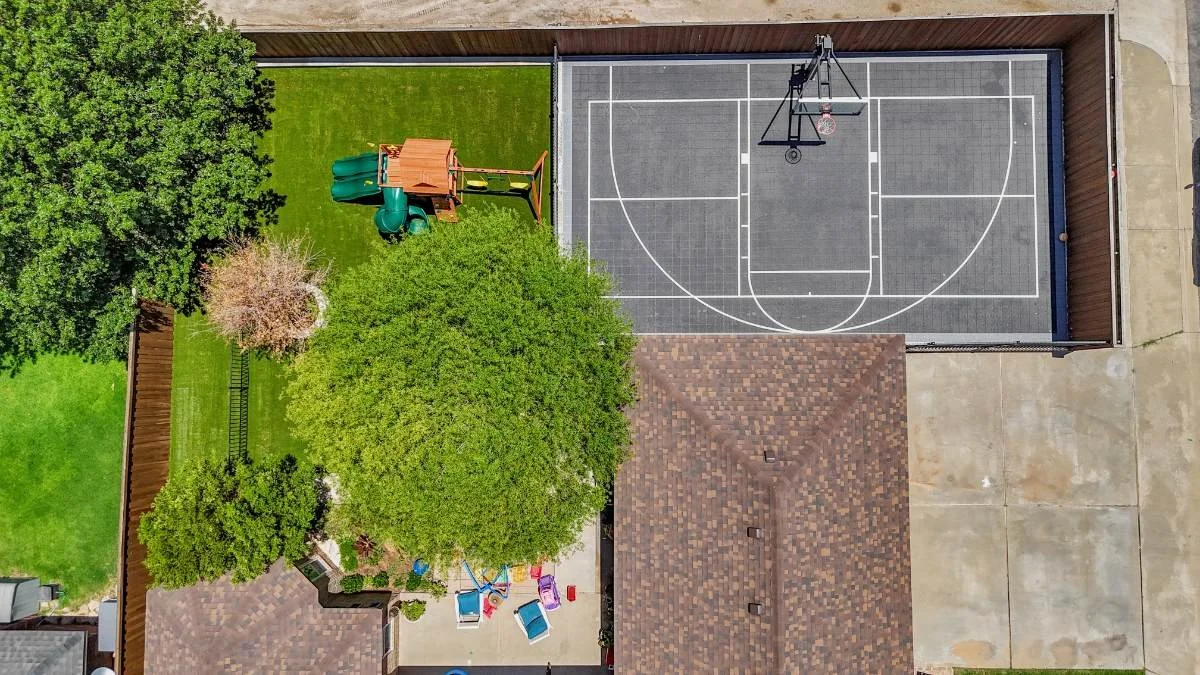
A backyard court can turn a Salt Lake City, Utah property into a dependable place for pickup basketball, pickleball rallies, family games, and active time outdoors. Before choosing colors or a hoop, start with the yard itself. Homeowners comparing sport court coatings in Salt Lake City, UT should first define how the court will be used, where water goes after storms, and how much room is available beyond the painted lines.
That planning matters in a Wasatch Front backyard, where bright summer sun, winter weather, snowmelt, and sloped lots can all affect comfort, drainage, and surface wear. The best court is not necessarily the largest one. It is the one that fits the site, supports the household’s favorite activities, and remains simple to maintain year after year.
Start With Court Purpose
Ask one practical question first: what should this space do most weeks? A family that mainly shoots baskets needs a different layout from one that hosts regular pickleball games, volleyball, badminton, or children’s free play. Choose a primary activity, then add compatible uses without crowding the court with permanent fixtures or too many lines.
For example, a basketball-focused court may benefit from a centered hoop and open perimeter space, while a pickleball-first design needs accurate dimensions, a net plan, and visual clarity. Outdoor pickleball courts are commonly oriented north to south to reduce direct sun in players’ eyes during morning and late-day play, as explained in pickleball court construction guidance.
Measure Space And Safety Clearance
The playing area is only part of the footprint. Players need room to stop, turn, chase a ball, and move around equipment without immediately meeting a fence, wall, planting bed, or patio edge. A slightly smaller court with comfortable clearance is often more enjoyable than a full-size layout squeezed into a narrow side yard.
- Measure the full usable area, not only the intended court.
- Mark property lines, trees, utility features, slopes, drains, and existing hardscape.
- Keep gates and walkways away from active play zones.
- Allow access for installation, future repairs, and equipment replacement.
Choose The Right Surface
Surface choice should match the sports, users, local exposure, and maintenance expectations. A stable base is essential regardless of the finish selected. The following comparison can help narrow the decision.
| Surface Type | Useful For | Key Consideration |
| Hard coated surface | Basketball, tennis, pickleball | Needs sound base work and drainage |
| Modular sport tiles | Multi-sport family play | Requires a level, stable foundation |
| Cushioned system | Comfort-focused recreation | Needs cleaning and routine inspection |
Consider who will use the court most, how much direct sun it receives, and whether routine sweeping, cleaning, and inspections are realistic. Surface appearance matters, but reliable footing, drainage, and long-term care matter more.
Plan Drainage Early
Drainage deserves attention before colors, nets, or fencing. Standing water can make a court slippery, leave staining, and contribute to surface problems over time. The importance of proper drainage during court repair is especially clear when water pools after rain or runoff moves downhill toward the playing area.
Watch the yard during or after a heavy storm. Identify roof runoff, low spots, nearby hillsides, and landscape beds that send water toward the planned court. Discuss grading, edge drainage, base preparation, and a safe runoff path before installation begins. Keep drains and court edges clear of leaves, mulch, and soil.
Create A Clear Multi-Sport Layout
A multi-sport court works best when the markings remain easy to understand at a glance. Give the primary sport the most visible lines, then use different colors for secondary activities. Avoid excessive crossing lines, especially around service areas, baselines, and key basketball zones. Removable nets and adjustable equipment make the court more flexible without making every activity permanent.
Review Rules And Neighbor Impacts
Before construction, check Salt Lake City or local county requirements, HOA approval procedures, property setbacks, fencing limits, lighting rules, and grading requirements. Outdoor courts can affect drainage, noise, visibility, and evening activity. Early conversations with nearby neighbors are particularly helpful when ball containment, lights, or frequent group play could affect adjacent yards.
Add Equipment, Fencing, And Lighting
Equipment And Containment
Select equipment that supports the court’s main purpose. Adjustable hoops can serve different age groups, while removable posts and nets preserve flexibility. Fencing can help protect windows, gardens, streets, and neighboring yards, but it should not eliminate the clear space players need around the court. Check anchors, posts, gates, and net hardware regularly.
Lighting
If evening use is part of the plan, choose shielded fixtures aimed downward. Good lighting helps players track a ball and see the surface without causing harsh glare or shining into nearby homes. Position fixtures early in the design process so electrical work, fence placement, and tree growth are considered together.
Maintain The Court
A simple routine can prevent small issues from becoming larger repairs. Each week, sweep away grit, leaves, and small stones; look for wet spots; and inspect nets, hoops, gates, loose tiles, cracks, or lifted edges. Seasonally, clear drainage paths, trim encroaching plants, inspect coatings and hardware after severe weather, and refresh faded lines when they become difficult to see.
Set A Budget And Timeline
Build a budget that includes site clearing, excavation, grading, drainage, base preparation, surface installation, markings, fencing, electrical work, equipment, permits, and future maintenance. Request written estimates that separate preparation from surface and accessory costs. Weather, inspections, material availability, and unexpected site conditions can affect the construction schedule, so leave room for adjustments.
Avoid Common Mistakes
- Maximizing court size while leaving too little safety clearance.
- Ignoring runoff, low spots, or roof drainage.
- Selecting a surface before choosing the main sports.
- Adding too many permanent markings or fixtures.
- Installing lights that create glare for players or neighbors.
- Skipping HOA, setback, permit, or fence checks.
- Assuming any outdoor surface is maintenance-free.
Conclusion
A well-planned backyard multi-sport court in Salt Lake City, Utah begins with the property and the people using it. Measure carefully, protect safety space, solve drainage early, choose a suitable surface, and keep the layout uncomplicated. With thoughtful planning and regular care, the court can remain a practical place for play, practice, and connection through many seasons.

