

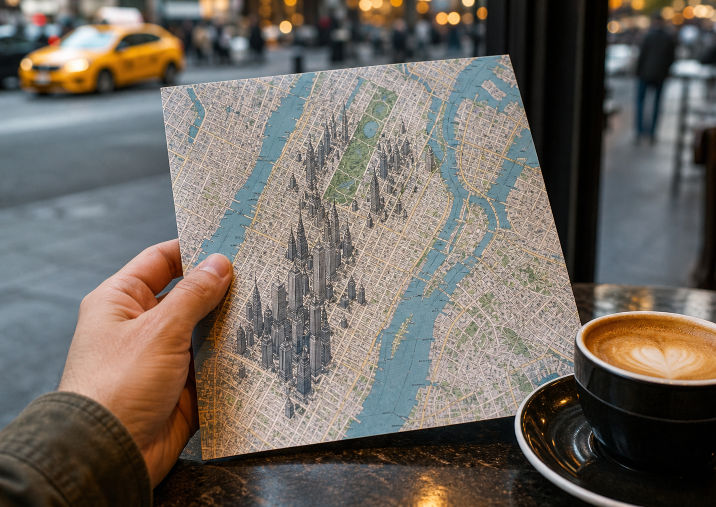
A great skyline day in New York City, New York, is not about racing from one high-rise to the next. It is about choosing a single memorable perspective, then giving yourself time to notice the streets, parks, river edges, architecture, and meals that make the view meaningful. Start with one of the many landmarks to visit in NYC, then build the rest of the day around a nearby neighborhood rather than crisscrossing the borough.
Whether you are visiting for the first time or planning a fresh way to experience a familiar city, the best route balances elevated views with time at street level. New York’s skyline changes character throughout the day, from softer early light to bright afternoon detail and the glow of windows after dark.
Why a Skyline Day Needs More Than a View
The city looks most impressive when you understand what you are seeing. A view from above can reveal the grid of Midtown, the curve of the rivers, the bridges leading toward Brooklyn, and the density of Lower Manhattan. But a complete day also includes the human scale: brownstone blocks, pocket parks, busy delis, public plazas, and the changing sounds of each neighborhood.
A practical formula is simple: one anchor activity, two nearby stops, and open time between them. This keeps the day enjoyable if the weather shifts, a restaurant has a wait, or your group wants to linger somewhere longer than expected.
Pick the Right Time of Day
Morning
Morning works well for travelers who prefer a quieter start and want to complete a major stop before lunch. Begin with coffee or breakfast near your chosen viewpoint, then use the rest of the morning for a walk through the surrounding neighborhood.
Midday
Midday is a straightforward option for families, visitors with evening tickets, and anyone who prefers to keep the day on a predictable schedule. It is also a useful time to place an indoor museum or gallery nearby if the forecast calls for heat, rain, or strong wind.
Late Afternoon and Evening
Late afternoon offers changing light and can create a natural transition into dinner. After sunset, the city takes on a different energy as office towers, bridges, traffic, and storefronts become part of the scene. If you choose an evening plan, allow extra time for the trip back, especially after a long day on foot.
Check the forecast the night before and again on the morning of your visit. Haze, rain, wind, summer heat, and occasional poor air quality can affect both comfort and visibility, so it is wise to have an indoor alternative nearby.
Build a Route Around One Main Viewpoint
Pick a primary skyline location first, then resist the urge to add several distant ticketed stops. A packed itinerary can turn a day in Manhattan into a sequence of escalators, subway platforms, and rushed check-ins. Staying within one broad area leaves room to actually experience the place you came to see.
A Simple Route Formula
- Have breakfast near the first neighborhood stop.
- Visit the main viewpoint during your preferred light window.
- Walk through a nearby park, plaza, or historic area.
- Eat lunch within walking distance instead of traveling across town for one meal.
- Finish with a waterfront stroll, cultural venue, or relaxed dinner.
Add Variety to Lower Manhattan
Downtown offers an especially strong mix of civic architecture, older streets, waterfront access, and bridge views. The city’s newer public cupola experience at Center 360 is located at the David N. Dinkins Municipal Building near City Hall Park. It provides another way to take in Lower Manhattan, but reservations, visitor requirements, and weather-related operations should be checked before shaping a route around it.
From this area, you can continue toward City Hall Park, the Brooklyn Bridge approach, the Financial District, or Battery Park. The key is to choose one direction and stay with it, rather than trying to cover every downtown landmark in one afternoon.
Pair Big Views With Street-Level Sights
A skyline is easier to appreciate after time on the ground. The contrast between a broad city panorama and a close-up walk through a neighborhood makes the city feel more detailed and less like a checklist.
- Historic streets: Look for older blocks where the street layout and building scale differ from the Midtown grid.
- Public parks: Use green space as a reset between crowded sidewalks and major attractions.
- Waterfront paths: Walk beside the Hudson or East River for wider views and more breathing room.
- Cultural spaces: Add a museum, library, gallery, or public-art stop when you need time indoors.
- Food markets: Choose flexible dining areas when people in your group want different meals.
Plan Transportation Without Overplanning
Group stops by the neighborhood, uses the subway for longer jumps, and walks shorter connections when the route is clear. Before leaving, review planned subway and rail service changes, particularly for weekend travel or a route involving transfers. Save directions on your phone, carry a portable battery, and keep one backup destination within a short walk.
Walking times on a map can be misleading when crowds, crosswalks, stairs, construction, or photo stops are involved. Build a cushion into every move, especially if you have a reservation or dinner booking.
Leave Room for Food and Rest
Meals should be part of the route, not an emergency decision made when everyone is tired. A well-timed lunch can break up a long walking stretch, while an earlier dinner may be easier to manage than a late reservation after a sunset stop.
- Reserve popular restaurants when the schedule cannot be moved.
- Choose casual spots when the weather may force a change of plans.
- Carry water and a small snack during longer walks.
- Use a park bench, café, or public seating area for regular breaks.
- Leave one meal flexible for a place you discover during the day.
A Sample One-Day Skyline Plan
- 9:00 a.m.: Breakfast near your starting neighborhood.
- 10:30 a.m.: Explore a park, plaza, or historic district on foot.
- 12:00 p.m.: Visit the day’s main skyline viewpoint.
- 2:00 p.m.: Have lunch and take a slower neighborhood walk.
- 4:00 p.m.: Add an indoor cultural stop or public space.
- 6:00 p.m.: Head toward a waterfront or open urban view.
- 7:30 p.m.: End with dinner and an unhurried evening stroll.
Final Checklist Before Leaving
- Confirm opening hours, ticket times, and reservation details.
- Check weather, visibility, and transit conditions.
- Wear comfortable shoes and bring layers for elevated or waterfront areas.
- Charge your phone and carry a backup battery.
- Keep an indoor option ready in case rain or fatigue changes the plan.
Make the Day Feel Like New York
A better skyline day is built on realistic timing, a clear neighborhood focus, and enough flexibility for the city to surprise you. Choose one unforgettable view, connect it to a few nearby experiences, and avoid treating every hour as a race. That balance turns a sightseeing plan into a day that feels distinctly New York.

