

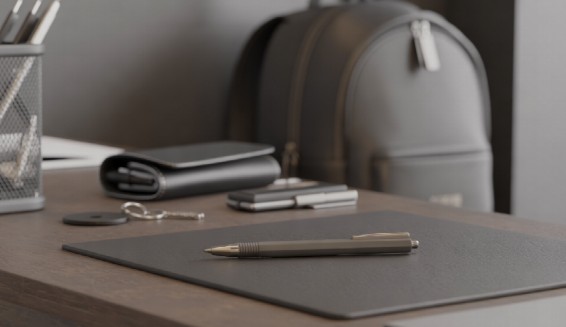
In laboratories, lecture halls, and field research stations, the quality of your notetaking tools directly impacts the accuracy of your work. A smudged calculation or illegible diagram can mean the difference between a successful experiment and hours of wasted effort. This reality has made the mechanical pencil an indispensable part of the scientist’s everyday carry—those essential items that professionals rely on throughout their workday.
Unlike wooden pencils that dull with use, mechanical pencils maintain a consistent line width that proves critical when sketching molecular structures, recording measurements, or annotating complex equations. The engineering behind these instruments has evolved considerably since their invention, transforming them from simple lead holders into precision instruments designed for demanding technical work. Understanding what makes an effective EDC mechanical pencil can significantly improve both the efficiency and accuracy of scientific documentation.
From Patent to Precision: The Mechanical Pencil’s Technical Evolution
The mechanical pencil emerged from a practical problem: traditional pencils required constant sharpening, interrupting workflow and producing inconsistent lines. When Sampson Mordan and John Isaac Hawkins filed the first patent in 1822, they created what was essentially a refined lead holder—a far cry from today’s sophisticated instruments.
The real breakthroughs came with mechanical innovations. The twist-advance mechanism of the 19th century gave users better control over lead extension, while the push-button advancement systems of the 20th century made operation nearly effortless. Modern manufacturing has introduced materials like knurled aluminum barrels and reinforced plastic components that balance durability with the lightweight portability essential for everyday carry. These advances weren’t merely aesthetic—they addressed real ergonomic and functional demands from users who spent hours writing detailed technical notes.
Why Scientists and Engineers Choose Mechanical Pencils
The preference for mechanical pencils in technical fields isn’t arbitrary. These instruments offer specific advantages that align with the demands of scientific work:
- Consistent line precision: A 0.5mm lead produces the same width from first stroke to last, essential when drawing circuit diagrams or chemical structures where line weight carries meaning.
- Immediate readiness: No sharpening means no interruption when inspiration strikes or when recording time-sensitive observations during experiments.
- Reduced waste: Refillable lead systems generate significantly less material waste than wooden pencils, an important consideration in research environments increasingly focused on sustainability.
- Smudge resistance: Harder lead grades (H, 2H) common in mechanical pencils resist smearing better than graphite from wooden pencils, preserving the integrity of detailed notes.
Selecting the Right Engineering Pencil for Technical Work
Not all mechanical pencils perform equally in demanding scientific applications. Several specifications determine whether a pencil will enhance or hinder technical work:
- Lead diameter: The 0.5mm size has become the standard for detailed technical drawing, offering fine lines without excessive fragility. The 0.7mm variant provides more durability for field work or general notetaking where extreme precision matters less.
- Grip design: Extended writing sessions demand ergonomic consideration. Knurled metal grips provide secure hold without requiring excessive pressure, reducing hand fatigue during lengthy calculations or documentation.
- Build quality: Metal-bodied pencils withstand the rigors of daily pocket carry better than plastic alternatives. The weight distribution also affects writing comfort—too light feels insubstantial, too heavy causes fatigue.
- Lead advancement mechanism: Click-advance systems offer simplicity, while rotating mechanisms like those in the Uni Kuru Toga continuously rotate the lead to maintain a sharp point.
Among professionals, a few mechanical pencils have earned reputations for reliability, including the Pentel GraphGear 1000, the Rotring 600, and the Grafton from Everyman. The GraphGear 1000 combines a retractable tip with a professional-grade metal body, while the Rotring 600 offers the precision expected from a drafting instrument in a form suitable for everyday carry.
The Engineering That Enables Precision
The deceptively simple appearance of a mechanical pencil conceals sophisticated internal mechanisms. The lead advancement system relies on a clutch mechanism—typically three small jaws that grip the lead when retracted and release it for advancement when the button is pressed. This system must operate reliably through thousands of cycles while maintaining consistent grip pressure.
The barrel serves multiple functions beyond housing components. It must protect the delicate internal mechanism while providing balanced weight distribution. Premium models use aluminum or brass, materials that offer durability without excessive weight. The barrel’s length and diameter also affect writing comfort—too narrow causes cramping, too wide reduces control.
Lead sleeve design represents another critical engineering consideration. Fixed sleeves offer maximum lead support for technical drawing, while retractable sleeves provide pocket safety for EDC use. The sleeve length affects visibility when drawing against rulers or templates, with longer sleeves preferred for drafting work.
Making the EDC Pencil Work for You
Selecting an appropriate mechanical pencil represents only the first step. Lead hardness significantly affects performance—2B or B grades suit general writing and sketching, while H or 2H grades better serve technical drawing where crisp, smudge-resistant lines matter most. Experimenting with different grades helps identify what works best for your specific applications.
Maintenance extends pencil lifespan considerably. Periodically clearing the lead advancement mechanism of graphite dust prevents jams. Keeping spare leads accessible ensures you’re never caught without a working instrument during critical moments. For those carrying pencils in pockets or bags, models with retractable tips prevent both pocket damage and tip breakage.
The right EDC mechanical pencil becomes an extension of your thinking process—reliable enough to fade into the background while enabling the precise documentation that scientific work demands. Whether you’re a student mastering organic chemistry or a professional engineer sketching preliminary designs, the tool you choose shapes the quality of your output in ways both subtle and significant.

