

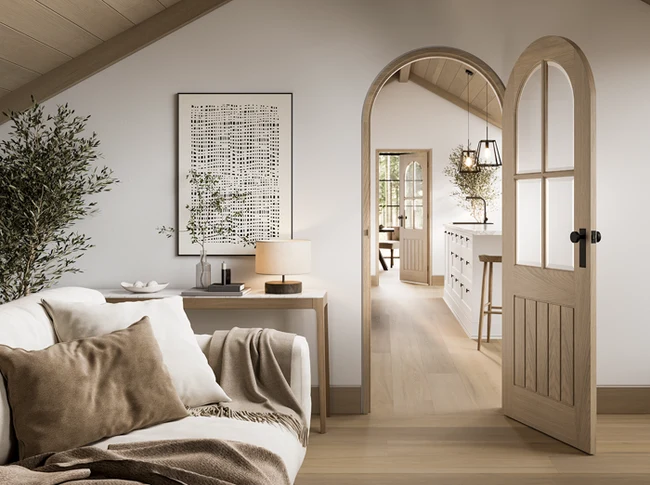
You can spend weeks choosing paint colours, flooring, and furniture, then barely give your internal doors a second thought. It happens all the time. Yet those doors are among the few things in your home that you see, touch, and use every single day.
A door that sticks, rattles, or blocks the hallway can become a daily annoyance. The right one, though, can make a room quieter, improve privacy, and pull the whole interior together.
If you’re renovating or building, here are the door decisions that deserve a little more attention before you start buying.
Start With How Each Room Is Actually Used
A bedroom door has a different job from a pantry door. Sounds obvious, doesn’t it? Yet plenty of homeowners choose the same door throughout the house without considering what each space needs.
Bedrooms generally benefit from privacy and some level of sound reduction. A home office might need similar qualities, especially if someone regularly takes video calls or works while the rest of the household is active.
Living areas are different. You might want a door that allows natural light to reach a darker hallway. A glazed design can help, although the glass type matters when privacy is a concern.
Think about your daily routine before choosing a style. Where do people need quiet? Which rooms feel dark? Are there places where an open door regularly gets in the way?
Those questions are far more useful than simply choosing whatever looks attractive in a catalogue.
Don’t Underestimate Door Construction
Two doors can look almost identical but feel completely different when you close them.
Hollow-core doors
Hollow-core doors are commonly chosen for budget-conscious projects. They’re generally lightweight, making them easier to handle, and they’re suitable for spaces where sound control isn’t a major concern.
The trade-off is that they typically provide less sound reduction and feel lighter than solid-core alternatives.
Solid-core doors
Solid-core doors tend to feel more substantial. Their greater mass can improve sound reduction compared with typical hollow-core designs, although gaps around the frame and the quality of the seals also affect the result.
For bedrooms, studies, and other areas where noise matters, they’re worth considering.
Engineered timber doors
Engineered timber construction can offer dimensional stability and a consistent appearance. However, performance varies between products, so always check the manufacturer’s specifications rather than assuming all engineered doors behave alike.
The best choice depends on your budget, the room, and what you expect from the door over time.
Choose a Style That Belongs in Your Home
It’s tempting to choose a dramatic door design after seeing a beautiful renovation photo. The problem? That same door might look completely out of place in your own hallway.
Shaker-style doors, with their simple recessed panels, suit many traditional and contemporary interiors. Flush doors create a cleaner appearance and work particularly well in minimalist homes.
French doors can introduce more light and create a stronger connection between adjoining living spaces. Meanwhile, natural timber finishes add warmth and visible grain, especially alongside neutral walls.
If you’re comparing options, speaking with internal door specialists in Australia can help you narrow down suitable materials, styles, and configurations for your home.
One practical tip: consider your skirting boards, architraves, and existing door frames. A beautiful door can still look awkward when its detailing clashes with everything surrounding it.
Think Carefully Before Choosing Glass Doors
Glass internal doors can transform a dark passageway. They allow light to pass between rooms without requiring you to leave the doorway open.
But there’s a difference between bringing in daylight and giving everyone a clear view of your bedroom.
Clear glass works well between shared living areas. Frosted or translucent glass can be more appropriate for spaces where privacy matters.
You should also check the glass specifications. Safety glazing requirements depend on the door’s location and design, and the appropriate product needs to comply with applicable Australian standards.
Don’t assume all glazed doors provide the same sound insulation, either. Their performance depends on the glazing, frame, seals, and overall construction.
Check Your Measurements Before Ordering
Here’s an expensive mistake that’s surprisingly easy to make: ordering a replacement door based on what you assume is a standard size.
Australian homes don’t all have identical door openings. Older properties, in particular, can contain unusual dimensions or frames that have shifted slightly over time.
Measure the existing door’s height, width, and thickness. Check the frame too, especially if you’re planning to replace more than the door leaf.
You should also consider the clearance needed over flooring. A new carpet or thicker floor finish may change how freely a door opens.
And don’t forget the swing direction.
Imagine fitting a new door only to discover that it clashes with a wardrobe or blocks access to a light switch. That’s a frustrating problem to solve after installation.
If the measurements are uncertain, have an experienced installer check the opening before placing the order.
Consider Sliding Doors for Tight Spaces
Sometimes the biggest issue isn’t the door itself. It’s the space needed to open it.
In a small laundry, narrow hallway, or compact bedroom, a conventional hinged door can occupy valuable floor space.
Sliding doors may offer a practical alternative.
A surface-mounted sliding door travels along the wall, so you’ll need enough clear wall space beside the opening. Furniture, switches, and power points can interfere with its movement.
Cavity sliding doors disappear into a wall pocket, but they usually require more planning and construction work.
There’s another trade-off to remember. Standard sliding door systems may allow more sound through the gaps than well-sealed hinged doors.
They’re excellent in the right location, but don’t choose one solely because it looks fashionable.
Give Door Hardware the Attention It Deserves
Door handles rarely get much attention until something goes wrong.
A loose handle, noisy latch, or poorly aligned strike plate can turn an otherwise attractive door into a constant irritation.
Choose hardware that feels comfortable in your hand and suits the door’s weight and intended use.
Privacy locks are useful for bathrooms and bedrooms, while passage handles are generally suitable for rooms that don’t need locking.
Finish matters too. Black hardware can create contrast against pale doors, while brushed metallic finishes often blend more quietly into traditional interiors.
Try to keep hardware finishes reasonably consistent across connected spaces. Mixing too many unrelated styles can make a home feel visually disjointed.
Quality hinges are equally important, particularly for heavier doors. Always check that the hardware is suitable for the door being installed.
Don’t Rush the Painting and Finishing
A new door might look ready to install, but finishing requirements can vary considerably.
Some doors arrive pre-primed, while others need preparation before painting or staining.
Follow the manufacturer’s instructions carefully, including requirements for sealing edges and any permitted trimming. Incorrect finishing can affect the appearance, performance, or warranty.
For painted doors, proper surface preparation makes a noticeable difference. Light sanding between suitable coats can help produce a smoother finish.
Natural timber doors may require a compatible clear finish or stain that protects the surface while allowing the grain to remain visible.
Pay attention to ventilation and drying conditions, particularly when working in humid weather.
Rushing this stage can leave you with sticking surfaces, uneven coverage, or marks that become obvious every time the light catches the door.
Make Your Final Choice With Everyday Life in Mind
The most expensive internal door isn’t necessarily the best one for your home.
A simple flush door may be exactly what a busy family hallway needs. A solid-core design could be more useful for a bedroom near a noisy living area. Glass doors might solve a lighting problem that no amount of repainting could fix.
Before making your final decision, picture an ordinary Tuesday in your home. People are walking through rooms, someone is working, children are playing, and doors are opening and closing throughout the day.
Which features would genuinely make those moments easier?
That’s usually where the smartest choices become clear.
A Better Door Makes a Better Room
Internal doors are easy to overlook because they seem like minor finishing details. But their size, construction, style, and placement all influence how comfortably your home functions.
Take time to compare materials, check measurements, and think about what each room actually needs. A little planning now can save you from awkward layouts, unnecessary noise, and costly replacements later.
The right internal door shouldn’t demand attention every time you walk past it. It should simply look right, work properly, and make your home a more comfortable place to live.

