

Why the Right Venue Can Change the Whole Evening
A bar and grill can be an easy choice for dinner, drinks, sports, or a group celebration, but not every location suits every plan. Someone looking for a quiet meal may want a very different setting than friends hoping to watch a major game. Before choosing a place, it helps to consider whether a prime sports bar located directly near the action suits the occasion, or whether a calmer neighborhood restaurant would better serve the group.
The strongest choice is usually the one that matches the pace of the night. Food quality matters, but so do the size of the tables, the volume of the music and television, the ease of parking, and the ability to talk comfortably. A little planning can turn a routine outing into a smoother, more enjoyable evening.
It is also worth remembering that the same venue can feel very different depending on the day and time. A weekday lunch may be relaxed and quick, while a Friday night or a major playoff game can bring longer waits, louder crowds, and limited seating. Matching expectations to the likely conditions helps everyone arrive prepared.
Start With the Purpose of the Visit
Decide what the group wants before opening a map app. That one step makes it easier to filter out places that may be popular but do not fit the moment.
- Casual dinner: Look for comfortable seating, a clear menu, and dependable service.
- Game watching: Check television placement, sound policies, event schedules, and available seating.
- Date night: Choose a setting where conversation is possible, and the atmosphere feels relaxed.
- Group gathering: Prioritize reservations, larger tables, shareable food, and convenient parking.
- Quick stop: Favor easy access, flexible seating, and a menu that can be ordered without much delay.
For groups, it can help to identify one or two nonnegotiables before searching. For example, the group may need patio seating, a place to watch a particular game, vegetarian choices, step-free access, or a location within walking distance of another activity. This approach narrows the list quickly without overcomplicating the decision.
Use Local Search Tools More Carefully
A broad search can produce a long list, so use phrases that reflect the actual need. Search terms such as “bar and grill with outdoor seating,” “sports bar with dinner specials,” “quiet restaurant bar for conversation,” or “group dining near downtown” can make the results more relevant.
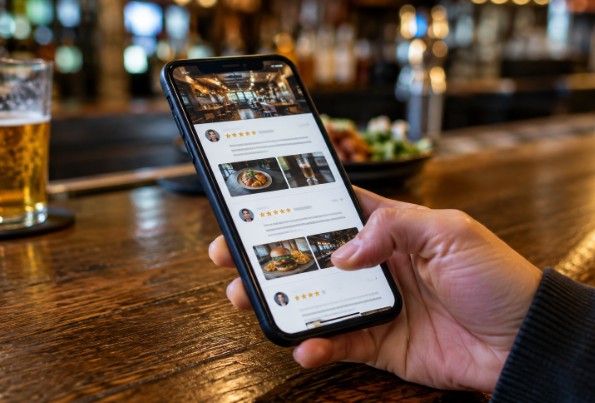
After finding a few options, compare map listings with the venue’s own website and recent social posts. Check current hours, menus, event announcements, and recent customer photos before leaving home. A restaurant may have different kitchen hours than bar hours, and a normally quiet room may be much busier during trivia, live music, or a televised game.
Photos can be particularly helpful for judging practical details that are not always described in a listing. They may show whether tables are closely spaced, whether the patio is covered, how many televisions are visible from the dining area, or whether the venue appears suited to a large party. Favor recent images when possible, since layouts and décor can change.
Read Reviews for Patterns, Not Single Opinions
Reviews are most helpful when they reveal repeated themes. Look for multiple recent comments about food temperature, service speed, cleanliness, noise, wait times, and staff handling of busy periods. A single disappointing visit does not always reflect the usual experience, but several similar reports may indicate an issue worth considering.
Pay attention to detail and timing. A review that explains when someone visited, what they ordered, and how the staff responded is more useful than a vague complaint or an unexplained five-star rating. It can also help to compare feedback across multiple platforms, especially when planning a birthday dinner or a larger outing.
Consider the reviewer’s priorities as well. A person disappointed by a lively crowd may have been seeking a quiet meal, while someone praising the same crowd may have visited for a game. Reading with the intended occasion in mind makes it easier to separate a genuine warning sign from a simple mismatch of expectations.
Check the Menu Before Making Plans
A menu should work for the full group, not only the person choosing the restaurant. Scan for appetizers, lighter options, substantial entrées, nonalcoholic drinks, and dishes that can be shared. If children, vegetarians, guests with allergies, or selective eaters are coming along, look for choices that make everyone’s order easier.
Prices also deserve a quick review, particularly for groups. Current menus and recent menu photos can help set expectations, but calling ahead is sensible if a specific dish, substitution, or dietary accommodation matters. A flexible menu often prevents the awkward situation where one guest wants dinner while another can only find a snack.
It can also be useful to check whether specials are limited to certain days or times. Happy-hour offerings, wing nights, lunch portions, and game-day menus may not be available all day, so confirming the timing helps avoid disappointment upon arrival.
Match the Atmosphere to the Occasion
Atmosphere is not simply good or bad. It is about fit. A packed room with large screens and cheering fans can be ideal for a rivalry game, while the same environment may be difficult for a family conversation or a first date.
- Noise: Consider whether guests will be able to talk without competing with music or televisions.
- Lighting: Think about whether the room feels right for dinner, drinks, or a late gathering.
- Seating: Check for booths, patios, high-top tables, bar seats, and tables for larger parties.
- Traffic: Account for crowds created by sporting events, performances, or weekend dinner rushes.
When possible, request seating that supports the group’s plan. A table away from speakers may make conversation easier, while seats near a television may matter more to guests watching a game. Small preferences are often easier for staff to accommodate before a busy service begins.
Confirm Practical Details Before You Go
Spend five minutes on the details that can derail an otherwise good plan:
- Confirm opening hours and kitchen hours.
- Find out whether reservations or call-ahead seating are available.
- Review parking, walking routes, public transit, and accessibility needs.
- Ask about policies for large parties and outdoor seating.
- Check for private events, live entertainment, trivia, or game-day crowds.
- Save the address and phone number before heading out.
If the visit involves a celebration, ask in advance about separate checks, cake policies, decorations, or gratuity practices for larger parties. Confirming these points early can prevent awkward conversations at the end of the meal and give the venue an opportunity to explain its policies clearly.
Plan Food and Drinks With Balance
Ordering at a comfortable pace can make the visit more enjoyable. Water, a shared starter, and enough food for the length of the outing can help guests settle in without rushing decisions. People who drink alcohol can use the CDC guidance on moderate alcohol use to understand that drinking less lowers health risks, and that adults who choose to drink are advised to stay within moderation guidelines.
Guests can also make ordering easier by checking in with one another before placing a large shared order. A mix of familiar dishes, lighter choices, and shareable items can accommodate different appetites without leaving the table with too much or too little food.
Make a Safe Ride Home Part of the Plan
Choose transportation before the first drink is ordered. A designated driver, rideshare, taxi, public transportation, or overnight arrangement can remove uncertainty later. Do not treat coffee, food, or extra waiting time as a transportation plan if someone may be impaired.
For rideshare pickup, safer choices include confirming the vehicle and license plate in the app, waiting in a well-lit location away from traffic, and wearing a seat belt. These practical steps are included in safe ways to get home after a night out.
For a group, agree on the departure plan before the evening becomes busy. Sharing a pickup location, keeping phones charged, and making sure no one is left waiting alone can make the end of the night as smooth as the beginning.
Common Mistakes to Avoid
- Picking the top search result without checking recent feedback or photos.
- Assuming an online menu, kitchen schedule, or special offer is still current.
- Ignoring an event calendar that could change the usual atmosphere.
- Showing up with a large group without confirming seating options.
- Waiting until the end of the night to decide how everyone will get home.
- Choosing a venue based only on distance when the menu, noise level, or seating arrangement does not meet the group’s needs.
A Simple Five-Minute Decision Method
- Name the main goal for the evening.
- Choose three nearby options.
- Compare menus, recent reviews, atmosphere, and hours.
- Verify any details that could affect the visit.
- Select the place that fits the group, rather than the one with the highest rating alone.
This method keeps the process focused without requiring extensive research. If two choices seem equally suitable, choose the one with clearer current information and fewer practical uncertainties.
Frequently Asked Questions
Should guests make a reservation?
Reservations are especially useful for larger groups, weekend dinners, popular sports events, and celebrations. Calling ahead can also clarify wait times and seating policies.
How can guests avoid a long wait?
Visit outside peak dining hours, review the event calendar, and ask whether the restaurant expects a crowd. Arriving before the main rush can also offer more seating options.
What makes a bar and grill good for families?
Family-friendly options often offer flexible menus, comfortable seating, clear operating hours, and an atmosphere that suits a range of ages and appetites.
Conclusion
Finding the right bar and grill does not require hours of research. Start with the purpose of the outing, compare a few realistic options, check recent information, and confirm practical details before leaving. When the menu, setting, service expectations, and ride home all match the plan, a simple meal can become a night people want to repeat.

