

Choosing bicycle tires and rims can seem straightforward until the measurements on the packaging do not tell the whole story. A tire might be labeled with a familiar diameter and width, yet that information alone cannot confirm whether it will fit a particular rim or clear the bicycle’s frame. Rim dimensions, tire construction, and manufacturer compatibility guidelines all influence the final setup.
Understanding these details helps cyclists avoid common purchasing mistakes and make better decisions when replacing worn tires or upgrading their wheels. Rather than relying on a single number, it is worth learning how tire labels and rim measurements work together. This is especially important for road cyclists, who may compare several wheelsets with different rim profiles and widths while trying to find a practical combination for their riding needs.
Why Tire Labels Do Not Tell the Whole Story
A tire label usually provides its nominal diameter and width. These measurements are useful starting points, but they do not describe every dimension of the installed tire. The actual inflated width can vary according to the tire’s construction, the rim’s internal width, and the pressure used.
For example, two tires carrying the same printed width may measure differently when installed on different rims. One combination might fit comfortably within a bicycle’s clearance limits, while another could leave less room around the frame or fork. This is why cyclists should check the manufacturer’s compatibility guidance rather than assume that matching labels guarantee a suitable fit.
The TOCCAY 50mm wheelset range offers a reference for examining this category of road wheels. Comparing the published specifications can help riders understand how the rim platform, construction, and configuration differ across available options.
Understanding Wheel Diameter and Tire Width
Wheel diameter identifies the general size category of the wheel and tire system. Road bicycles commonly use 700C wheels, but cyclists should confirm the required size for their particular bicycle instead of assuming that every road wheel is interchangeable.
Tire width describes how broad the tire is expected to be, while rim width describes the wheel’s supporting platform. These are related measurements, but they are not the same. The rim’s internal width is particularly important because it influences the tire’s shape once installed and helps determine which tire sizes the manufacturer approves.
External rim width, meanwhile, measures the rim from one outer edge to the other. It provides information about the rim’s overall dimensions but should not be used by itself to select a tire. Riders should consult the approved tire range and check the actual mounted width before making a final decision.
How Rim Width Changes the Tire Setup
A rim’s internal width can affect how a tire sits on the wheel. A compatible wider rim may give a tire a different profile than a narrower one, which can influence its measured width and the shape of its contact area. However, a wider rim does not automatically improve every tire setup. Compatibility and the manufacturer’s recommendations must come first.
Rim width also matters when cyclists compare modern road wheel designs. The best combination depends on the tire’s approved rim range, the bicycle’s available clearance, and the intended riding conditions. A setup that works well for one bicycle may not be appropriate for another, even when both use 700C wheels.
When comparing products, riders should look for internal and external width as separate specifications. Treating them as interchangeable can lead to incorrect assumptions about tire fit and overall wheel dimensions.
Rim Depth Is Different From Rim Width
Rim depth measures the height of the rim profile, not its width. A 50mm-deep rim, for instance, describes a deeper profile than a 40mm-deep rim. It does not mean the rim is 50mm wide or that it requires a tire with a 50mm width.
Depth can influence the wheel’s aerodynamic design and handling characteristics, particularly in crosswinds. Width, on the other hand, is directly relevant to understanding the tire’s seating platform and the dimensions of the assembled setup. Keeping these measurements separate makes product comparisons much easier.
Cyclists exploring deeper road wheels can review the AERO-50 Ghost rim dimensions as an example of a specification sheet that lists rim depth and width independently. The distinction matters because a wheel’s profile alone cannot establish whether a particular tire will fit.
The TOCCAY AERO-50 Ghost as a Sizing Example
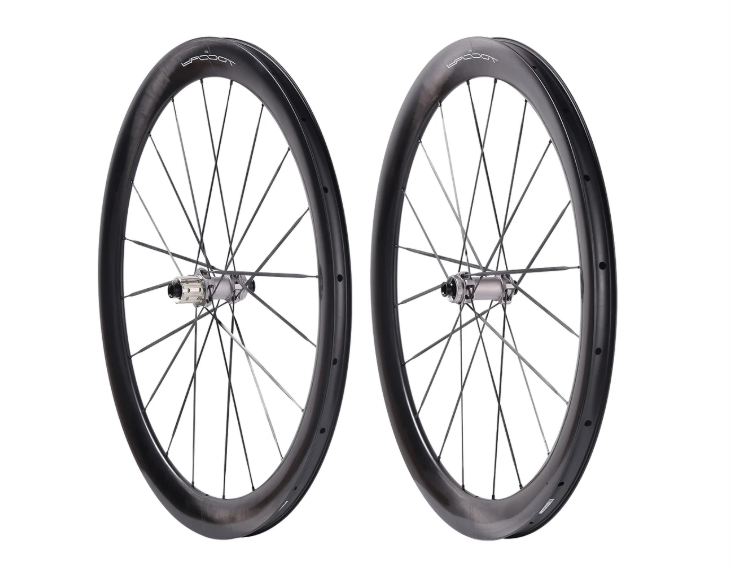
The TOCCAY AERO-50 Ghost Carbon Wheelset provides a practical example of how several measurements come together. Its published specifications list a 700C wheel size, 50mm rim depth, 25mm internal width, and 33mm external width. The carbon-spoke version is listed at 1,150g per pair, but weight does not determine tire compatibility.
The product is described as clincher and tubeless-ready, but tire suitability depends on the exact tire’s approved rim-width range, the rim interface and the bicycle’s actual clearance. A tire-width label alone does not guarantee compatibility. Riders still need to check the tire manufacturer’s approved rim dimensions, the mounted tire’s actual width, and the frame and fork clearance.
The wheelset also uses a Centerlock disc-brake interface and offers Shimano HG or SRAM XDR freehub options. These details illustrate an important point: selecting wheels involves more than matching tire and rim measurements. The complete setup must also suit the bicycle’s drivetrain, brakes, and axle requirements.
Why Tire Compatibility Charts Matter
Compatibility charts help cyclists determine which tire sizes are approved for a particular rim. They are particularly useful when a rider wants to move to a wider tire for comfort or a different road surface. Rather than relying on general advice, consult the recommendations for the exact tire and rim models being considered.
A labeled tire width should also be treated as an estimate until the tire is mounted and inflated. The final width can vary depending on the rim’s internal measurement and the tire’s design. This is why checking clearance using the actual combination is important, especially when the bicycle has limited space around the frame or fork.
Cyclists should follow the tire and wheel manufacturers’ pressure limits and installation instructions. Tubeless-ready setups require compatible components and correct installation, while traditional clincher arrangements must also use suitable tires and inner tubes where applicable.
Comparing Different 50mm Wheel Options
When comparing wheelsets with a similar rim depth, cyclists should look beyond the shared number. Internal width, external width, weight, spoke construction, hub design, and approved tire sizes may differ, even if both products are described as 50mm wheels.
It is also useful to consider where and how the bicycle will be ridden. A cyclist who spends most of their time on smooth roads may have different tire preferences from someone who regularly encounters rough surfaces. Comfort, grip, rolling resistance, and puncture protection should all be considered alongside wheel dimensions.
Common Sizing Mistakes to Avoid
One frequent mistake is assuming that two tires with the same printed width will measure identically after installation. Another is confusing rim depth with rim width or assuming that the wheel diameter alone confirms compatibility. Both errors can be avoided by reading the complete specification sheet.
Cyclists should also avoid choosing a tire solely because it falls within a broad recommended range. The exact tire model, its approved rim combinations, and the bicycle’s clearance requirements still matter. When specifications are unclear, checking with the manufacturer is safer than relying on assumptions.
Finally, do not overlook the rest of the wheel system. The freehub must match the cassette, the braking interface must suit the bicycle, and the axle dimensions must be correct. These checks help ensure that a wheel upgrade works as a complete setup rather than simply fitting on paper.
Make the Measurements Work Together
Tire and rim labels are useful, but they are only the beginning of choosing a compatible setup. Diameter identifies the general wheel size, tire width describes the tire’s nominal dimensions, rim width helps determine the appropriate tire combination, and rim depth describes the profile. Each measurement serves a different purpose.
By checking manufacturer compatibility charts, confirming actual mounted width, and considering frame clearance, cyclists can make more confident decisions when replacing tires or upgrading wheels. The goal is not simply to find matching numbers, but to choose a combination that fits correctly, performs as intended, and suits the bicycle’s real riding conditions.

