

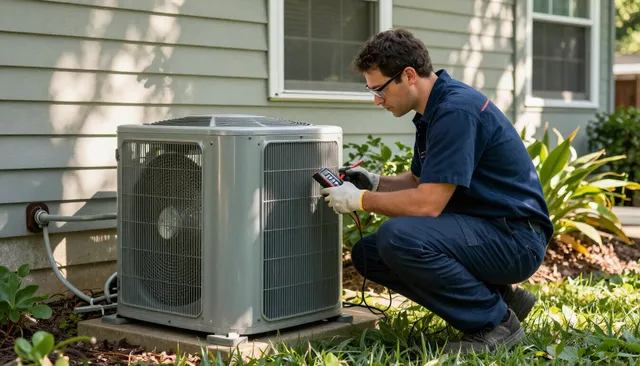
Hot upstairs rooms, clammy living areas, and a system that never seems to shut off are common in humid North Georgia. In many homes, the root causes are not the thermostat setting or brand name, but predictable HVAC mistakes that affect sizing, airflow, and humidity control. Fixing them starts with measurements and design choices that match your house, not rules of thumb.
1. Skipping a Room-by-Room Manual J Load Calculation
Guessing tonnage by square footage often leads to poor comfort. A proper Manual J load calculation uses window area and orientation, insulation levels, air leakage, shading, and local design temperatures to determine how many BTUs of cooling and heating each room needs. Without it, equipment can be oversized or undersized, and ducts rarely match the actual room loads. Many homeowners hire an Alpharetta HVAC contractor to run a Manual J, then pair the results with Manual S equipment selection and Manual D duct design so airflow (cfm) matches each room’s needs.
Consider a two-story house with west-facing windows and a bonus room over the garage. If the load calculation shows that upstairs bedrooms need 180 cfm each while the existing branch ducts deliver only 90 cfm, no thermostat adjustment will solve the problem. The remedy is a duct redesign, not a bigger condenser.
2. Oversizing That Causes Short Cycling and Leaves Humidity Behind
In our muggy summers, dehumidification matters as much as dry bulb temperature. An oversized air conditioner or heat pump cools the air quickly, then shuts off before the evaporator coil stays cold long enough to remove moisture. The result is cool but clammy rooms, condensation on supply registers, and musty odors. Homeowners sometimes replace a 2-ton unit with a 3.5-ton model and notice the house feels worse, not better.
Choosing the correct system size with Manual S helps the system run longer, steadier cycles that remove humidity. In some cases, two-stage or variable-speed compressors and ECM blower motors improve latent removal by maintaining lower coil temperatures during partial-cooling loads. The tradeoff is higher upfront cost, but the payoff can include better comfort, quieter operation, and fewer humidity complaints in transitional seasons when loads are light.
3. Ignoring Static Pressure and Undersized Returns
Airflow is the lifeblood of HVAC. When total external static pressure is too high, the blower cannot move the target 350 to 400 cfm per ton across the evaporator coil. Symptoms include noisy return grilles, whistling at doors, rooms that never reach the desired temperature, and even coil icing. A quick diagnostic is a static pressure test with a manometer at the return and supply plenums, measured in inches of water column.
Common culprits are undersized return ducts, a single return trying to serve multiple bedrooms with closed doors, and small filter cabinets that increase pressure drop. Corrections might include adding a second return, increasing the size of return trunks and grilles, installing a larger media filter cabinet with more surface area, or commissioning the blower to match duct capacity. Framing can limit duct sizes in tight chases, so a practical compromise is often a combination of added returns and improved filter area to reduce pressure while keeping noise in check.
4. Leaky, Long, or Crushed Duct Runs Starving Key Rooms
Flexible ductwork that snakes across an attic with tight bends, sagging runs, or crushed sections can cut airflow in half. Duct leakage to a vented attic vents conditioned air outdoors and pulls in dusty, hot air. Rooms at the far end of long branches, like a bonus room over the garage, are frequent victims. Look for kinked flexible ducts at takeoffs, missing balancing dampers, and unsealed ceiling boots.
Sealing seams with mastic (not cloth duct tape), supporting flexible ducts every 4 feet to prevent sag, and straightening runs reduce friction losses. Sometimes the fix is to relocate the takeoff closer to the plenum, add a dedicated return in a room receiving insufficient airflow, or increase the size of a restrictive branch. In many homes, tightening and balancing ducts delivers more comfort than swapping to a condenser with a higher SEER2 rating, because airflow actually reaches the coil and the rooms that need it.
Controls, Filtration, and Condensate Management Overlooked
Thermostat placement can make or break comfort. A thermostat in a sunny hallway above a return register can cause improper cooling cycles, while a poorly located sensor near a kitchen can overcool the house. Smart thermostats with dehumidification control can adjust cooling cycles and blower operation to lower indoor relative humidity, but only when airflow and duct design are in range. Zoning dampers help when loads are split between floors, but zones must be designed to maintain minimum airflow across the coil to avoid freezing.
Filtration is another tradeoff. Higher MERV filters capture fine particles, but some models add substantial pressure drop. If you want MERV 11 to 13 filtration, increase filter area with a larger cabinet or multiple return grilles to maintain airflow. Finally, don’t ignore the condensate drain. A properly trapped and vented drain line, a clean condensate pan, and a float switch to shut the system off during a blockage prevent ceiling stains and water damage during peak cooling. A seasonal maintenance visit that measures static pressure, verifies cfm per ton, checks refrigerant charge under correct airflow, and cleans the drain keeps the whole system working together.
Comfort in a humid climate depends on correctly sized equipment, low-resistance ductwork, and controls that manage moisture and temperature together. If your upstairs stays hot or the house feels clammy, ask for a room-by-room Manual J, a Manual S equipment match, a Manual D duct review, and a written static pressure test. With those measurements, you can target fixes that actually change how air moves and how your system removes humidity, instead of throwing money at guesses.

