

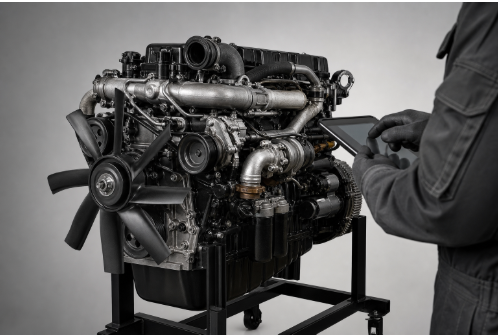
Replacing a heavy-duty diesel engine is a major operational decision for an owner-operator, fleet manager, or equipment owner. Whether the plan involves a Cummins 6.7 engine or another diesel platform, the goal is not simply to get the vehicle running again. It is to identify the original failure, choose a sound repair option, and return the truck or machine to service without creating another expensive problem.
Careful planning also makes costs and downtime easier to manage. Before authorizing work, gather diagnostic records, engine identification information, maintenance history, and a clear description of how the vehicle is used. Those details give a repair shop or engine supplier a stronger basis for recommending the right course of action.
Start With A Complete Failure Diagnosis
Low power, smoke, overheating, hard starting, or warning lights can stem from issues beyond the engine itself, such as a failed turbocharger or a cooling system fault. Incorrectly removing an engine without confirming the issue may lead to unnecessary replacements. A thorough diagnosis should include scan data, oil and coolant inspections, compression tests, fuel pressure checks, and a visual inspection for leaks or damage. It’s crucial to document fault codes and symptoms, and to identify the root cause of the failure, including potential loss of lubrication or contamination.
Compare Repair And Replacement Options
Once the failure is understood, compare practical repair paths rather than assuming a single option fits every situation.
- Component repair: Often suitable when damage is isolated to a serviceable part or system. The underlying cause still needs to be corrected.
- In-frame overhaul: May fit an engine with internal wear when the block and major structural components remain serviceable.
- Complete rebuild: Allows broader inspection, measurement, machining, and replacement of worn or damaged internal parts, but can involve more labor and time.
- Used engine: Can reduce the upfront purchase price, though its history, condition, accessories, and remaining service life may be uncertain.
- Remanufactured engine: May be a better fit when documented specifications, tested components, and warranty coverage are priorities.
Confirm The Replacement Engine Match
Matching a replacement engine by displacement alone is not enough. Record the engine serial number, vehicle identification number, application, rating, and current configuration. Then compare the mounting points, oil pan shape, flywheel housing, turbocharger position, accessory drives, intake and exhaust routing, cooling connections, fuel system fittings, and electrical connectors.
Also, verify horsepower, torque, governed speed, and intended use. An engine configured for an on-road truck may not directly suit an industrial machine, a generator, a marine application, or a vocational truck. The control module, wiring harness, sensors, and calibration must work with the vehicle and its emissions equipment.
Build A Complete Replacement Budget
The quoted engine price is only one part of the total project cost. A useful budget accounts for every item needed to remove, install, test, and support the replacement.
- Engine, long block, or overhaul components
- Freight, lifting equipment, core charges, taxes, and shop supplies
- Removal and installation labor
- Fluids, filters, seals, belts, hoses, clamps, and gaskets
- Cooling, fuel, turbocharger, electrical, and driveline inspections
- Programming, calibration, diagnostic time, and final testing
- Lost income, rental equipment, or substitute vehicle costs during downtime
Plan For Downtime And Logistics
Engine replacement projects stay more predictable when parts and labor are coordinated before teardown begins. Confirm availability of the engine, related components, and any application-specific accessories. Ask for a written estimate of labor time, but leave room for inspection findings after the original engine is removed.
Set a target removal date, arrange transportation if necessary, and identify a backup truck, rental unit, or alternate production plan. Reserve time for the first start, diagnostic scan, road test, or load test, and follow-up inspection. Returning equipment to work before these checks are complete can create avoidable disruptions.
Prepare The Truck Before Installation
A replacement engine can only perform as well as the systems connected to it. Flush contaminated oil or coolant as appropriate, inspect the radiator and hoses, check the thermostat and water pump, and address any fuel contamination before connecting the new engine. Inspect engine mounts, battery cables, grounds, starter circuits, wiring connectors, transmission components, and driveline connections.
Parts that contributed to the prior failure should not be reused without inspection. A restricted radiator, a leaking charge-air system, a weak electrical connection, a failed injector, or a dirty fuel tank can damage a replacement engine or make it appear defective.
Check Emissions And Diagnostic Needs
Modern diesel systems rely on electronic controls and, where equipped, aftertreatment hardware. Confirm that sensors, exhaust components, control modules, wiring, and software are compatible with the replacement configuration. Federal, state, and local requirements can vary by application, so the installation should retain required emissions equipment and use the proper calibration.
For on-road and heavy-duty commercial applications, EPA repair-information guidance explains that manufacturers must make emissions-related service information, diagnostic data, and certain tools available for repair. Complete a fault code scan after the first start and address any active problems before the vehicle returns to regular service.
Choose The Right Repair Team
Select a repair team that can explain its diagnosis and provide a written scope of work. Ask what is included, what is excluded, which parts will be reused, whether the engine was tested before shipment, and how warranty claims are handled. Clear answers matter more than vague assurances.
Technical capability should cover more than internal engine work. The medium-heavy truck certification tests reflect the range of systems involved, including diesel engines, drivetrains, electrical and electronic systems, and preventive maintenance. A shop that evaluates the full vehicle is better positioned to catch related faults before installation.
Follow A Careful Break-In Plan
The first start begins the verification process. Prime lubrication and fuel systems as required, then monitor oil pressure, coolant temperature, charging voltage, leaks, and abnormal noise. Inspect belts, hoses, exhaust connections, and mounts during a controlled warm-up.
After a road test or suitable load test, recheck fluid levels, connections, and diagnostic codes. Follow the engine manufacturer’s instructions for initial service intervals, operating limits, and break-in procedures.
Common Questions About Diesel Engine Replacement
Does High Mileage Always Mean The Engine Needs Replacement?
No. Mileage is one consideration, but engine hours, idle time, load, maintenance history, oil condition, cooling performance, and diagnostic results are also important.
Is A Used Engine Always The Least Expensive Option?
Not necessarily. A lower purchase price can be offset by missing parts, testing requirements, installation changes, limited warranty coverage, or required repairs after installation.
What Should Be Gathered Before Requesting A Quote?
Provide the vehicle identification number, engine serial number, application, duty cycle, symptoms, fault codes, maintenance history, photos of connection points, and the required return-to-service date.
Conclusion
A heavy-duty diesel engine replacement should be treated as a complete system repair, not a simple engine swap. Diagnose the original failure, compare all viable options, confirm the exact engine match, budget for related work, and verify performance after installation. That approach helps control downtime and gives the replacement engine the best chance for reliable service.

