

In O’Fallon, Missouri, a thermostat can read 72 degrees while an upstairs bedroom still feels stuffy in July or chilly on a winter morning. Those comfort problems are not always caused by the furnace or air conditioner. The attic sits between your living space and the outdoor conditions above the roof, making it a major part of the home’s thermal boundary.
For homeowners dealing with uneven temperatures, drafts, or concerns about heating and cooling costs, attic insulation installation can be an important part of diagnosing the issue. iFOAM Insulation of O’Fallon provides attic-focused evaluations and upgrades that may include air sealing, removal of damaged insulation as needed, and blown-in, batt, or spray foam insulation. Its O’Fallon service page also describes work for homes throughout St. Charles County, including nearby St. Peters, Wentzville, Lake St. Louis, and Cottleville.
Why the Attic Has Such a Large Effect on Comfort
Heat naturally moves from warmer areas toward cooler ones. During an eastern Missouri summer, a roof and attic can become very hot, allowing heat to move toward the rooms below when the attic floor is poorly insulated. In winter, heat from conditioned living areas can escape upward through gaps and thin insulation.
This is especially noticeable in two-story homes, homes with finished rooms near the roofline, homes with vaulted ceilings, and homes with ductwork or HVAC equipment in the attic. A family may notice that the first floor feels acceptable while the upstairs hallway never seems to reach the thermostat setting. The HVAC system may be operating normally, but the home could be losing or gaining heat faster than the equipment can comfortably offset the loss or gain.
Insulation, Air Sealing, and Energy Use
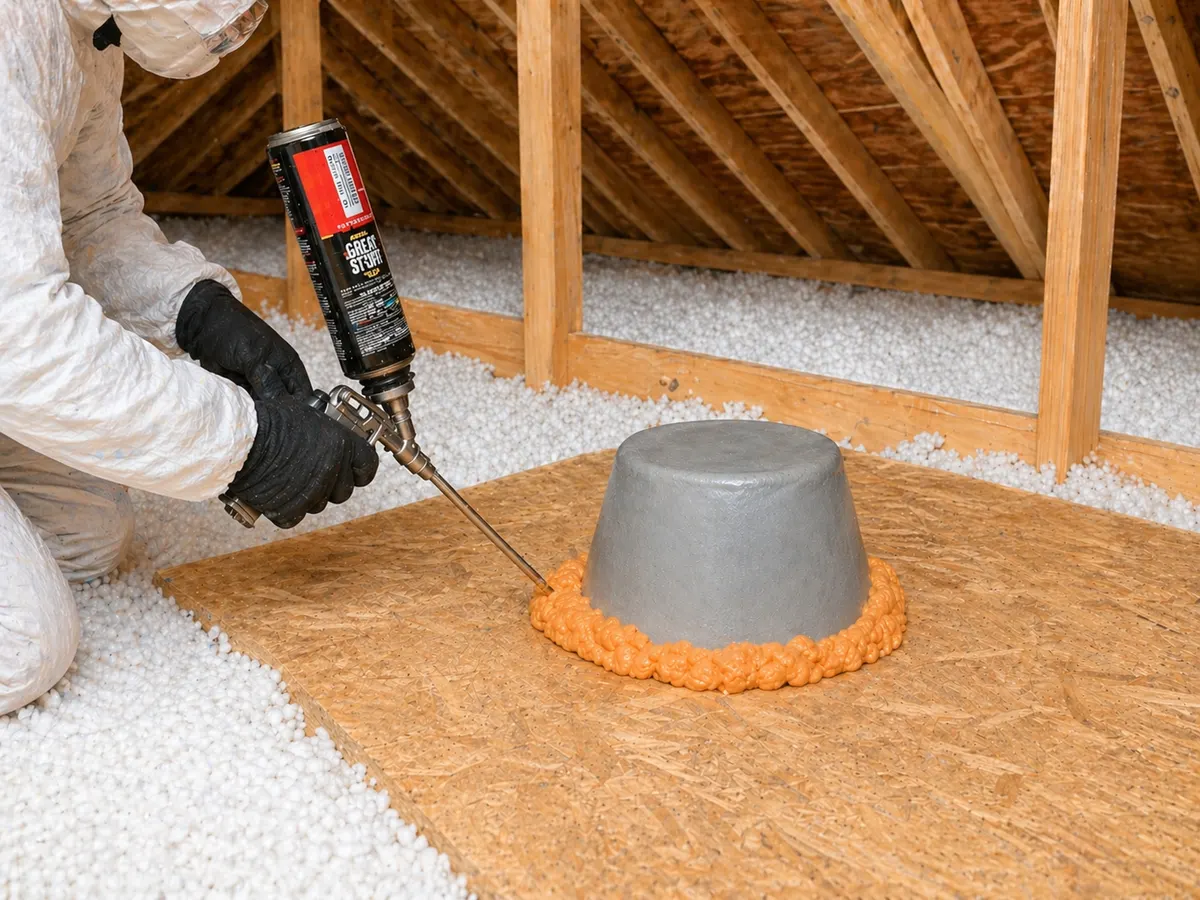
Insulation slows heat transfer. Air sealing addresses openings that allow air to move between the attic and the rooms below. Both matter because insulation can lose effectiveness when air is moving freely through gaps around wiring, plumbing penetrations, attic hatches, recessed lights, duct chases, and other openings.
When the attic boundary performs poorly, heating and cooling equipment may need to run longer to maintain indoor temperatures. Actual energy results vary by home size, weather, thermostat settings, duct condition, equipment efficiency, and household habits. Still, EPA estimates that cost-effective air sealing and insulation improvements can save an average of about 15 percent on heating and cooling costs in typical existing homes. Homeowners can use guidance on sealing and insulating an attic to better understand how insulation levels and air leaks interact.
Signs Your Attic May Need Attention
A visible attic issue is not required for there to be a comfort problem, but the following signs are worth investigating:
- Bedrooms or upper floors that are consistently hotter in summer or colder in winter.
- Noticeable temperature differences from one room or floor to another.
- Drafts near ceiling fixtures, attic access doors, or recessed lights.
- Insulation that looks thin, uneven, compressed, damp, stained, or disturbed by pests.
- Moisture on roof sheathing, musty odors, or discoloration near the roofline.
- Ice dams form along the roof edges during freezing weather.
- Heating or cooling equipment that seems to run frequently without delivering any comfort.
These symptoms do not point to one guaranteed solution. Duct leaks, HVAC sizing, window performance, roof leaks, and moisture problems can also contribute. The first useful step is to identify which conditions are present before adding material.
How to Perform a Safe Visual Attic Check
Homeowners can often perform a basic visual review, but an attic can contain unsafe footing, exposed electrical components, sharp fasteners, dust, and heat. Avoid walking on ceiling drywall. Step only on secure flooring or walk boards, and do not disturb unknown materials.
- Use a stable ladder and adequate lighting.
- Look across the attic floor for consistent insulation coverage and obvious thin spots.
- Check around pipes, wires, ducts, chimney areas, and the attic hatch for visible openings.
- Look for damp insulation, roof leaks, staining, mold-like growth, or animal activity.
- Confirm that insulation is not covering soffit vents at the eaves.
- Document what you find with photos, then seek qualified help for electrical, structural, pest, or moisture concerns.
Common Attic Insulation Options
The best choice depends on the attic layout, existing materials, moisture history, ventilation approach, budget, and air-sealing needs. Common options include:
- Fiberglass batts: Precut sections that can work well in open, regularly shaped spaces. They need to fit closely without gaps or compression.
- Blown-in cellulose: Loose material that can cover an attic floor and fill around many obstructions. Existing conditions should be evaluated before adding it over old insulation.
- Blown-in fiberglass: Another loose-fill option that can provide broad, even coverage in many retrofit attics.
- Spray foam: A material that can help create an air barrier when properly designed and installed. It requires planning around the roof assembly, moisture control, and the attic’s intended use.
Why Ventilation Still Matters
Insulation and ventilation have different jobs. In a traditionally vented attic, insulation and air sealing help separate conditioned rooms from the attic. In contrast, soffit, ridge, gable, or other roof vents can help manage airflow within the attic. Blocking soffit vents with loose-fill insulation can interfere with that airflow.
In vented attics, baffles at soffit vents help maintain a channel between the roof deck and the insulation. This lets ventilation air move above the insulation rather than through it. Ventilation details should be evaluated carefully because roof shape, duct placement, moisture conditions, and insulation strategy all affect the right approach.
When to Call a Professional
Professional assessment makes sense when insulation is wet, pest-contaminated, moldy, heavily compressed, or difficult to access. It is also wise when there are exposed wires, limited safe walking areas, complicated rooflines, combustion vents, or ducts in the attic. A thorough evaluation can consider insulation depth, air leakage, moisture, ventilation, and duct condition as connected issues.
A Simple Next-Step Checklist
- Identify the symptom: Is the main concern heat, cold, drafts, moisture, noise, or high energy use?
- Inspect visible conditions: Is the attic insulation dry, reasonably even, and undamaged?
- Look for air leaks: Are there openings around ceiling penetrations and attic access points?
- Protect ventilation: Are soffit vents open and kept clear of insulation?
- Consider the whole house: Check HVAC filters, ductwork, and other likely sources of comfort problems.
A better-performing attic is rarely about a single product. In O’Fallon homes, the most durable comfort improvements come from treating insulation, air sealing, ventilation, moisture control, ductwork, and HVAC performance as parts of one connected system.

