
Forty-three percent of patients who miss a dental appointment say they forgot about it. Not anxiety, not cost, not scheduling conflict. They just forgot. That one number explains more about the modern dental software revolution than any market research report ever could.
The patient experience at a dental office used to begin and end at the front desk. Paper forms, a clipboard, a pen that may or may not work. Then came digital scheduling, then automated reminders, then cloud-based records. Now the technology stack inside a dental practice touches almost every moment from the second you type the practice name into a search bar to the day your crown is ready for pickup. And most patients have no idea it’s happening.
The Quiet Infrastructure Behind Your Appointment
Think about the last time you booked a dental visit. You probably found the practice online, checked reviews, clicked a scheduling link, confirmed via text, and showed up without filling out a single paper form. That frictionless chain runs on practice management software working in the background.
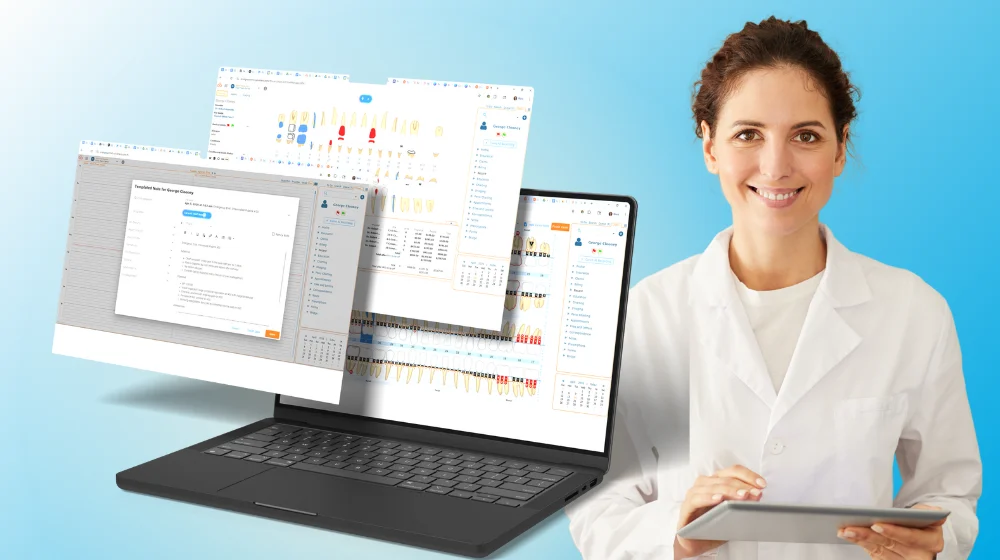
Dental practice management systems handle scheduling, billing, insurance verification, treatment planning, and patient records from a single interface. The administrative load that once required two full-time front-desk employees can now be distributed across automated workflows. That matters a lot, because the dental workforce is not sitting still.
According to the U.S. Bureau of Labor Statistics’ 2024 Occupational Outlook Handbook, dentist employment is projected to grow 4 percent from 2024 to 2034, with roughly 4,500 new openings per year. That 4% growth rate matches the national average across all occupations, and about 4,500 openings for dentists are projected annually over that decade. Practices that want to attract patients in a growing but competitive market have one real differentiator: the experience they deliver. Software is what makes that experience consistent.
What “Good Tech” Actually Feels Like as a Patient
Here’s a scenario most people will recognize. You call a dental office at 7:45 p.m. on a Tuesday to ask about an opening. No one answers. You leave a voicemail. Three days later, someone calls back, but you’re in a meeting. You play phone tag for a week and then give up and go somewhere else.
Now run that same scenario at a practice running a modern management platform. You open the website after dinner, see available slots in a real-time calendar, book a 9 a.m. Thursday appointment in two minutes, receive a text confirmation immediately, and get an automated reminder 48 hours before the visit. The difference is not charm or customer service philosophy. It’s the technology stack.
Practices that get this right build what I’d call the PACT model for patient retention: Proactive reminders, Automated intake, Clear post-visit communication, and Treatment plan follow-up. Each piece is technology-dependent. Miss one and you create a gap where patients drift to a competitor.
Digital Imaging and AI-Assisted Diagnostics
The front-office software story gets most of the attention, but the clinical side has changed just as dramatically. Digital X-rays expose patients to significantly less radiation than traditional film and produce images dentists can zoom, annotate, and share with specialists in seconds. Intraoral cameras let patients see exactly what the dentist sees, which changes the nature of the conversation from “trust me, you have a cavity” to “look at this image right here.”
AI-assisted radiograph analysis is the newest layer. Cleared by the FDA, these tools flag potential areas of concern on X-rays before the dentist even picks up the scan. The dentist still makes the call. But the AI acts like a second set of eyes reviewing hundreds of data points at once, a task no human can perform at that speed or at that scale of consistency.
“The technology doesn’t replace the relationship. It removes the friction that gets in the way of it.” This framing reflects a near-universal consensus among dental technology researchers who study how digital tools affect the patient-provider dynamic, consistently finding that automation of administrative tasks increases the time dentists spend in actual patient conversation.
Why Patient Behavior Makes This Urgent
There’s a gap that technology is being asked to close, and it’s a wide one. The CDC’s 2024 Behavioral Risk Factor Surveillance System data, published via the CDC FastStats database, found that only 66% of adults aged 18 and older reported visiting a dentist or dental clinic for any reason within the previous year. That means roughly one in three American adults went twelve full months without a single dental visit. Better patient communication tools, online booking, and automated recall systems are among the most direct ways practices can bring that number up.
Practices that send a personalized recall message 90 days before a patient’s cleaning is due reactivate significantly more lapsed patients than those that rely on postcards or passive reminders. The data on this is consistent: patients don’t avoid dental care because they dislike it (well, some do). They avoid it because life moves fast and dental care is easy to defer. Technology makes deferral harder by staying present in the patient’s life without requiring a human staff member to make a phone call every time.
Choosing a Practice That Gets This Right: A Practical Checklist
If you’re evaluating dental practices in your area and you want one that has actually invested in the patient experience, here are five signals worth looking for before you book an appointment:
- Online booking available 24/7. If the only option is a phone call during business hours, that’s a 2005-era workflow.
- Digital intake forms before the visit. Filling out paper forms in the waiting room wastes your time and theirs.
- Automated appointment reminders via text or email. A practice that doesn’t remind you doesn’t respect your schedule.
- Digital imaging with patient-facing screens. You should be able to see your own X-rays during the exam, not six weeks later if you request them.
- A clear treatment plan summary after each visit. If you leave without knowing what comes next, something broke in the communication process.
Practices like Ingenious Dentistry in Houston invest in modern technology and continuing education precisely because they understand that the tools don’t replace skilled clinical care; they make it more accessible and consistent for every patient who walks through the door.
What the Data Table Tells You About the Shift
| Technology Feature | Patient Benefit | Practice Benefit
|
|---|---|---|
| Online real-time scheduling | Book any time, no phone tag | Fewer no-shows, fuller schedule |
| Automated recall reminders | Never miss a cleaning | Higher patient retention rate |
| Digital X-rays and intraoral cameras | Clearer explanation of treatment | Faster, sharper diagnostics |
| AI-assisted radiograph review | More consistent early detection | Reduced diagnostic variability |
| Electronic treatment plan delivery | Written record to review at home | Better case acceptance rates |
None of these features are futuristic. They’re available right now at forward-thinking practices across the country. The gap isn’t in the technology’s existence; it’s in adoption.
The Patient Side of the Equation
Technology only works if patients actually use it. That means practices need to meet patients where they are. Older patients may still prefer a phone call. Younger patients may expect to handle everything through a patient portal or a text thread. The best practice management platforms accommodate both without requiring staff to run two parallel systems.
The practices winning on patient satisfaction scores right now are not necessarily the ones with the most advanced equipment. They’re the ones that made their administrative experience as smooth as their clinical one. Booking an appointment should feel no harder than booking a restaurant reservation. Receiving a treatment plan should feel no more confusing than reading a clear email. That bar is achievable. It just requires the right tools and the intention to use them.
What’s one thing you wish your dental practice did differently? Chances are, there’s a software feature that already solves for it. The question is whether your practice has bothered to turn it on.

