

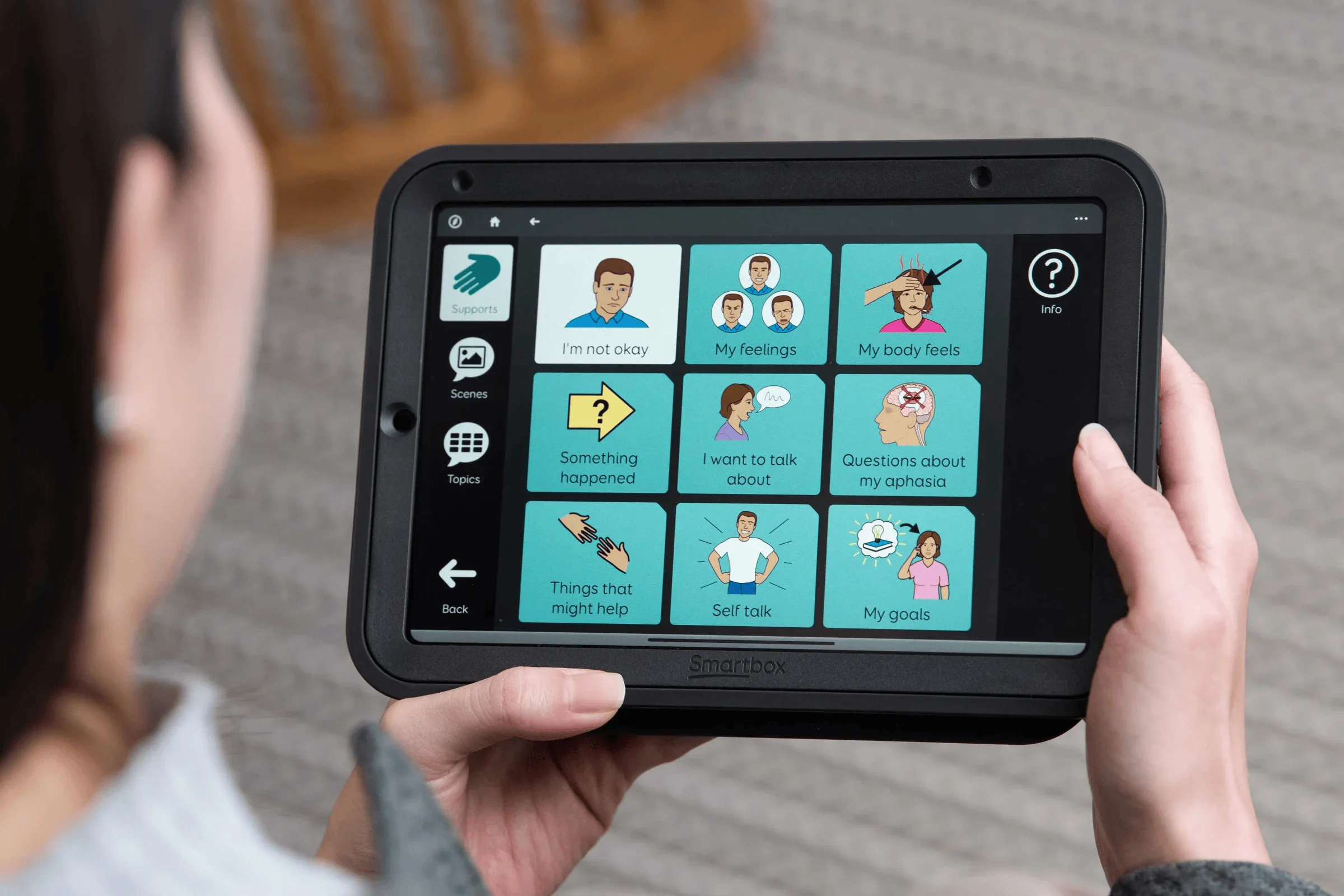
Picture someone who knows exactly what they want to say but cannot get the words out. The thought is there, complete and clear, but the path from mind to mouth is broken. That is the daily reality for millions of people living with aphasia, and for a long time, the only real tool available was in-person speech therapy with a licensed clinician. Today, that is no longer the whole story.
A wave of apps, devices, and digital communication tools has quietly changed what life with aphasia looks like. Families who used to feel helpless now have real options. Caregivers can support their loved ones between therapy sessions. And people with aphasia themselves are reclaiming conversations they thought were gone for good. This article breaks down what the technology actually does, which tools tend to work best, and how to think about choosing one.
Who Gets Aphasia, and Why the Numbers Matter
Before looking at the tools, it helps to understand the scale of the problem. According to the American Speech-Language-Hearing Association (ASHA), roughly 25 to 50 percent of all strokes result in aphasia, and an estimated 100,000 to 180,000 people acquire aphasia each year in the United States. Additional data from ASHA suggest that between 2 and 4 million Americans are currently living with aphasia at any given time.
Those numbers explain why so many developers, researchers, and nonprofits have turned their attention to this space. When millions of people share the same communication barrier, the demand for better tools becomes undeniable. And the good news is that the research is catching up fast.
What the Research Actually Shows About App-Based Therapy
Skepticism about apps for serious language disorders is fair. A lot of wellness tech is oversold. But the evidence for mobile-based aphasia interventions is more solid than most people expect.
A 2024 systematic review published in Frontiers in Neurology analyzed 15 research investigations, including 10 randomized controlled trials, and found that eight of those studies demonstrated the efficacy of mobile application-based therapy in improving overall language functionality for post-stroke aphasia patients, while three studies highlighted improvements in communication skills specifically. Six of the included studies also found that speech improvement effects were maintained during the follow-up period.
That last detail matters. Sustained improvement, not just performance during active therapy, is the real measure of whether a tool belongs in someone’s daily life. The short version: these apps are not magic, but they are not gimmicks either. Used consistently alongside professional guidance, they genuinely move the needle.
“Conventional face-to-face interventions often lack the necessary therapeutic intensity,” the Frontiers in Neurology 2024 review noted, pointing to app-based therapy as a practical bridge for independent rehabilitation between clinical sessions.
The Three Categories of Aphasia Technology
Here is a framework I’d call the CRT model: Communication, Rehabilitation, and Training. Every tool on the market falls into one of these three buckets, and knowing which bucket you need changes everything about which product you should try first.
- Communication tools are not about recovery. They give people with aphasia a way to express themselves right now, today, regardless of where they are in their recovery. Augmentative and alternative communication (AAC) apps like Proloquo2Go and TouchChat fall here. They use symbols, images, or pre-set phrases with voice output so the person can convey a message without relying on word retrieval at all.
- Rehabilitation tools are designed to rebuild language pathways over time. Apps like Constant Therapy present structured exercises built by clinicians, progressing difficulty as the user improves. These work best when a speech-language pathologist is tracking progress and adjusting goals.
- Training tools sit between the two. They practice specific skills, like naming household objects or forming short sentences, in a way that is closer to a game than a clinical drill. They keep engagement high without requiring a therapist to be in the room.
Most families benefit from having at least one tool from each category. A communication app handles urgent moments. A rehabilitation app drives long-term progress. A training app fills the gaps in between.
A Real Scenario: What This Looks Like in Practice
Consider a retired teacher in her late 60s who had a stroke and was left with moderate aphasia. She knew she wanted coffee, could picture the mug, could feel the craving, but the word simply would not come. Her husband spent weeks guessing. It was exhausting and demoralizing for both of them.
Her speech-language pathologist set up a simple AAC app on a shared tablet, loaded with images she chose herself: her coffee, her garden, her grandchildren’s faces. Within a week she was pointing and tapping to communicate basic needs. Within a month she was using the rehabilitation app for 20 minutes each morning. She did not get all her words back, but she got her conversations back. That is the real win.
Understanding what causes Aphasia? and how it affects language is the foundation for making smart choices about which tools are worth trying. Without that baseline, families often buy the flashiest app rather than the right one.
Practical Steps for Choosing the Right Tool
There is no universal answer, but this five-step process cuts through the noise:
- Start with the speech-language pathologist. Any tool used without clinical guidance risks reinforcing bad habits or missing a more effective approach entirely. The SLP knows the severity and type of aphasia, which shapes everything else.
- Identify the primary goal. Is the priority to communicate right now, or to rebuild language over time? The answer determines whether a communication tool or a rehabilitation app should come first.
- Try before you buy. Most major apps offer free trials or limited free versions. Spend a week with the free version before committing to a paid plan or an expensive dedicated device.
- Check device compatibility. Some tools are iOS only, some work on Android, and dedicated AAC hardware can cost well over $5,000. Match the tool to what you already own when possible.
- Build in a review point. Set a 60-day checkpoint to assess whether the tool is being used and whether it is helping. If it has been sitting untouched for three weeks, it is the wrong tool, not a failure of the person using it.
The Emotional Piece Nobody Talks About Enough
Technology can restore communication, but it cannot fully address what aphasia does to a person’s sense of self. More than 2 million people in the United States are estimated to have aphasia, and according to the American Stroke Association, stroke survivors with aphasia face an increased incidence of post-stroke depression compared to stroke survivors without aphasia. An app can hand someone back their voice, but community, peer support, and professional care are what hand them back their identity.
That is why the best outcomes tend to come from combining technology with a strong support network, not from treating an app as a standalone fix. Think of the technology as the daily practice and human connection as the reason to keep practicing.
Where This Is All Heading
AI-powered word prediction, real-time speech coaching through a phone’s microphone, and personalized therapy programs that adjust automatically based on daily performance scores are no longer hypothetical. Several are already in beta or early commercial release. The pace of development in this space is faster than most clinicians expected, and that is genuinely good news for the 100,000-plus people who acquire aphasia every year in the United States.
The tools are not perfect. Access is still unevenly distributed, and cost remains a real barrier for many families. But the direction is right. If you are supporting someone with aphasia, right now is the best time there has ever been to explore what technology can offer. Start with one tool, one goal, and one conversation with a professional. That is enough to begin.
| Tool Category | Primary Purpose | Best Used When | Example Tools
|
|---|---|---|---|
| Communication (AAC) | Express needs immediately | Severe aphasia; early recovery | Proloquo2Go, TouchChat |
| Rehabilitation Apps | Rebuild language pathways | Ongoing therapy; SLP-guided | Constant Therapy |
| Training / Practice Apps | Maintain and extend gains | Between therapy sessions | iName it, TalkTablet |

