

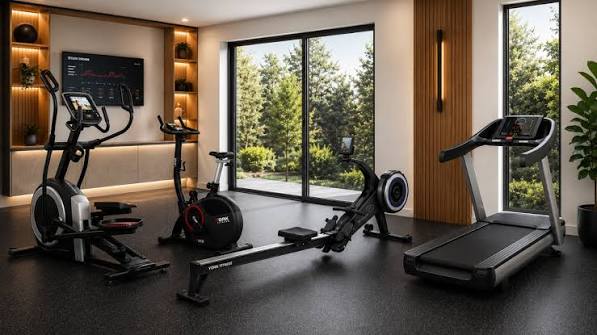
Buying cardio equipment is easy. Using it consistently six months later is the harder part.
That’s why choosing a machine based on the longest feature list isn’t always a smart move. A treadmill might look impressive, but it won’t do much for you if you hate running. A rowing machine can deliver a demanding workout, but poor technique can make every session frustrating.
The better approach is to start with your habits, available space, and preferred way of exercising. Once you know those things, comparing equipment becomes much simpler.
Start With the Exercise You Already Enjoy
People sometimes shop for fitness equipment based on the person they hope to become. Someone who rarely runs suddenly buys a large treadmill because they plan to run five days a week.
Maybe that works. Often, it doesn’t.
Think about activities you already enjoy. If you naturally prefer walking and jogging, a treadmill makes sense. If cycling feels comfortable, an exercise bike is an obvious candidate. If you like workouts that involve your upper and lower body, rowing may be more appealing.
You don’t need to love every workout. Still, the basic movement shouldn’t feel like something you’re constantly trying to avoid.
Measure Your Space Before Shopping
Cardio machines have a funny way of looking smaller in photos.
Before buying anything, measure the actual area where the machine will live. Don’t just measure the equipment’s footprint. You also need enough room to get on and off comfortably.
Remember the space around the machine
A treadmill, for example, needs clearance behind the running belt. An elliptical may require extra overhead clearance because your body sits higher when you’re standing on the pedals.
Rowers create another interesting problem. They’re narrow, but they’re long when being used. Some can be moved or stored vertically after training, which can make them practical for rooms that serve several purposes.
Exercise bikes generally require less floor space, making them easier to fit into bedrooms, apartments, offices, and smaller home gyms.
Measure first. Your future self will appreciate not having to rearrange half the room when a large box arrives.
Match the Machine to Your Training Style
There isn’t one type of cardio machine that suits everybody. Each creates a noticeably different workout.
Treadmills for familiar movement
Walking and running require very little explanation, which is part of the treadmill’s appeal.
You can walk gently, increase the incline, jog, or push the speed for harder intervals. That flexibility can make a treadmill useful when several people with different fitness levels share the same equipment.
The trade-off is size. Treadmills can also produce noticeable noise and vibration, particularly when running.
Exercise bikes for compact cardio
Exercise bikes are popular when floor space matters or you prefer seated training.
Resistance can be adjusted for easier steady sessions or demanding intervals. Because cycling avoids the repeated foot strikes associated with running, many people also prefer it when they want lower-impact exercise.
Comfort matters here. Check whether the seat and handlebars can be adjusted to suit your body rather than assuming you’ll adapt to the machine.
Rowers for whole-body movement
A rowing machine brings more of the body into the exercise.
Your legs generate much of the drive while your core and upper body contribute throughout the stroke. That makes rowing attractive to people who want conditioning that doesn’t feel entirely lower-body focused.
There is a catch: technique matters.
Someone can start walking on a treadmill almost immediately. Proper rowing takes more practice. Learning the movement before chasing speed or resistance can make sessions much more enjoyable.
Ellipticals for smooth, low-impact sessions
Elliptical trainers create a continuous movement without your feet repeatedly striking a running surface.
They can work well for longer cardio sessions, particularly for people who simply don’t enjoy running. Models with moving handles can involve the upper body as well.
Pay attention to stride length and overall machine dimensions. An elliptical that feels cramped or awkward is unlikely to become your favourite piece of equipment.
Decide Which Features You’ll Really Use
Once you’ve chosen a machine category, the specification sheet can become distracting.
Screens, built-in programs, connectivity options, speakers, device holders and dozens of resistance settings all sound useful. Some genuinely are. Others may barely get touched after the first week.
Start with the fundamentals.
For treadmills, look at the running area, speed and incline options, stability and cushioning. For bikes, consider adjustment range, resistance and riding position. With rowers, resistance type, rail length and storage may matter more. On an elliptical, stride comfort and smooth movement deserve close attention.
If you’re comparing several categories rather than shopping for one specific machine, browsing Flex Equipment’s Cardio Range can also help you see the different equipment formats available before narrowing down what suits your training space.
Features should support the way you exercise, not convince you to buy a machine that’s wrong for you.
Think About Who Else Will Use It
A home gym isn’t always used by one person.
If two or three household members will train on the same machine, adjustability becomes much more important. Seat positions, handlebar height, resistance levels and workout intensity need to accommodate different users.
Accessibility matters too.
One person might want intense interval sessions while another mainly wants comfortable daily movement. In that situation, equipment with a broad adjustment range may be more useful than a highly specialised machine.
For shared spaces, noise deserves consideration as well. A workout at 6 a.m. feels considerably less convenient when everyone else in the house can hear it.
Don’t Ignore Maintenance
Cardio machines move. That means components eventually need attention.
Running belts may require adjustment. Bolts can loosen. Rails collect dust. Seats and handles experience wear. Electronic consoles introduce another component that may eventually need servicing.
Before buying, consider how easy the equipment is to maintain and whether replacement parts or servicing are reasonably accessible.
This matters even more when the machine will receive heavy use. Equipment used by several family members every day faces different demands from something used twice a week.
Commercial gyms have an even stronger reason to think about durability because equipment may be used repeatedly throughout the day.
Set a Budget Around Use, Not Features
The cheapest machine isn’t automatically the best value, and neither is the most expensive one.
Imagine buying a $700 machine and using it four times a week for several years. Now compare that with spending $2,500 on something you abandon after three months.
Price alone tells you very little about value.
Think about expected frequency of use, construction, comfort, warranty coverage and the features you genuinely need. Someone training daily may have good reason to spend more on durability. A casual user may be perfectly happy with a simpler setup.
Put your money into the parts of the machine that affect the workout itself before paying extra for features that mostly make the specification sheet longer.
Try to Picture an Ordinary Tuesday
Forget the motivated version of yourself for a moment.
Picture an ordinary Tuesday after a long day. You have 30 minutes available and aren’t particularly excited about exercising.
Which machine would you actually get on?
That’s often a more useful question than asking which option offers the theoretically perfect workout. Fitness equipment only provides value when it becomes part of your routine.
Choose something that fits your room, feels comfortable, supports the type of training you enjoy, and doesn’t create unnecessary barriers to getting started. The right cardio equipment isn’t necessarily the machine with the most impressive specifications. It’s the one that makes regular exercise easier to keep doing.

