

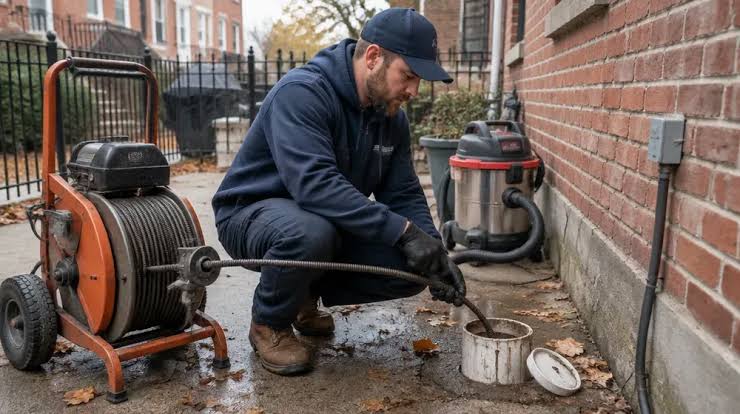
A slow kitchen sink, a gurgling bathtub, or a toilet that threatens to overflow can feel like routine annoyances. In older rowhouses and twins, though, these symptoms can point to more than a simple P-trap obstruction, trouble in the main building drain or sewer lateral. Knowing the difference helps you decide whether a quick cable clear is enough or whether you should approve deeper diagnostic work before considering trenchless repair or excavation.
For homes across Philadelphia. PA, aging cast iron stacks and clay tile laterals are common, and both are prone to scale buildup, root intrusion at joints, and cracks that invite soil and groundwater into the line. Recognizing multi-fixture patterns, knowing where your cleanout is, and requesting a sewer camera inspection when symptoms persist can keep repeated backups from becoming a basement cleanup routine.
-
Early Symptoms That Point Beyond a Simple P-Trap Clog
When only one fixture misbehaves, the culprit is often nearby: a wad of hair in a tub shoe or hardened grease in a sink branch. Main line issues show up throughout the system. Watch for toilets that bubble when the washing machine drains, a basement floor drain that spits up during a shower, or slow drainage in the lowest-level fixtures at the same time. A sour sewer gas odor around a floor drain or utility sink can also hint at a dry trap or a venting problem layered on top of a partial main blockage.
Consider two common scenarios. First, after a heavy rain, the basement floor drain begins to back up even though no one is running water. That can indicate infiltration through cracks, a sag or “belly” that holds water, or surcharge in a combined sewer neighborhood. Second, if you flush a toilet and hear gurgling at the nearby tub, that cross-talk suggests the main cannot vent properly because of a restriction, pushing and pulling on traps throughout the branch.
-
What a Pro Checks First: Cleanouts, Traps, and Roof Vents
Before anyone reaches for a sewer machine, access matters. A technician will try to locate a main cleanout near the foundation wall, in a basement slab, or just outside where the building drain exits. Removing the cap and running water can show whether the main is holding. If the cleanout is missing, buried behind drywall, or paved over outdoors, diagnosing and clearing become harder and riskier for your fixtures; adding a two-way cleanout is often worth planning once the line is open.
Localized checks still help refine the picture. Pulling a sink P-trap can rule out a nearby blockage and let a small camera inspect a branch. If drains are slow throughout, a quick look at the roof vent stack can rule out obstructions such as leaves or a bird nest. One mistake to avoid: pouring chemical drain cleaners. Caustics and acids can soften gaskets, etch aging cast iron, and create hazards for anyone opening traps or cleanouts afterward.
-
Why a Sewer Camera Inspection Changes the Decision
A push rod sewer camera threaded through the cleanout turns guesswork into specifics. On screen, you can see roots matted at a clay joint, a cracked hub, heavy scale and tuberculation on cast iron, or a low spot that keeps water standing. A locator can mark the camera head from the surface to estimate depth and position so you know whether a defect sits under a finished basement, a front walk, or the street. With that map, the conversation shifts from “try another snake” to “match the fix to the cause.”
Imagine a house where the camera shows thick, flaky scale on the first 15 feet of cast iron just inside the foundation. In that case, mechanical descaling with chain flails, then flushing with a hydro jet, may restore the bore without replacement. Now consider a clay lateral where every joint hosts fine roots and one section is offset. After initial jetting clears the line, options like a cured-in-place pipe (CIPP) liner or a sectional point repair become viable, but only after a post-jet camera confirms the host pipe is round, continuous, and free of major bellies.
-
Clearing vs. Fixing: Cable, Hydro Jet, Descaling, and Trenchless Lining
Cabling with a drum machine and cutters is often the first pass. It can cut through rags or wipes and shave off small roots, but it tends to leave grease smears and softer debris on the pipe wall. Hydro jetting sends water at controlled pressure through a spinning nozzle to scour the pipe’s full circumference, making it a better choice for grease and sediment. The tradeoff is pipe condition: brittle, thin-walled cast iron near the end of its life may not tolerate aggressive jetting. In those cases, careful descaling with chain knockers, followed by a rinse, reduces risk.
When defects go beyond debris, you move from clearing to fixing. Spot excavation replaces a collapsed section but disrupts landscaping or floors. Trenchless options include CIPP liners that create a new resin tube inside the old pipe, sectional patches for isolated defects, and pipe bursting to replace an entire line by pulling a new HDPE pipe through the old alignment. Each method has constraints. Liners need a relatively round, continuous host pipe with adequate diameter and a path for inversion or pull-in; significant bellies, sharp offsets, or crushed sections are poor candidates. Planning includes access pits, right-of-way permits, and pre- and post-installation camera documentation.
Timing, Access, and Prevention for Rowhouses and Older Basements
In tight basements, clearing space to the stack, floor drain, and cleanout speeds safe work and protects finishes. Move stored items, cover nearby appliances, and confirm a path from the entry to the work area for a jetter hose or drum machine. If backups follow storms, schedule rehabilitation during a dry stretch to reduce groundwater infiltration while the lining cures. Outdoors, utility locates mark where gas and electric enter before crews dig access pits. In and around the city, crews from Ring The Bell Plumbing, Heating & Drains, the plumbing and drain service formerly known as John Snyder Plumbing & Heating, will be familiar with these constraints in rowhouse alleys and small front yards.
After the line is flowing and documented, small habits reduce the chance of recurrence. Keep wipes, dental floss, and grease out of the system; install fine-mesh strainers on basement utility sinks to catch laundry lint; and if trees sit along the lateral path, consider periodic camera checks or a maintenance jet to keep joints clear. In flood-prone areas or homes with low-lying fixtures, a properly installed backwater valve on a branch can prevent sewer surcharge from returning through a floor drain. Document the location of any new cleanouts and keep them accessible so the next service call is measured in minutes, not hours.

