

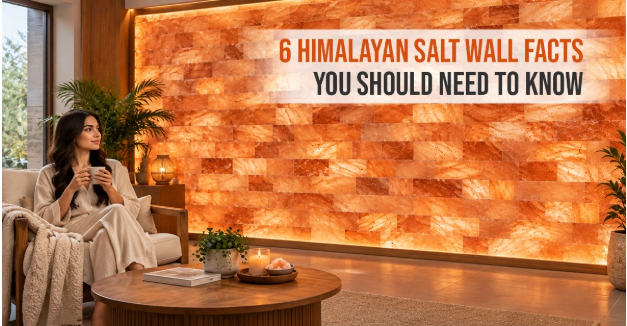
The most important Himalayan salt wall facts include choosing authentic salt bricks, using proper LED lighting, ensuring professional installation, controlling humidity, performing basic maintenance, and understanding that salt walls are decorative wellness features rather than medically proven treatments.
A Himalayan Salt Wall is an exquisite indoor feature built from natural Himalayan salt bricks, creating warmth and elegance while providing extra benefits to any home, spa, yoga studio, or wellness center.
Why Himalayan Salt Walls Matter
Salt walls are matter for the the natural beauty they offer and the benefits of Himalayan salt walls; they create a distinctive natural look with warm, ambient lighting. Knowledge of the product and how it works keeps you from making a poor investment. When properly installed, a well-built salt wall may last for years or even decades. Important factors to keep in view when building a salt wall.
- Premium salt tiles
- Professional installation
- Quality adhesive
- Warm white LED lighting
- Controlled indoor humidity
- Simple regular maintenance
These factors ensure long-term performance, durability, and a decorative indoor feature.
6 Important Himalayan Salt Wall Facts You Should Know Before Building One
Fact 1: Himalayan salt comes from ancient deposits of sea salt
Himalayan salt is mined from the Khewra Salt Mine region of Pakistan and consists mainly of sodium chloride with small amounts of minerals such as iron, calcium, potassium, and magnesium that contribute to its natural coloration.
Himalayan salt tiles are the same size. The variety of natural colorations forms a wall with an overall unique appearance.
Common Natural Features
| Feature | Description |
| Color | Pink, orange, white, and reddish tones |
| Material | Natural Himalayan rock salt |
| Finish | Smooth or rough-cut |
| Appearance | Every brick has unique patterns |
| Best Use | Indoor decorative walls |
This is why it is better to buy only original Himalayan salt tiles for walls from known suppliers like Pink Salt Wall, since they maintain the quality of their raw material and craftsmanship.
Fact 2: Proper Lighting Creates the Best Visual Effect
Lighting is one of the most important parts of a salt wall. Even premium salt bricks can appear pedestrian without correct backlighting. Warm white LED lights are recommended as they amplify your natural glow with minimal heat.
Most professional backlit salt walls use warm white LED strips (2700K–3000K) positioned behind the bricks to create an even glow and highlight the natural color variations of Himalayan salt.
Best Lighting Practices
- Use warm white LED lights.
- Install even lighting across the wall.
- Choose moisture-resistant LED strips.
- Allow easy access for future maintenance.
- Avoid excessive heat sources.
Fact 3: Installation Quality Determines Long-Term Performance
A beautiful wall starts with professional installation. Standard Himalayan salt bricks measuring 8 × 4 × 2 inches typically weigh around 5.2 pounds each. Larger installations may weigh several hundred pounds, which is why strong framing and structural support are important.
Himalayan Salt Wall always needs to be constructed on a solid indoor structure that is supportive of its weight.
Professional Installation Checklist
| Installation Step | Why It Matters |
| Strong wall frame | Supports heavy salt bricks |
| Quality adhesive | Keeps bricks secure |
| Proper spacing | Creates an even finish |
| LED planning | Produces balanced lighting |
| Moisture control | Extends wall life |
Homeowners looking for a simpler installation process often choose a salt wall kits, which includes pre-selected salt bricks, adhesive, and other essential materials needed to build a Himalayan salt wall.
Professional installation reduces maintenance while improving durability and appearance.
Fact 4: Salt Walls Perform Best in Indoor Controlled Environments
Salt has a natural tendency to draw moisture from the air.
That doesn’t mean that salt walls melt in standard indoor environments. They work efficiently in controlled environments that allow for stable humidity levels.
Ideal locations include:
-
- Living rooms
- Home spas
- Yoga studios
- Wellness centers
- Meditation rooms
- Luxury hotel lobbies
- Office reception areas
Bathrooms and outdoor areas usually require additional moisture protection because constant humidity can reduce the lifespan of salt bricks.
Fact 5: Maintenance Is Simple but Important
One reason many designers recommend salt walls is their low maintenance.
Regular maintenance is the key to keeping both beautifying and structural components sound.
Easy Maintenance Tips
- Use a dry microfiber cloth to dust.
- Do not wash the bricks with water.
- Humidity indoors should be controlled between 35% and 55%.
- LED lights are tested once or twice a year.
- Inspect adhesive joints during annual maintenance.
Following these simple practices keeps your wall looking beautiful for many years.
Many homeowners appreciate these practical maintenance requirements alongside the aesthetic Himalayan salt wall benefits associated with creating a relaxing indoor environment.
Fact 6: Salt Walls Are Designed for Beauty Rather Than Medical Treatment
Current scientific evidence does not confirm Himalayan salt walls as medical treatments or cures for disease. Their primary value lies in interior design, ambiance, and wellness-focused aesthetics.
Decorative salt walls are not confirmed as medically proven treatments or cures for disease by current scientific evidence. They hold their most trusted value in tactile design, tranquil ambience, inviting light, and soothing wellness spaces.
This is why architects, interior designers, and hospitality professionals keep incorporating salt walls in luxury wellness projects for their aesthetics rather than definitive medical results.
How Much Does a Himalayan Salt Wall Cost to Build?
The cost depends on:
- wall size
- brick thickness
- lighting system
- frame construction
- installation complexity
Small DIY salt wall materials
≈ $200–600
Residential feature wall
≈ $800–3,000
Large custom installation
≈ $3,000–10,000+
For example, a 20 sq ft Himalayan salt wall built with standard 8 × 4 × 2 inch salt bricks from Pink Salt Wall typically costs around $615–$700 for the salt bricks. Such sizes usually come with a pre-built salt wall kit.
Where Himalayan Salt Walls Are Commonly Installed
Himalayan salt walls can be installed in the following locations.
| Location | Suitable |
| Home Living Room | Excellent |
| Spa | Excellent |
| Yoga Studio | Excellent |
| Meditation Room | Excellent |
| Hotel Lobby | Excellent |
| Wellness Center | Excellent |
| Office Reception | Excellent |
| Outdoor Patio | Not Recommended |
| Open Garden | Not Recommended |
| Sauna | Excellent |
According to the installation team at Pink Salt Wall, the most common causes of salt wall deterioration are excessive humidity, poor-quality adhesives, and improper LED placement.
Expert Buying Tips
Before purchasing salt bricks for a salt wall, always consider these factors:
- Verify that the salt comes from authentic Himalayan sources.
- Choose premium-quality salt bricks with consistent dimensions.
- Use professional LED lighting ranging from 2700 K to 3000k.
- Select experienced installers.
- Install in a humidity-controlled indoor location.
- Purchase from trusted suppliers with proven industry experience, such as Pink Salt Wall, to ensure product quality and installation support.
Conclusion
When you are ready to build a Himalayan salt wall, you must keep in view the mentioned facts and figures, such as having knowledge of salt brick quality, installation procedure, lighting ideas, and maintenance approaches. Without following the given facts, it is difficult for you to build a high-quality salt wall.
From luxury home design, wellness centers and spas to commercial spaces, it’s the best way of putting your investment into long-lasting beauty that is functional(longevity) and also provides a relaxing environment.
FAQs
1. How long does a Himalayan salt wall last?
With normal maintenance, if a salt wall is well installed and placed indoors in controlled conditions, it can last anywhere from 20-30 years.
2. Do Himalayan salt walls require regular maintenance?
No. Routine maintenance is not required. Dust it 2-4 times each month using a microfiber fabric, and never use water to wash the surface. Check the lighting conditions regularly.
3. What lighting is best for Himalayan salt walls?
The best warm white LED lighting for Himalayan salt walls is 2700 K to 3000 K, as this will naturally reveal the color with low heat output.
- Is the Himalayan Salt Wall Suitable For a Pet?
A Himalayan salt wall is generally suitable for homes with pets, but only when it is installed safely and pets cannot lick or chew the salt.
5. Is a Himalayan Salt Wall Suitable For Outdoor Installation?
No, Outdoor installation of Himalayan salt walls is not recommended because of the high humidity and the risk of rain.

