

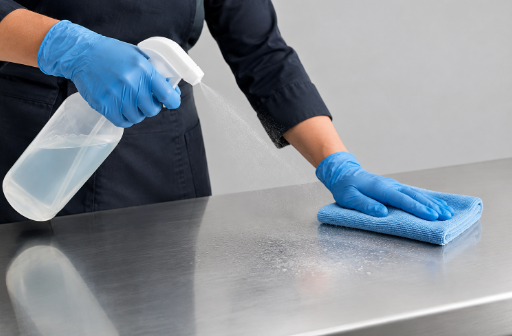
From busy offices and schools to small healthcare practices, workshops, and laboratories, facilities in Great Barrington need practical ways to control surface contamination without creating needless risks to people or property. The right approach is not simply choosing the harshest product on the shelf. It means matching the disinfectant, the surface, the task, and the work environment.
That balance matters in spaces where the same counters, handles, equipment, and workstations are used throughout the day. Understanding the potential impact of chemical residue, odor, corrosion, and worker exposure can help local teams build cleaning routines that are both dependable and easier to sustain.
Why Disinfection Needs a Balanced Approach
A product can be effective against germs and still be poorly suited to a particular task. Strong odors, difficult application steps, surface damage, residue, or irritating vapors can undermine a cleaning program over time. For example, a shared reception counter in a Great Barrington office needs a process that staff can complete consistently without damaging its finish or disrupting daily service.
Cleaning vs. Disinfecting
Cleaning removes dirt, oils, and other material from a surface. Disinfecting uses a product intended to inactivate specified germs on an inanimate surface. These are related but different actions. Soil can make it harder for a disinfectant to work, which is why cleaning surfaces before disinfecting them is an important step in many settings.
For many routinely used, low-risk spaces, regular cleaning may be sufficient. Disinfection can add value after someone has been visibly ill, in high-traffic areas, during an outbreak, or where facility policies call for it. Healthcare, food-service, laboratory, and other regulated environments may have more specific procedures.
What to Check Before Choosing a Product
- Identify the contamination concern or target microorganism.
- Confirm the product is approved and labeled for the intended use.
- Determine whether the surface is hard, porous, coated, painted, electronic, or food-contact.
- Review the required concentration, dilution instructions, and application method.
- Verify the required wet contact time.
- Check whether rinsing is required after use.
- Review storage, disposal, ventilation, and protective equipment instructions.
How Contact Time Affects Results
Contact time, sometimes called wet time, is the period a disinfectant must remain visibly wet on the surface. Wiping it away too early can prevent the product from performing as intended. Contact time can differ by product, organism, dilution, and surface. If a door handle dries in one minute but the label requires a longer wet period, staff may need to apply more product or use a method that keeps the surface wet long enough.
Surface Compatibility and Residue
Repeated exposure to an incompatible chemical may discolor finishes, corrode metal, cloud clear plastics, dry rubber seals, or affect screens and coatings. Test a product in an inconspicuous location when practical, then monitor surfaces over time. Residue can cause streaking, attract soil, or interfere with later processing, so both appearance and function matter.
- Metal fixtures: Check for corrosion, pitting, or changes in finish.
- Plastics and rubber: Watch for cracking, cloudiness, swelling, or brittleness.
- Electronics: Follow the device manufacturer’s cleaning instructions and avoid oversaturation.
- Painted or coated surfaces: Check for dulling, peeling, softening, or discoloration.
- Food-contact surfaces: Confirm whether the label requires a potable-water rinse.
Worker Safety and Ventilation
Workers should read both the label and the safety data sheet before use. These materials explain required gloves, eye protection, protective clothing, first-aid measures, and ventilation precautions. In enclosed janitorial rooms, restrooms, or storage areas, increase air circulation when the product directions call for it. Never mix disinfectants with bleach, ammonia, acids, or other cleaners unless the label specifically permits that combination.
Training should also cover proper dilution, spill response, secure storage, secondary-container labeling, and reporting of unusual reactions. A repeatable process helps reduce accidental exposure and inconsistent results.
A Simple Disinfection Workflow
- Remove food, unnecessary equipment, and sensitive items from the area.
- Wear the protective equipment listed on the product label.
- Remove visible dirt and organic material when required.
- Apply the disinfectant using the approved method.
- Keep the surface wet for the full contact time.
- Rinse or wipe only if the label directs it.
- Allow the area to dry before returning it to service.
- Store the product securely and document spills, damage, or exposure incidents.
Common Mistakes to Avoid
- Using a general cleaner as though it were a disinfectant.
- Ignoring surface compatibility or device manufacturer instructions.
- Using too little product to maintain the required wet time.
- Wiping the surface dry before the contact time is complete.
- Using fogging, electrostatic spraying, or other equipment not permitted by the label.
- Skipping ventilation and protective equipment requirements.
- Storing chemicals in unmarked containers.s.
Final Checklist
- Target germ or contamination concern identified.
- Product approved for the intended use.
- Surface compatibility checked.
- Contact time understood.
- Correct application method selected.
- Ventilation and protective equipment reviewed.
- Rinsing, storage, and disposal instructions understood.
- Workers are trained before the task begins.
Safe surface disinfection in Great Barrington, Massachusetts, starts with disciplined decisions rather than guesswork. Match the product to the task, prepare the surface, follow the label, protect workers, and monitor materials for changes over time. That approach supports cleaner shared spaces without creating preventable problems for the people and equipment that keep them running.

