

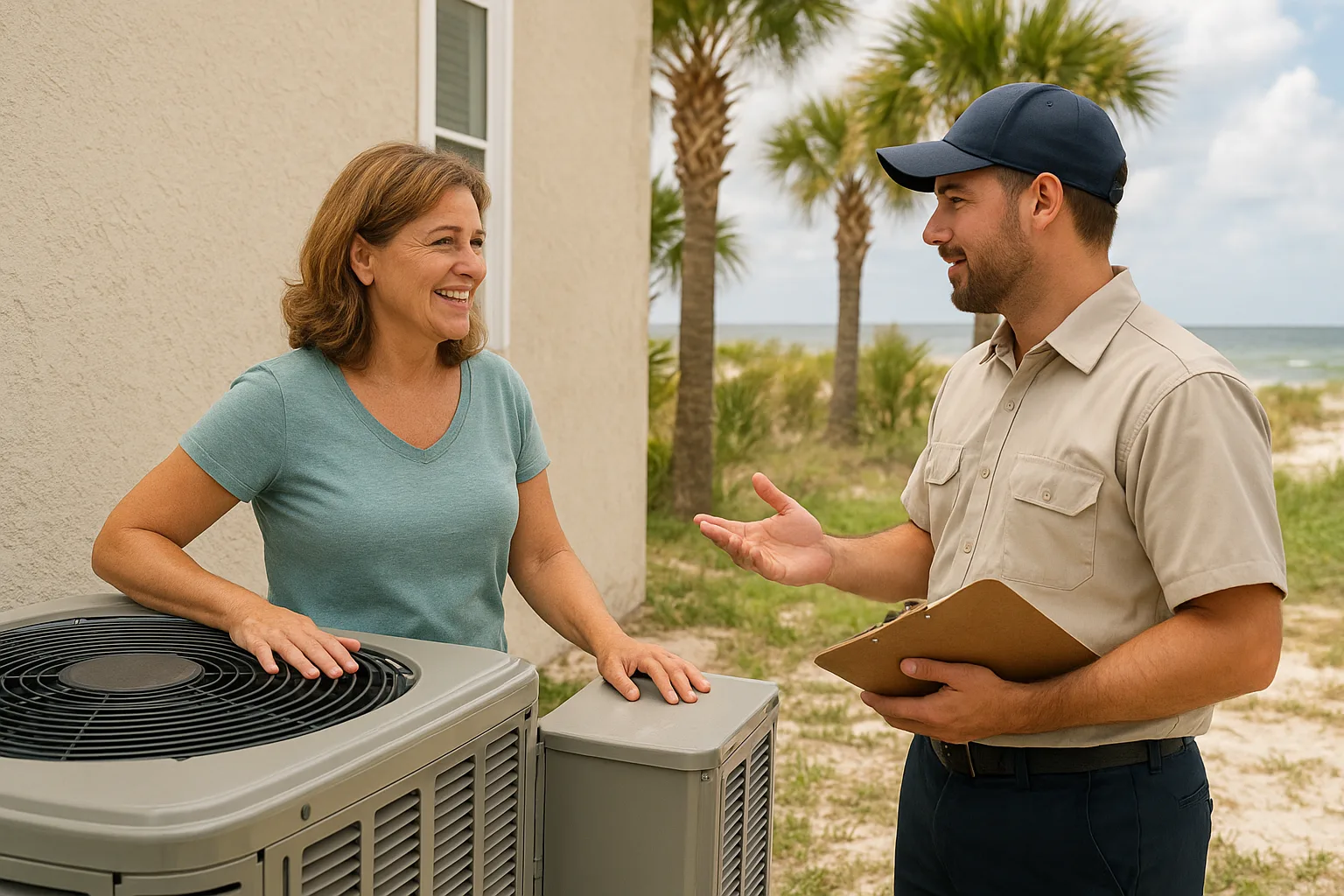
Living near the water changes how air conditioners age and fail. In Oceanside, salt air, windblown grit, sun-baked attics, and intermittent heat waves combine to stress components in ways inland homes rarely see. When cooling drops off, the culprit is not always obvious from the thermostat. Is it a clogged condenser coil outside, a weak capacitor, a refrigerant leak at a corroded joint, or an iced-over evaporator coil from low airflow? This guide explains how coastal conditions shape common AC symptoms, what those signs often mean, and which simple checks you can complete safely before scheduling a repair. The goal is to help you act quickly on issues that can snowball into bigger failures while avoiding steps that accidentally make things worse.
1. What Early AC Symptoms Mean in a Coastal Climate
Two warning signs often show up in beach communities: weak airflow at the supply registers and warmer-than-normal air even though the outdoor unit is running. In Oceanside, sea spray and yard debris can clog condenser fins, raising head pressure and forcing the compressor to work harder. That can lead to hot air at vents or short cycling as safety controls trip. If the outdoor fan hums but does not spin, a fatigued run capacitor or stuck contactor is likely. Buzzing from the condenser cabinet points to pitted contacts or a motor trying to start against corroded bearings. For fast local help, reliable expertise with AC repair in Oceanside can pinpoint whether you are dealing with a simple electrical part or deeper system stress.
2. How Salt Air, Sun, and Humidity Drive Specific Failures
Salt accelerates corrosion on condenser coils, service valves, and fasteners. Over time, pitted aluminum fins and rusty steel screws make panels hard to remove and can compromise the coil tubes, causing slow refrigerant leaks. Low refrigerant charge lowers evaporator temperature, inviting ice on the coil and suction line and starving airflow indoors. Meanwhile, attic temperatures spike under intense sun, increasing runtime and hammering start components like capacitors and contactors. Higher coastal humidity feeds algae in the condensate drain, where a blocked trap triggers a float switch and shuts the system down. Add windblown lint and grass clippings pressed into the fins after mowing, and your compressor may run hot enough to trip a breaker or cook insulation on fan motor windings.
3. Safe Checks You Can Do Before Calling a Technician
Confirm that the thermostat is set to Cool and the fan is on Auto, then replace or clean the air filter. A loaded MERV 11 to 13 filter can spike static pressure, reduce blower airflow, and frost the evaporator coil. At the outdoor condenser, clear vegetation at least 18 to 24 inches away on all sides. With the power still on, gently rinse the coil fins from top to bottom using a garden hose on low pressure. Do not use a pressure washer or coil brush that can fold fins flat. If your system has a visible clear condensate trap, pouring a cup of white vinegar can help dissolve slime and restore drainage.
Check the electrical basics without opening any panels. Make sure the outdoor disconnect handle is fully seated and the breaker is not tripped. If you see ice on the copper suction line or around the indoor coil, switch the system to fan only for a few hours to thaw, then try cooling again. Avoid running the compressor while iced, which can flood liquid refrigerant back to the compressor. Note any error codes on your smart thermostat, take a photo of the equipment nameplate, and record unusual noises. These details help a technician zero in on likely causes, from a failing blower motor to a stuck thermal expansion valve (TXV).
4. When a Repair Is Urgent in Coastal Homes
Some conditions call for immediate attention. Suppose the outdoor fan isn’t spinning while the compressor hums; shut the system off to prevent overheating and possible compressor damage. If you smell sharp electrical or burning odors at the air handler, keep the unit off and do not reset the breaker repeatedly. Water around the indoor unit or a ceiling stain below an attic air handler suggests a condensate overflow that can damage drywall; turn cooling off to stop condensate production and request service. A breaker that trips again after a single reset points to a shorted motor, failing compressor, or damaged wiring insulation, problems that are aggravated by corrosion in coastal air.
Ice on the evaporator or suction line demands a pause in cooling, but not necessarily a major repair. After thawing with the fan only, restore cooling and watch for rapid icing, which indicates persistent low airflow or low refrigerant charge. If the coil ices again within an hour, leave the system off and schedule service to prevent compressor stress. Explain what you observed: recent filter changes, attic temperatures, signs of algae in the drain, and whether doors or windows were left open during a party that spiked indoor humidity. Clear descriptions help separate a one-time airflow issue from a refrigerant leak or failing blower wheel.
Preventing Repeat Failures With Coastal-Focused Care
Coastal maintenance reduces both breakdowns and energy use. Rinse condenser coils lightly every one to two months during the cooling season and after mowing. Consider a factory-approved coil coating or corrosion-resistant fasteners if you are within a few blocks of the ocean; the trade-off is upfront cost versus fewer cleanings and slower fin degradation. Shade the condenser with a pergola or plantings that do not block airflow; avoid covers that trap moisture. Match the filter MERV to your ductwork and blower capability, balancing capture of fine, salt-laden dust against the extra static pressure that can choke airflow. During a professional tune-up, ask for verification of superheat and subcooling, inspection of the contactor and capacitor, cleaning of the blower wheel and evaporator coil, and confirmation that the condensate float switch works as intended. Sealing leaky ducts in a hot attic and improving attic ventilation also lower run times, extending capacitor and motor life.
Coastal conditions do not have to shorten your AC’s lifespan. By reading early symptoms in the context of salt air and sun exposure, doing simple safety checks, and calling for help when red flags appear, Oceanside homeowners can stop minor stress from turning into major failures. Keep vegetation away from the condenser, stay realistic about filter resistance, rinse fins gently, and schedule seasonal service before the first heat wave. Small habits like clearing the condensate trap and photographing equipment labels give a technician a head start and help prevent repeat issues. With a coastal-aware approach, your system can cool reliably through the hottest afternoons without overworking hidden parts.

