

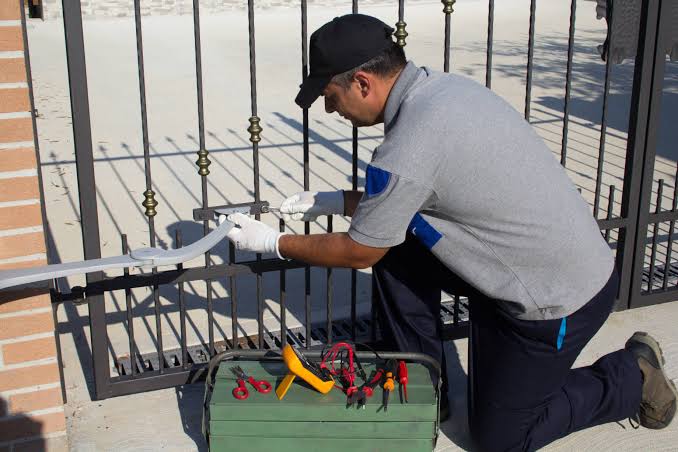
Electric gates provide convenience, security, and controlled access for homes, businesses, apartment complexes, and other properties. However, like any mechanical and electrical system, automated gates can develop problems over time. Issues such as slow movement, unusual noises, remote-control failure, damaged sensors, or a gate that refuses to open can quickly become frustrating and may compromise access or security.
Professional electric gate repair helps identify the underlying cause of these problems and restore the gate to safe, reliable operation. While some issues may appear minor, attempting to repair electrical components without the appropriate knowledge can create additional damage or safety risks. Understanding common gate problems, their possible causes, and the importance of regular maintenance can help property owners deal with faults more effectively.
Common Problems That Require Electric Gate Repair
Automated gates can experience a variety of faults depending on their age, design, usage frequency, installation quality, and environmental conditions. One of the most common problems is a gate that does not open or close when the remote control or access system is activated. This can result from something as simple as a depleted remote battery, but it may also indicate a problem with the receiver, control board, motor, wiring, or power supply.
Another frequent issue is unusual or inconsistent movement. A gate may begin moving slowly, stop halfway, jerk during operation, or reverse unexpectedly. Mechanical resistance, worn components, motor problems, incorrect settings, or obstructions along the gate’s path can all contribute to this behavior. Identifying the precise cause is important because replacing an unrelated component will not necessarily solve the problem.
Some gates may produce grinding, squeaking, clicking, or buzzing sounds. New or unusually loud noises should not be ignored because they can indicate worn rollers, hinges, gears, bearings, or motor components. Continuing to operate a gate with a developing mechanical problem may increase wear and potentially result in a more expensive repair.
Electrical Issues and Power Problems
Electric gates depend on a reliable power supply to operate correctly. If the gate suddenly stops working, the first consideration should be whether the system is receiving power. Electrical faults can involve the main supply, switches, fuses, transformers, batteries, wiring, or control equipment.
Backup batteries can also become less effective as they age. A gate that works normally when connected to the main power supply but fails during an outage may have a weak or defective backup battery. Battery condition should be assessed as part of routine maintenance rather than waiting until an emergency occurs.
Loose or damaged wiring can create intermittent faults that are difficult to diagnose. Because electrical systems can present safety hazards, inspection and repair should generally be handled by a qualified professional who understands the equipment and applicable electrical requirements.
Problems With Gate Motors
The motor is one of the most important components in an automated gate system. It provides the force needed to move the gate, so motor problems can prevent normal operation or cause noticeable changes in performance.
A motor that becomes noisy, overheats, struggles to move the gate, or stops unexpectedly may require inspection. In some cases, the motor itself may still be functional while another component is creating excessive resistance. For example, damaged rollers, misalignment, or an obstruction can force the motor to work harder than intended.
A technician can inspect the motor and related mechanical components to determine whether the problem can be corrected through adjustment, cleaning, lubrication, component replacement, or more extensive repair. Replacing a motor can be a source of problems. A remote may stop working because its battery is depleted, its buttons are damaged, or its signal is not without identifying the original cause may not provide a lasting solution.
Remote Controls and Access Systems
Remote controls make automated gates convenient, but they can also be a source of problems. A remote may stop working because its battery is depleted, its buttons are damaged, or its signal is not reaching the receiver correctly.
If several remotes stop working at the same time, the issue may be related to the gate’s receiver or control system rather than the individual remotes. Interference, damaged antennas, programming problems, and electronic faults can affect communication between the remote and gate operator.
Other access systems, such as keypads, intercoms, card readers, and smart access controls, can also experience faults. A professional inspection can determine whether the problem originates from the access device itself or the gate’s main control system.
Safety Sensor Problems
Safety sensors are an essential part of many automated gate systems. They are designed to detect obstacles or prevent the gate from operating in potentially dangerous circumstances. If sensors become dirty, misaligned, damaged, or disconnected, the gate may refuse to close or may behave unpredictably.
Sometimes a sensor problem can be caused by dirt, leaves, or another obstruction. However, repeatedly bypassing or disabling safety equipment is not an appropriate solution. Sensors should remain operational because they form an important part of the gate’s safety system.
When a gate starts opening and closing incorrectly, sensors should be inspected along with the motor, control board, wiring, and mechanical components. Correct diagnosis is important because similar symptoms can sometimes have different causes.
Mechanical Wear and Alignment
Not every gate problem is electrical. Automated gates contain mechanical components that experience repeated movement, including hinges, rollers, tracks, wheels, chains, arms, gears, and other hardware. Over time, these components can become worn, dirty, loose, or misaligned.
A sliding gate, for example, may struggle to move if its track becomes obstructed or damaged. A swing gate may experience difficulty if its hinges become worn or if the gate becomes misaligned. When mechanical resistance increases, the automatic operator may have to work harder, potentially accelerating wear on the motor and drive system.
Regular inspection and maintenance can help identify these problems before they cause a complete operational failure. Keeping moving components clean and appropriately maintained can also contribute to smoother operation.
Why Professional Diagnosis Matters
A gate that fails to operate may have several possible causes. For example, a gate that does not close could be affected by a sensor, motor, control board, obstruction, wiring fault, or mechanical alignment issue. Replacing parts based only on symptoms can result in unnecessary expenses.
Professional technicians generally begin by examining the system as a whole. They may check the power supply, controls, motor, safety devices, mechanical movement, and relevant settings. This systematic approach can help identify the actual source of the fault instead of simply treating the most obvious symptom.
Professional service can also help prevent secondary damage. A small mechanical problem may place additional strain on an electric motor. Similarly, an electrical issue may damage control components if it remains unresolved. Addressing faults promptly can sometimes reduce the extent and cost of subsequent repairs.
Maintenance Can Reduce Unexpected Breakdowns
Routine maintenance is one of the most effective ways to keep an automated gate operating reliably. Maintenance schedules should take into account the type of gate, frequency of use, environmental conditions, and manufacturer’s recommendations.
A maintenance inspection may include checking moving components, cleaning tracks, examining hinges and rollers, testing safety sensors, inspecting wiring, assessing batteries, checking motor operation, and verifying that the gate opens and closes correctly.
Lubrication may also be necessary for appropriate mechanical components, although the correct lubricant and application method depend on the equipment. Excessive or incorrect lubrication can sometimes attract dirt or interfere with components, so maintenance should follow the manufacturer’s recommendations.
Regular servicing is particularly important for gates that are used many times each day. High-frequency operation places greater demands on motors, mechanical parts, and control systems than occasional residential use.
When a Gate Should Be Repaired
Some signs should prompt property owners to arrange an inspection rather than continuing to operate the gate. These include repeated stopping, grinding noises, visible damage, unusual movement, overheating, electrical smells, failure of safety sensors, or a gate that becomes increasingly slow.
A gate that moves unevenly can indicate a mechanical issue that may worsen with continued use. Likewise, repeated electrical failures should not simply be reset without investigating the underlying cause.
If a gate becomes stuck in an unsafe position or shows signs of a serious electrical fault, it may be appropriate to stop using it until a qualified professional can inspect the system. Safety should take priority over convenience.
Repair or Replacement?
Not every faulty gate requires complete replacement. Many problems can be resolved by repairing or replacing individual components. The appropriate solution depends on the age and condition of the system, availability of replacement parts, extent of damage, and overall reliability.
For a relatively modern gate with a sound structure and a localized fault, repair may be a practical solution. However, an older system with repeated failures, obsolete components, significant structural deterioration, or poor energy efficiency may eventually be more economical to replace.
A professional assessment can help property owners understand the available options. Rather than focusing only on the immediate repair cost, it can be useful to consider the expected service life, maintenance requirements, the specific type of automated gate is important. Different systems use different motors, controls, sensors, access technologies, and mechanical reliability, and future availability of parts.
Choosing a Reliable Repair Service
When selecting a contractor for electric gate work, experience with the specific type of automated gate is important. Different systems use different motors, controls, sensors, access technologies, and mechanical arrangements.
A reliable service provider should be able to explain the problem clearly and distinguish necessary repairs from optional upgrades. It is also useful to ask about warranties on replacement parts and workmanship, where applicable.
Property owners should be cautious about contractors who immediately recommend replacing expensive components without performing appropriate diagnostic checks. A proper inspection should provide a reasonable explanation of what has failed and why the proposed repair is necessary.
Final Thoughts
An automated gate combines electrical, electronic, and mechanical components, so even a seemingly simple fault can have several possible causes. Problems involving motors, sensors, remote controls, wiring, batteries, tracks, hinges, and control boards should be diagnosed carefully to ensure the correct solution is applied.
Professional electric gate repair can restore reliable operation while helping identify problems that might otherwise develop into larger and more expensive failures. Alongside prompt repairs, regular maintenance, safety inspections, and appropriate component replacement can extend the useful life of an automated gate and help keep it functioning smoothly.
For property owners, the most important principle is to treat unusual gate behavior as a warning rather than something to ignore. A gate that operates correctly should move smoothly, respond consistently, and function with its safety systems intact. Timely attention to faults can help maintain convenience, security, and safe access for everyone who uses the property.

