

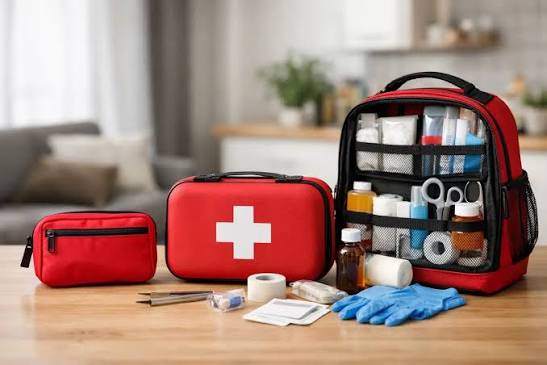
If you’ve ever stood in the first aid aisle wondering whether you need the tiny 20-piece tin or the giant 300-piece box, you already understand the real question behind every first aid kit: size. Too small, and you’re missing what you need in the exact moment you need it. Too big, and it just sits in a closet, unused and eventually expired.
Here’s the part most people skip past: knowing what belongs in that kit matters more than the size of the box itself. That’s where Basic First Aid training comes in, not as an afterthought, but as the actual skill that makes any kit worth having in the first place. If you’re in the London, Ontario area, this kind of certification is a practical next step, and it’s worth more than another trip down the first aid aisle.
Why Does Kit Size Matter Less Than You Think?
A bigger kit feels safer. More bandages, more gauze, more of everything. But a kit is only as useful as the person standing next to it. A 300-piece kit in the hands of someone who’s never practiced CPR or doesn’t know how to pack a wound is still just a box of supplies.
Training changes what the kit actually means. Suddenly it’s not a pile of items you hope you never touch. It’s a set of tools you know exactly how to use, in the order you need to use them.
Think about it this way: a fire extinguisher is useless to someone who’s never pulled a pin under pressure. A first aid kit works the same way. The supplies are only step one. Knowing what to reach for first, second, and third is the part that actually saves time when it counts.
What Actually Belongs in a Well-Sized First Aid Kit?
A properly sized kit isn’t about volume. It’s about matching contents to the people and risks around you. A few things worth checking for:
- Adhesive bandages in a range of sizes, not just one
- Sterile gauze and medical tape for larger wounds
- A CPR face shield or mask
- Instant cold packs for sprains and swelling
- Any medication-specific items your household or team needs, like an EpiPen
A kit sized for a family of four looks different from one sized for a small office or a job site crew. The skill to use everything inside it, though, stays the same no matter how big the box is. A well-stocked kit sitting next to someone who’s completed a proper course closes the gap between having supplies and actually helping.
What Do You Learn in a Basic First Aid Course?
A good course walks you through the moments that actually matter, including:
- How to recognize and respond to cardiac arrest, including CPR and AED use
- How to manage choking, severe bleeding, and burns
- How to help someone through a seizure, a diabetic emergency, or an allergic reaction
- How to assess a scene safely and take charge until paramedics arrive
Courses built around blended learning, meaning online theory paired with an in-person skills session, tend to fit real schedules better than a full day locked in a classroom. You work through the material at your own pace, then practice the physical skills while an instructor checks your technique.
Who Actually Needs This Training?
Almost anyone who has ever thought, even briefly, “I wouldn’t know what to do.” Parents. Coaches. Retail staff. Small business owners. People who work alone in a warehouse or a shop for hours at a time.
None of these people think of themselves as the “emergency type.” A parent takes the course so they’re not frozen if their kid chokes at the dinner table. A retail worker takes it because customers collapse in stores more often than anyone likes to admit. A small business owner takes it because they’re often the only adult on-site when something goes wrong.
For workplaces specifically, Ontario employers have obligations under the Occupational Health and Safety Act, and certification through a WSIB-approved provider is often required to meet workplace first aid standards. The Association of Workers’ Compensation Boards of Canada has tracked how often workplace injuries happen with no one on-site prepared to respond, and it’s more common than most employers assume.
Outside of work, the reasoning is simpler. Most cardiac emergencies happen at home, according to the Heart & Stroke Foundation, and early bystander CPR meaningfully improves someone’s odds of survival. The person best placed to help is rarely a paramedic. It’s whoever is already in the room, kit or no kit.
How Do You Choose the Right Provider?
A few things are worth checking before you commit to a course:
- Is the provider Red Cross or Heart & Stroke authorized, so the certification is recognized wherever you need it?
- Does it offer blended learning, so you’re not stuck in a classroom all day?
- Is it WSIB-approved, if workplace compliance is part of the reason you’re taking it?
- Is there an actual in-person skills session, not just a video and a multiple-choice quiz?
Getting the kit right is a good start. Knowing how to use what’s inside it is the part that actually matters when something goes wrong.
If you’re looking for CPR or first aid classes near Richmond Street and Horton Street, close to Western University and Victoria Hospital, or anywhere else in the surrounding area, you can reach out to Coast2Coast First Aid & Aquatics in that area.
FAQs
Q: What size first aid kit do I actually need?
A: It depends on how many people it needs to cover and the setting: a home kit for a family of four looks different from a kit for a small office or job site crew. Size matters less than making sure the contents match your real risks.
Q: Is a bigger first aid kit always better?
A: Not necessarily. A large kit in the hands of someone untrained is still just a box of supplies. Training on how and when to use each item matters more than the number of pieces inside the kit.
Q: How long does a Basic First Aid course take to complete?
A: Most blended-learning courses take a few hours of online theory, completed at your own pace, followed by a single in-person skills session that typically runs half a day.
Q: Do I need this certification for work, or is it just personal?
A: Many Ontario workplaces need certified staff on-site to meet Occupational Health and Safety Act requirements, so employers often cover the cost. Plenty of people also take it purely for peace of mind at home.
Q: How often do I need to renew my first aid certification?
A: Standard First Aid and CPR certifications in Canada are generally valid for three years, though it’s worth confirming renewal timelines with your specific provider.

