

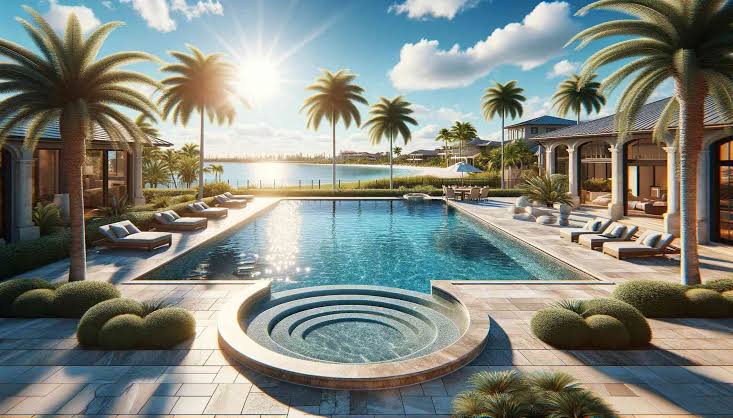
A pool deck in Bradenton has to deal with more than people walking across it. Florida’s Gulf Coast climate brings strong sun, high heat, frequent rain, humidity, and occasional severe storms. Over time, those conditions can affect the way a concrete pool deck looks, feels, and holds up.
Weather-related wear does not always mean the entire deck needs to be replaced. Understanding how local conditions affect concrete can help homeowners recognize problems earlier, choose suitable finishes, and maintain the surface more effectively.
How Bradenton’s Climate Puts Stress on Concrete
Bradenton’s warm Gulf Coast climate keeps outdoor concrete exposed to heat, sunlight, moisture, and seasonal rainfall for much of the year. National Weather Service climate normals for the Sarasota-Bradenton area put the normal July high at about 91°F, with July also being one of the wetter months of the year.
Those conditions matter for a pool deck because the concrete repeatedly heats up, gets wet, and dries again. Over time, that exposure can contribute to surface wear and make existing cracks, weak areas, drainage problems, or aging finishes more important to address.
Sun and Heat Can Affect the Surface
Bradenton’s sun and heat can affect both the temperature and appearance of a concrete pool deck. Direct sunlight can make the surface hot under bare feet, while long-term outdoor exposure can gradually affect coatings, colors, and sealers, especially when a product is not intended for exterior use.
As an older finish wears, fading, dull areas, and other signs of surface weathering may become more noticeable.
Decorative finishes and protective products should be selected for exterior concrete and pool-deck conditions. A product intended for indoor use is not automatically appropriate for a Florida pool deck.
Humidity and Rain Create Their Own Challenges
Bradenton’s humidity and seasonal rainfall can keep concrete pool decks exposed to frequent moisture throughout the year. Pool water adds another source of regular wetting around the deck.
Water can collect in low areas or remain on parts of the deck when drainage is poor. Cracks and damaged areas can also create additional places for moisture to collect. Persistent damp areas may contribute to staining, discoloration, and unwanted surface growth, making drainage and routine cleaning important parts of pool deck maintenance.
Cracks, damaged areas, and recurring drainage problems should be evaluated rather than simply covered with a new finish.
Why Surface Preparation Matters
Surface preparation matters because a new resurfacing material needs clean, stable, properly prepared concrete for proper adhesion. Dirt, grease, loose concrete, old coatings, and other contaminants can interfere with the bond between the existing surface and the new material.
Peeling or poorly bonded coatings should be removed rather than buried beneath a new resurfacing material. Cracks, damaged areas, drainage problems, and signs of movement should also be evaluated before work begins to determine whether repairs or other corrective work are needed.
A new finish cannot correct an underlying problem that has not been addressed.
The Pool Environment and Everyday Use
The pool environment adds another source of wear beyond weather exposure. Pool decks come into regular contact with pool water, cleaning products, foot traffic, furniture, and other everyday activity.
Dirt, residue, and repeated use can affect the appearance of the surface over time, particularly when routine cleaning is neglected. Furniture may also leave marks or affect some finishes when it is dragged across the deck rather than lifted.
Regular cleaning and following the care instructions for the installed finish or sealer can help keep the surface in better condition.
When Pool Deck Resurfacing Makes Sense
Pool deck resurfacing can be worth considering when the existing concrete remains suitable but the surface has become worn, faded, stained, or outdated. The condition of the concrete should be evaluated first, including cracks, damaged areas, drainage problems, and previous coatings.
Homeowners comparing local solutions for an aging concrete deck can learn more about pool deck resurfacing in Bradenton and the types of resurfacing systems available for different surface conditions.
What to Look for in a Resurfacing Finish
A pool deck resurfacing finish should suit the existing concrete, outdoor exposure, and conditions around a wet pool area. Consider the texture and traction of the surface, color and appearance, exposure to sun and moisture, maintenance requirements, and the protective sealer used with the system.
The condition of the pool deck and the surface preparation required should also be evaluated before a resurfacing finish is selected.
How to Protect a Pool Deck in Bradenton
Protecting a pool deck in Bradenton starts with regular cleaning, good drainage, and paying attention to changes in the concrete or existing finish. Routine care can also make it easier to identify cracks, drainage problems, or surface deterioration that may need attention.
- Keep the surface clean. Remove dirt, leaves, organic debris, and other material that can collect on the deck.
- Don’t ignore cracks or damaged areas. Cracks, surface damage, or changes in the existing finish should be evaluated rather than simply covered.
- Make sure water can drain properly. Watch for low areas or locations where water repeatedly collects after rain or pool use.
- Use products intended for exterior and pool-deck surfaces. Follow the manufacturer’s directions when using cleaners, sealers, coatings, or other surface-care products.
- Follow the maintenance recommendations for the installed finish or sealer. Different systems may have different cleaning, care, and resealing requirements.
- Check the deck after periods of heavy rain or severe weather. Look for standing water, new damage, changes in existing cracks, or areas where the finish appears to be deteriorating.
- Avoid dragging heavy furniture across the surface. Lifting chairs, tables, and other items can help reduce scratches, marks, and unnecessary wear on some finishes.
These steps will not stop normal aging, but they can help homeowners maintain the surface and identify conditions that may need attention.
What Bradenton Homeowners Should Keep in Mind
Bradenton’s sun, heat, humidity, and seasonal rainfall are part of the environment a concrete pool deck is exposed to throughout the year. Pool water, regular use, and recurring drainage or maintenance issues can add further stress to the surface.
Changes such as fading, worn finishes, cracks, damaged areas, or recurring drainage problems should be evaluated based on the condition of the deck. Some surfaces may only need routine maintenance, while others may be candidates for repair or resurfacing.
Homeowners who want a professional evaluation of an existing concrete pool deck can also learn more about Surface Rocket and its surface restoration services in Florida.
FAQs
Does Florida weather damage concrete pool decks?
Yes. Heat, sunlight, rain, and humidity can contribute to concrete surface wear and deterioration over time. Pool water, regular use, foot traffic, and maintenance conditions can add further wear.
How often should a concrete pool deck be sealed?
There is no single schedule for every deck. It depends on the sealer, exposure, traffic, and condition of the surface. Follow the product manufacturer’s recommendations and watch for signs that the finish is wearing.
Can an old pool deck be resurfaced?
Often, yes, when the existing concrete remains suitable for resurfacing. Cracks, movement, serious damage, drainage problems, and previous coatings should be evaluated before a new resurfacing system is installed.
Is resurfacing better than replacing a pool deck?
It depends on the condition of the existing concrete. If the existing concrete remains suitable for resurfacing, resurfacing may be a practical option for addressing a worn, faded, or outdated surface. If there are serious structural problems, significant movement, or other conditions that make resurfacing unsuitable, repairs or replacement may be necessary.
Why does my Bradenton pool deck get so hot?
Concrete exposed to direct sunlight can become considerably warmer than the surrounding air. The color of the surface, material, finish, amount of direct sun, and time of day can all affect how hot a pool deck feels underfoot. Homeowners concerned about surface temperature should consider these factors when comparing pool-deck finishes.
How long can a resurfaced pool deck last in this climate?
There is no single lifespan for every resurfaced pool deck. Service life depends on the resurfacing system, condition and preparation of the existing concrete, installation, sun and moisture exposure, traffic, maintenance, and the protective products used with the system. Follow the manufacturer’s care and maintenance recommendations for the specific finish installed.

