

Key Takeaways
- Inspect trees regularly for dead limbs, trunk cracks, unusual leaning, and disturbed roots.
- Schedule professional pruning and tree assessments before severe weather arrives.
- Keep people away from fallen trees, hanging branches, and downed power lines.
- Document storm damage and contact your utility provider or insurer when necessary.
- Choose insured, qualified tree contractors and confirm the scope of work in writing.
- Tree service companies can improve storm preparedness through accurate service information, clear communication, and responsible advertising.
Philadelphia homeowners know that a large tree can add shade, character, and privacy to a property. During severe weather, however, high winds, saturated soil, lightning, and heavy rain can turn weak limbs or unstable trunks into immediate hazards. In neighborhoods with mature street trees, compact row-home yards, parked cars, sidewalks, and overhead service lines, even a relatively small branch failure can damage property or block safe access. Conditions can change quickly during a storm, particularly when wind affects an already stressed canopy or rain softens the soil supporting a tree’s roots.
Preparation is far safer than making rushed decisions after a storm. For local tree companies, clear online information also matters when residents need help quickly. Targeted tree service ads can help responsible contractors communicate service areas, emergency availability, and the types of work they can safely perform. Local Tree Service Marketing provides digital marketing services for tree-care businesses, including lead generation, local SEO, website development, paid advertising, and call tracking. Because its work focuses on the tree industry, the company understands the service types and response challenges Philadelphia-area contractors face when connecting with homeowners who need storm cleanup, pruning, or removal.
Why Philadelphia Trees Can Become Vulnerable During Severe Weather
Urban trees often grow under conditions that are very different from those in a forest. Roots may be limited by sidewalks, driveways, compacted soil, utility work, or nearby construction. Older trees can also harbor hidden decay, previous pruning wounds, or structural defects that become more noticeable when wind and rain apply extra force to the canopy. A tree may appear healthy from a distance while still having a weak branch union, internal decay, or restricted root zone that affects its ability to withstand severe weather.
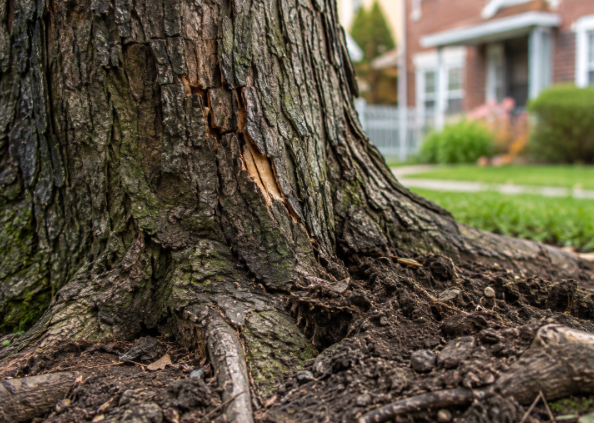
Location matters as much as tree condition. A branch over a roof, driveway, sidewalk, vehicle, fence, or power line poses a greater risk if it fails. Homeowners should pay particular attention to trees with multiple trunks, large dead limbs, visible trunk cracks, cavities, fresh leaning, or roots that appear to be lifting soil near the base. Newly disturbed ground, recent excavation, and visible changes in a tree’s position can also warrant closer attention, especially when a large tree is close to a home or frequently used walkway.
These signs do not automatically mean a tree must be removed. They do mean the tree deserves a closer assessment by a qualified tree professional. Homeowners should not climb, use a chainsaw aloft, or attempt to cut a storm-damaged limb that may be bent, suspended, or under tension. Even work that looks straightforward from the ground can become dangerous when a limb’s weight, balance, and points of contact are not fully visible.
A Simple Pre-Storm Tree Check
A brief walk-around inspection before storm season, and again after extended rain or strong winds, can help homeowners notice changes early. Stay on the ground and observe from a safe distance. It can be helpful to view the tree from multiple angles, since cracks, hanging branches, and an uneven canopy may be easier to see from the driveway, sidewalk, or the opposite side of the yard.
- Inspect the trunk and major limbs. Look for new cracks, cavities, loose bark, dead wood, or limbs that hang lower than usual.
- Check the ground around the base. Watch for raised soil, exposed roots, new gaps in the soil, or a trunk that appears to be leaning differently.
- Identify likely targets. Note branches that extend over roofs, windows, parked cars, walkways, or utility equipment.
- Photograph visible concerns. Photos taken safely from the ground can help document changes and give a contractor useful context.
- Arrange a professional evaluation when needed. This is especially important for large trees, trees near structures, and trees with obvious damage.
How To Reduce Tree Damage Before High Winds Arrive
Routine care is usually more controlled and less expensive than emergency work. Schedule pruning before a weather event rather than waiting until a branch is already broken. Proper pruning can remove dead, damaged, rubbing, or poorly attached limbs while preserving the tree’s overall structure. It should not be confused with simply cutting back the canopy as much as possible: excessive or poorly placed cuts can create additional stress and may leave the tree with weakly attached regrowth over time.
- Keep mulch several inches away from the trunk so the root flare remains visible and dry.
- Avoid striking roots or bark with lawn equipment, vehicles, or construction materials.
- Do not attach heavy swings, signs, wires, or decorations to questionable limbs.
- Move outdoor furniture and vehicles away from trees with known defects when severe weather is expected.
- Do not top a tree. Severe cutting can create weak new growth and increase future maintenance needs.
Philadelphia’s trees are part of a broader urban forest that includes street trees, yards, parks, and green corridors. The urban forestry guidance from the U.S. Forest Service recognizes that trees in cities are important green infrastructure, making thoughtful long-term care valuable for both individual properties and neighborhoods. Consistent maintenance also makes it easier to spot gradual changes before they become urgent problems during a storm.
What To Do When a Tree Falls After a Philadelphia Storm
After a storm, speed should never come before safety. A fallen tree can shift unexpectedly, and broken limbs may be carrying stored tension. Treat every downed wire as energized, even if it appears inactive or is partly hidden by branches. Avoid walking beneath partially fallen limbs or entering an area where a tree is resting against a building, since movement in the tree or structure may not be immediately apparent.
- Keep people, pets, and vehicles away from downed wires, hanging limbs, leaning trunks, and damaged structures.
- Call 911 if someone is injured, a road is blocked by an immediate hazard, or a structure appears unsafe.
- Contact the utility provider if power lines, poles, meters, or service equipment may be involved.
- Take photos from a safe location before debris is moved, particularly if a home, vehicle, fence, or other insured property was damaged.
- Notify the insurance company and follow its documentation instructions.
- Have a qualified tree contractor assess the tree before cutting, pulling, or moving large sections.
How To Choose a Tree Service After Storm Damage
Storms can create urgent demand, but homeowners should still take a few minutes to confirm who they are hiring. A reputable company should be able to explain its scope of work, provide a written estimate, and show appropriate insurance documentation upon request. Clear communication is particularly important when access is limited by narrow side yards, parked vehicles, neighboring properties, or debris that must be removed in stages.
- Ask whether the estimate includes cutting, lowering, hauling, cleanup, stump work, or only one portion of the job.
- Confirm who will perform the work and whether the crew has equipment suited to the tree’s size and location.
- Ask how the company will protect nearby roofs, fences, landscaping, vehicles, and utility lines.
- Be cautious of unsolicited crews that demand full payment upfront or pressure you to sign immediately.
- Request local references when the work is substantial or involves a high-risk removal.
How Local Tree Companies Can Plan for Storm Demand
When severe weather affects Philadelphia, homeowners often seek help based on urgency and location. Tree companies can make that process clearer by maintaining separate pages for emergency removals, hazardous limbs, fallen trees, debris hauling, and routine pruning. Each page should state the actual service area, the typical response process, and any availability limits. Contact information should be easy to find, and businesses should avoid suggesting immediate response times unless they can reliably meet them.
Operational planning is equally important. Crews should use a shared dispatch process, record incoming calls, prioritize hazards involving people and structures, and pause advertising when capacity is at full capacity. Accurate messaging protects customers from false expectations and helps crews focus on the jobs that present the greatest immediate risk. Providing homeowners with basic safety directions while they wait for an assessment can also help reduce the chance of unsafe do-it-yourself cleanup attempts.
Common Mistakes Philadelphia Homeowners Should Avoid
Many post-storm problems become more difficult when homeowners act before the full extent of the hazard is understood. Pausing to assess the area from a safe distance, document damage, and contact the appropriate professional can prevent a manageable situation from becoming more dangerous.
- Cutting or dragging a fallen tree before checking for utility hazards.
- Using a vehicle, winch, or rope to pull branches off a roof.
- Choosing a contractor solely because the price is lowest.
- Ignoring small cracks, dead limbs, or root disturbance until a storm exposes the problem.
- Assuming every damaged tree needs removal without obtaining an assessment.
- Entering a damaged yard at night or during continuing high winds.
Frequently Asked Questions
When should a Philadelphia homeowner schedule a tree inspection?
Schedule an inspection when a tree develops cracking, unusual lean, dead limbs, exposed roots, visible decay, or damage after wind. A routine check before periods of severe weather is also a sensible precaution. An inspection can be especially useful after nearby construction, trenching, or other work that may have affected the root area.
Is it safe to cut a tree that fell on a house?
No. A tree resting on a structure can shift suddenly, and nearby utility hazards may pose a risk. Secure the area, avoid touching wires or branches, and contact emergency services or a qualified professional when appropriate.
Should a tree be removed if it has only a few broken branches?
Not necessarily. Careful pruning may be enough if the trunk, roots, and remaining major limbs are structurally sound. A professional assessment can help determine whether pruning, stabilization, or removal is the better option.
Safer Trees Begin Before the Storm
Philadelphia homeowners can reduce storm-related risk by noticing tree problems early, protecting the area around damaged trees, and using qualified help for work beyond safe ground-level cleanup. A calm plan before the next storm can help protect people, property, and the city’s valued urban canopy. Regular observation does not eliminate every storm-related failure, but it gives homeowners more time to make informed decisions before an urgent situation develops.

