

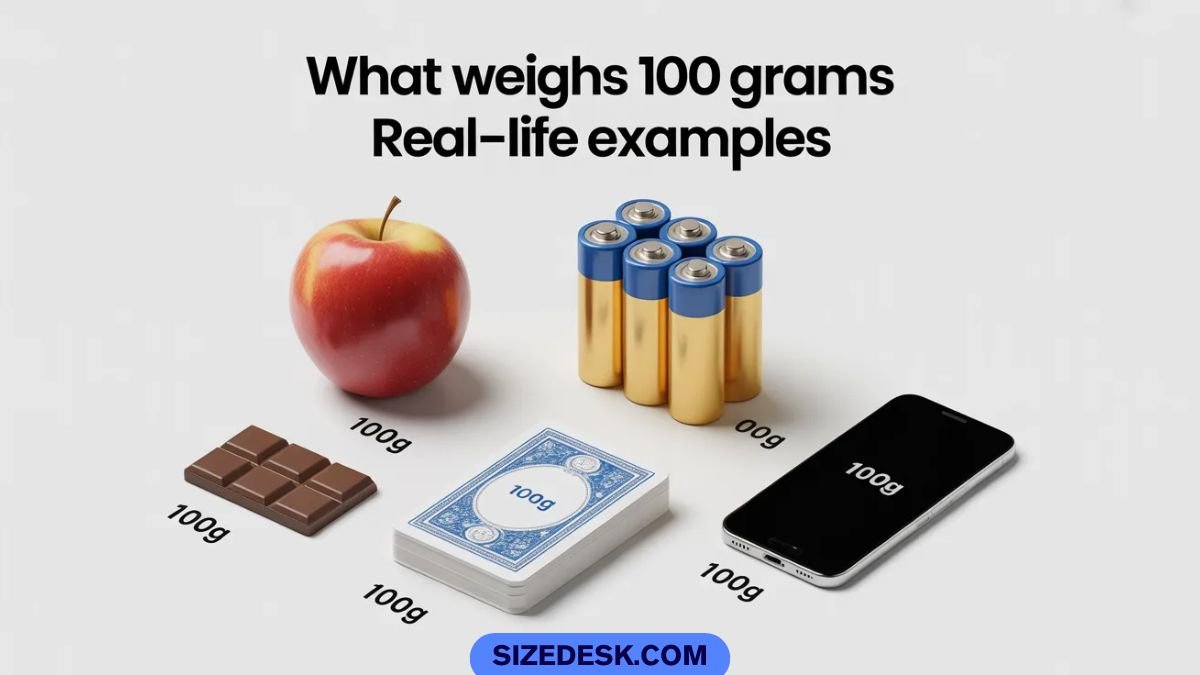
If you’ve ever asked yourself what weighs 100 grams, you’re not alone. This small but useful unit of measurement appears everywhere — on food labels, in recipes, at the post office, and even in fitness plans.
Once you feel 100 grams in your hand, you’ll start recognizing it everywhere — in food, tech, and daily essentials. It becomes easier to compare products or measure small objects without always reaching for a scale. In this article, we’ll explore real-life examples, simple comparisons, and practical ways to recognize 100 grams in everyday life.
Quick Answer: What Weighs 100 Grams?
100 grams weighs about the same as 20 US nickels, a medium apple, four AA batteries, or 100 milliliters of water. It equals 3.53 ounces or 0.22 pounds.
How Heavy Is 100 Grams?
Quick explanation
100 grams is a metric weight measurement equal to one-tenth of a kilogram. Since 1 kilogram equals 1,000 grams, 100 grams is simply 0.1 kilograms.
It’s a relatively small weight. You can hold it easily in one hand without effort. It’s heavier than a few coins, but much lighter than a full grocery bag.
Is 100g light or heavy?
In most situations, 100g is considered light. You wouldn’t describe it as heavy unless you were comparing it to something very small, like a paperclip.
However, when compared to a smartphone or a large fruit, 100 grams feels moderate. It has enough substance that you notice it, but not enough to feel bulky.
What does 100 grams feel like?
If you’re trying to picture what 100 grams feels like, imagine holding a medium apple or a standard bar of soap. It rests comfortably in your palm.
It has a firm, steady feel — not fragile, not dense. After handling a few objects that are 100 grams, your hand quickly learns the difference.
100 Grams in Different Units
Understanding conversions helps when reading international recipes or comparing measurements.
100 grams in ounces
100 grams in ounces equals about 3.53 ounces.
If you use imperial measurements, this is helpful for cooking or nutrition comparisons. Many food products in the United States list weight in ounces instead of grams.
100 grams in pounds
100 grams in pounds equals approximately 0.22 pounds.
Since 1 pound equals 454 grams, 100 grams is less than one-quarter of a pound. This makes it clearly a small weight in imperial terms.
100 grams in kilograms
100 grams in kilograms equals 0.1 kilograms.
This conversion is simple because it’s part of the metric system. Just move the decimal one place to the left.
Quick conversion table
Here’s a quick reference:
- 100 grams in ounces: 3.53 oz
- 100 grams in pounds: 0.22 lb
- 100 grams in kilograms: 0.1 kg
Keeping these numbers in mind makes everyday conversions easier.
What Weighs 100 Grams? 15 Real-Life Examples
Below are common items that weigh around 100 grams. These examples help you visualize 100 grams in real life.
1. 20 US Nickels (Exact 100g)

One of the most precise ways to understand what weighs 100 grams is by using US nickels. Each nickel weighs exactly 5 grams. When you count 20 nickels together, they total exactly 100 grams in weight.
Because coins are manufactured with strict standards, they are often used to test or calibrate digital scales. This makes nickels a reliable and accurate 100g weight reference you can easily use at home.
2. A Standard Chocolate Bar
Many standard chocolate bars are packaged in 100-gram sizes. This makes them one of the most convenient everyday objects that weigh 100 grams. The weight is usually printed clearly on the wrapper for reference.
When you hold a full chocolate bar in your hand, you can feel how solid 100 grams actually is. It feels compact and balanced, making it an easy real-life comparison.
3. A Medium Apple
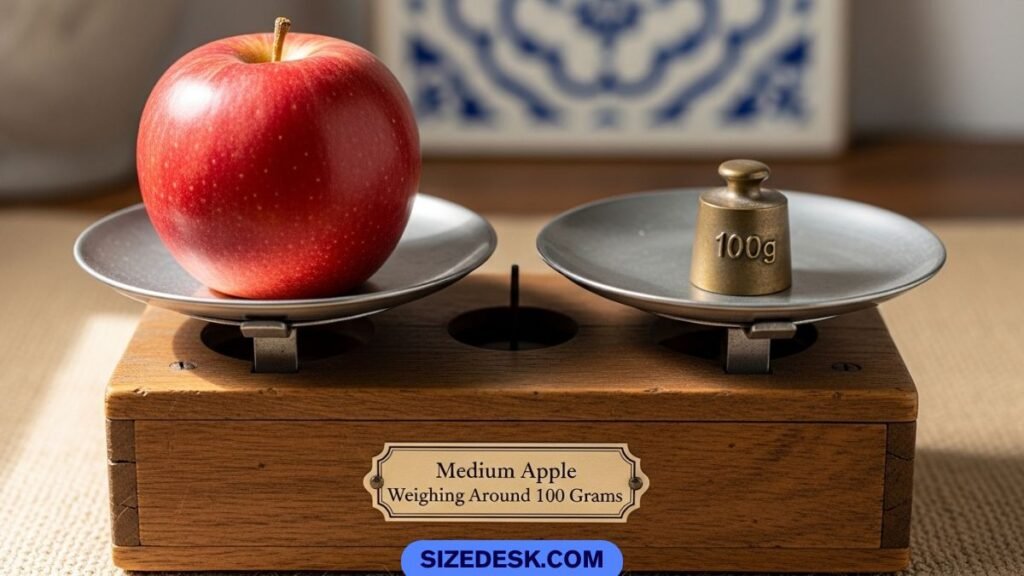
A medium-sized apple often weighs close to 100 grams, depending on the variety and water content. Smaller apples may weigh slightly less, while larger ones can exceed this amount by a small margin.
Holding a medium apple gives you a natural sense of what 100 grams feels like. It has a noticeable weight but remains comfortable to carry in one hand.
4. A Bar of Soap
Many standard bars of soap weigh between 90 and 110 grams. This makes them a close example of items weighing 100 grams in everyday life. The exact weight is usually printed on the packaging.
When you pick up a fresh bar of soap, it feels firm and compact. That steady weight gives you a practical idea of how heavy 100 grams really is.
5. Two Medium Eggs
Two medium eggs together usually weigh about 100 grams. A single egg weighs around 50 grams, so combining two creates a simple kitchen weight comparison you can easily remember.
If you hold two eggs in your palm, you’ll notice the weight feels balanced and moderate. This makes eggs a helpful food-based reference for visualizing 100 grams.
6. Four AA Batteries
Four standard AA batteries placed together weigh close to 100 grams. Batteries are small but dense, which makes their combined weight feel slightly heavier than expected.
When you stack them in your hand, you can clearly sense their solid weight. This makes AA batteries a practical household example for estimating 100 grams.
7. A Deck of Playing Cards
A complete deck of playing cards with its box weighs roughly 95 to 100 grams. The cards are thin, but together they create a compact and noticeable weight.
When you hold a deck, it feels steady without being heavy. That compact density provides a simple and familiar 100g weight reference for everyday comparison.
8. 100 Milliliters of Water

Water offers one of the easiest scientific comparisons for 100 grams. At room temperature, 100 milliliters of water weighs almost exactly 100 grams.
If you measure 100 milliliters in a cup and hold it, you’ll feel the true weight clearly. This makes water one of the most accurate and simple 100-gram references available.
9. Half a Cup of Sugar
Half a cup of granulated sugar weighs about 100 grams. This makes it a practical kitchen example when you need a quick weight reference without a scale. The exact weight can vary slightly depending on how tightly it’s packed.
When you pour half a cup of sugar into your hand or bowl, it doesn’t look like much. Yet it carries a noticeable weight. That small pile gives you a clear idea of how 100 grams feels in real life.
10. A Small Computer Mouse

A small wired computer mouse often weighs close to 100 grams. Lightweight models are designed to be easy to move, which keeps their weight around this range. Always check product specifications for exact numbers.
When you lift a compact mouse from your desk, it feels light but steady. It’s not heavy enough to strain your wrist, yet it has enough substance to feel solid in your hand.
11. A Medium Banana
A peeled medium banana typically weighs around 100 grams. The exact weight depends on size and ripeness, but many average bananas fall close to this amount after removing the peel.
Holding a medium banana gives you a natural food-based comparison. It feels light, easy to grip, and balanced. This makes it a simple everyday example for visualizing a 100-gram portion.
12. 100 Paperclips
About 100 standard metal paperclips together weigh roughly 100 grams. Each individual clip is very light, but the combined weight becomes noticeable when grouped in larger numbers.
If you gather them in your hand, the pile feels heavier than expected. This example shows how small items can add up quickly to reach a 100-gram total weight.
13. A 100g Pack of Rice
Many grocery stores sell small rice packets clearly labeled as 100 grams. This makes them one of the most accurate and convenient weight references available for home use.
When you hold a sealed 100g rice pack, the grains shift slightly inside. The compact but steady feel helps you understand how dense and balanced 100 grams can be.
14. A Compact Power Bank
Some slim, compact power banks weigh around 100 grams, especially lower-capacity models designed for portability. Larger models usually weigh more, so checking specifications is important.
When you hold a lightweight power bank, it feels small yet solid. That portable weight provides a modern example of how 100 grams compares to everyday electronics.
15. A Small Hardcover Book (Light Edition)
A thin, small hardcover book can weigh close to 100 grams, especially pocket-sized editions with fewer pages. Heavier books will exceed this weight quickly due to paper density.
When you pick up a lightweight hardcover, it feels firm but easy to carry. This example shows that 100 grams can represent a compact object with structure and noticeable presence.
How to Measure 100 Grams Without a Scale
Sometimes you need weight estimation without scale tools. Here are practical solutions.
Using coins (most accurate)
Count 20 US nickels. Since each nickel weighs 5 grams, they total exactly 100 grams.
If using pennies, about 40 modern US pennies weigh close to 100 grams, though the exact number depends on the type of penny.
Using food portions
Many packaged foods clearly list weight. A labeled 100g food portion is one of the simplest methods.
This works well for rice, pasta, sugar, or chocolate.
Using measuring cups
For liquids like water, measuring 100 milliliters gives you 100 grams.
For dry ingredients, density matters. Flour and sugar differ slightly in weight per cup.
Using hand-size estimation
After handling objects that are 100 grams, you develop a sense of the weight.
It becomes easier to estimate a portion size of 100 grams by feel alone.
Is 100 Grams Considered Heavy or Light?
Compared to 1 kilogram
100 grams is just 10% of a kilogram.
When you picture a 1kg bag of flour or rice, 100 grams is only a small portion of that.
Compared to 500 grams
Compared to half a kilogram, 100 grams feels very light.
Five 100-gram portions equal 500 grams.
Compared to 1 pound
Since 1 pound equals about 454 grams, 100 grams is less than a quarter pound.
In imperial terms, it’s clearly a light weight comparison.
Why 100 Grams Is a Common Measurement
Nutrition labels
Many food labels list calories per 100 grams.
This standard helps people compare nutritional values easily.
Cooking recipes
Metric recipes often use grams for accuracy.
Baking especially requires precise measurement for consistent results.
Jewelry & precious metals
Gold and silver are priced per gram.
100 grams is often used as a reference amount for valuation.
Shipping small items
Postal services calculate shipping costs based on weight.
Small packages often fall near or below the 100g mark.
Fitness & portion control
Diet plans often recommend 100 grams of meat or protein.
It’s an easy unit for portion tracking and calorie management.
Frequently Asked Questions About 100 Grams
What common object weighs 100 grams?
20 US nickels, a standard chocolate bar, or a medium apple are common items weighing 100 grams.
How many pennies weigh 100 grams?
About 40 modern US pennies weigh close to 100 grams, though slight variations exist.
How big is 100 grams of meat?
100 grams of meat is roughly the size of a small palm or a deck of cards.
Is 100 grams half a cup?
It depends on the ingredient. Water matches volume and weight, but dry ingredients vary.
How can I weigh 100 grams without a scale?
You can use coins, labeled food packages, or measured water to estimate accurately.
If you’re interested in understanding other small weight references, you might also explore guides about what weighs 500 grams or 20 grams. Comparing different metric amounts helps build better estimation skills.
Conclusion
Understanding What Weighs 100 Grams gives you a clear idea of small weight measurements in daily life. You can use coins, fruit, soap, or packaged food as simple references. These examples help you picture the weight without confusion. This knowledge supports better cooking, portion control, and careful shopping decisions. You build practical skills when you connect numbers to real objects.
When you remember What Weighs 100 Grams, you improve your ability to estimate weight with confidence. You rely less on tools and more on experience. Your hands learn the feel of this small but useful amount. Over time, this awareness makes everyday tasks easier and more accurate.

