

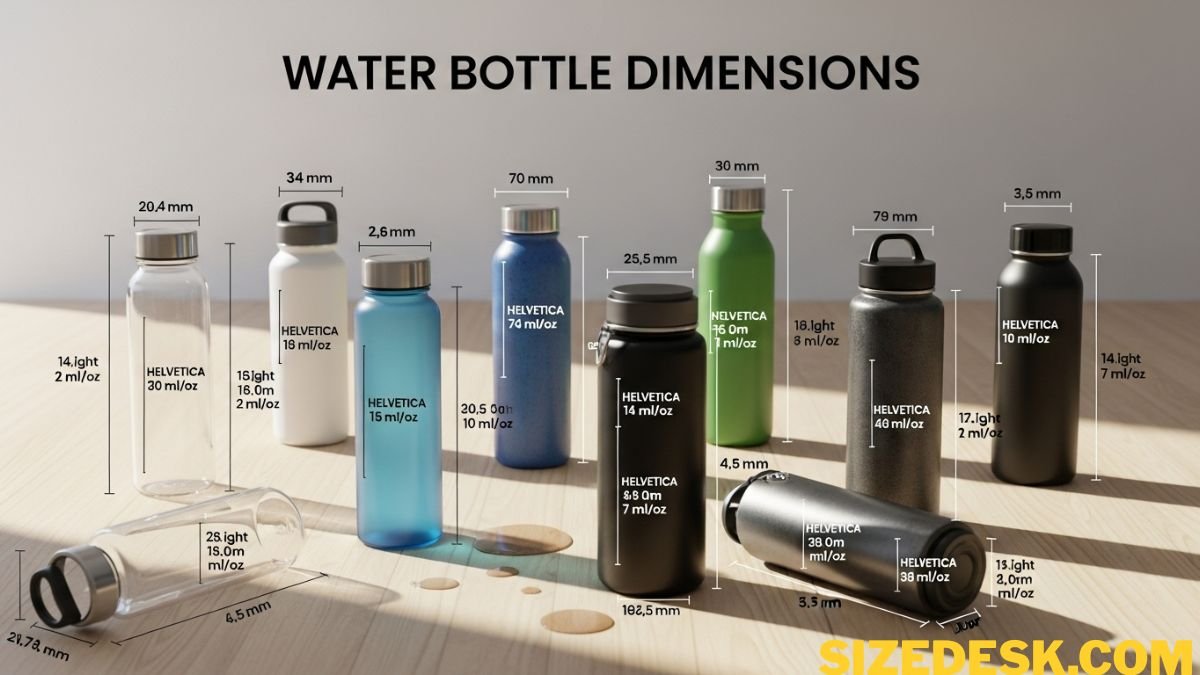
Water bottle dimensions refer to the measurements of a water bottle, including its height, diameter, and capacity. These dimensions determine how much water the bottle holds and how easy it is to carry. Knowing these measurements helps you choose the right bottle for your needs.
When choosing a water bottle, size matters more than you think. The right water bottle dimensions can make carrying it easier and ensure it fits into your bag or cup holder. Whether you’re heading to the gym or out for a hike, understanding bottle sizes can improve your hydration experience.
Most water bottles range in size from 8 oz to 2 liters. A 500 ml water bottle is common for daily use, while larger sizes are ideal for longer activities. The height and diameter of the bottle affect its portability and stability.
Dimensions of a Water Bottle
When it comes to water bottle dimensions, the size typically ranges from small, everyday bottles to larger containers for longer hydration needs. A standard water bottle height and diameter can vary, but most bottles fall within a specific size range to fit comfortably in your hand, a backpack, or a cup holder in your car. A common standard water bottle size in inches is typically between 6 to 12 inches tall, with diameters ranging from 2.25 to 4 inches. These measurements ensure that bottles are portable, easy to carry, and convenient for different activities.
For example, a 16.9 oz water bottle size (also known as a 500 ml bottle) is typically 8 inches tall and has a diameter of about 2.5 inches. On the other hand, larger bottles like the 2 liter bottle dimensions usually range from 12 to 12.5 inches in height with a diameter of around 4 inches. These measurements ensure that larger bottles can hold more water while still being stable enough to sit on flat surfaces.
The size of the bottle impacts its portability and how easily it can be stored or carried. Smaller bottles, like the 500 ml bottle dimensions, are perfect for everyday use, while larger bottles like the 1 liter water bottle size or 2 liter bottle dimensions are ideal for more intense hydration needs during long workouts or outdoor adventures.
Standard Water Bottle Dimensions Table
To make it easier for you to compare different bottle sizes, here’s a water bottle size chart with some of the most common water bottle measurements. This table breaks down the standard water bottle dimensions, including height, diameter, and capacity in both inches and centimeters.
| Water Bottle Capacity | Height (inches) | Diameter (inches) | Height (cm) | Diameter (cm) | Cap Size (inches) | Cap Size (mm) |
| 8 oz (237 ml) | 5.5 in | 2.25 in | 14 cm | 5.7 cm | 1.0 in | 28 mm |
| 12 oz (355 ml) | 7 in | 2.5 in | 17.8 cm | 6.4 cm | 1.0 in | 28 mm |
| 16.9 oz (500 ml) | 8 in | 2.5 in | 20.3 cm | 6.4 cm | 1.1 in | 28 mm |
| 20 oz (591 ml) | 8.9 in | 2.75 in | 22.6 cm | 7 cm | 1.1 in | 28 mm |
| 1 Liter (33.8 oz) | 11 in | 3 in | 27.9 cm | 7.6 cm | 1.2 in | 30 mm |
| 1.5 Liter | 12.25 in | 3.5 in | 31.1 cm | 8.9 cm | 1.2 in | 30 mm |
| 2 Liter | 12.5 in | 4 in | 31.8 cm | 10.2 cm | 1.3 in | 33 mm |
This table provides an easy reference for understanding the water bottle size comparison and gives you a better sense of the average water bottle measurements for different bottle capacities. Now, let’s take a look at a few more essential dimensions of water bottles.
How Many Inches is a Water Bottle?
One of the most common questions people ask is, how tall is a water bottle? The height of a water bottle varies based on its capacity and design. For instance, a 500 ml water bottle height is typically around 8 inches, while larger bottles like a 1 liter water bottle size can be 11 inches tall or more.
A bottle’s height plays an important role in its usability. For everyday use, a bottle that is 8 to 10 inches tall is often the most convenient, as it can easily fit into a cup holder in your car or the side pocket of your backpack. Taller bottles, like a 2 liter bottle, are usually designed to be more stable, with a wider base to prevent tipping.
Plastic Water Bottle Dimensions
Plastic bottles are the most common type of water bottle you’ll come across, and their plastic water bottle dimensions can vary depending on the brand and purpose. For example, a 16.9 oz plastic water bottle dimensions typically measure around 8 inches tall and 2.5 inches in diameter. This size is perfect for on-the-go hydration, and it fits comfortably in most car cup holders and backpack pockets.
Larger plastic bottles, such as 1 liter water bottles, are often 10 inches tall and 3 inches in diameter. These bottles are designed to provide a larger water volume without being too bulky, making them suitable for outdoor activities like hiking or gym workouts.
Read Also: How Much Is 2 Ounces? 14 Most Common Things That Weigh 2 Ounces
How Tall is a Water Bottle?
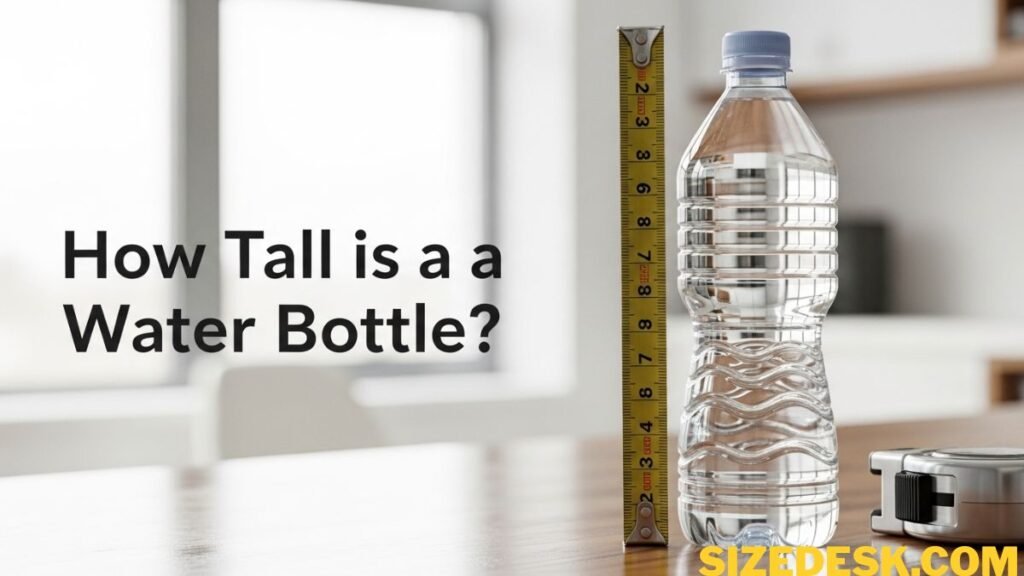
When asking how tall is a water bottle, it’s important to know that the height of the bottle is directly related to its capacity. Smaller bottles like the 8 oz water bottle are only about 5.5 inches tall, while larger bottles like the 2 liter bottle are about 12.5 inches tall.
Height also affects portability. Smaller water bottles are generally more portable and easier to store in tight spaces, while larger bottles provide more hydration but can take up more room in a bag or car.
Plastic Bottle Cap Size Chart
Another important factor to consider when it comes to water bottle dimensions is the bottle cap size. The size of the cap can vary depending on the bottle’s capacity. For instance, a 16.9 oz bottle cap size is typically 1.0 inch in diameter, while a larger bottle like a 2 liter bottle may have a cap size of 1.3 inches. These differences in bottle cap diameter and neck size ensure a tight seal for keeping your water fresh and preventing leaks.
Here’s a quick overview of plastic bottle cap sizes:
| Bottle Capacity | Cap Size (inches) | Cap Size (mm) |
| 8 oz (237 ml) | 1.0 in | 28 mm |
| 12 oz (355 ml) | 1.0 in | 28 mm |
| 16.9 oz (500 ml) | 1.1 in | 28 mm |
| 20 oz (591 ml) | 1.1 in | 28 mm |
| 1 Liter (33.8 oz) | 1.2 in | 30 mm |
| 2 Liter | 1.3 in | 33 mm |
Water Bottle Weight
The weight of a water bottle can vary significantly based on its size and material. An average water bottle weight for a plastic bottle is about 15 to 20 grams when empty. However, when filled, a 1 liter water bottle size can weigh about 1 kilogram (approximately 2.2 pounds).
For stainless steel water bottle size bottles, the weight can increase to 200 to 400 grams depending on the model. While these bottles are heavier, they’re often designed to be more durable and offer better insulation for hot or cold liquids.
When choosing a bottle, the weight is a key factor, especially if you plan to carry it for long periods, such as during a hike or workout.
How Many Oz is a Water Bottle?
Most water bottle sizes are measured in ounces, and one of the most common sizes is the 16.9 oz water bottle size (or 500 ml). This size is convenient for quick hydration throughout the day, and many brands make bottles in this size for ease of use.
If you prefer larger bottles, you might look at 32 oz or 64 oz bottles, which are perfect for outdoor adventures or long-duration activities. A 1 liter bottle is equivalent to approximately 33.8 oz, so it’s slightly more than a single 16.9 oz bottle.
How Many Oz is a Regular Water Bottle?
The most common and regular water bottle size in the United States is the 16.9 oz (500 ml) plastic water bottle. This is the standard size found in many convenience stores and vending machines. It’s the perfect size for staying hydrated during your daily routine, offering just enough water to keep you refreshed without being too large to carry around.
How Many Water Bottles is 1 Liter?
If you’re trying to figure out how many water bottles make up 1 liter, the answer is simple: 1 liter is about 33.8 ounces, which means it’s a little more than two 16.9 oz bottles. For example, a typical 16.9 oz bottle would be slightly less than half the amount of water in a 1 liter bottle.
Water Bottle Measurement Terminology
When discussing water bottle measurements, it’s essential to understand some common terminology. The capacity refers to how much liquid a bottle can hold, usually measured in milliliters (ml) or ounces (oz). The height describes how tall the bottle is from its base to the top, while the diameter indicates the width of the bottle at its widest point. Understanding these terms helps you make informed decisions when choosing a bottle that fits your needs.
In addition to capacity and size, bottle neck size and cap diameter are also important. These measurements affect the water bottle’s compatibility with accessories like bottle caps, lids, or straws. It’s also useful to note the circumference, which refers to the total distance around the bottle’s widest part. Knowing these terms allows you to accurately assess the bottle’s portability and storage convenience, which is essential for various activities.
Dimensions of Popular Water Bottle
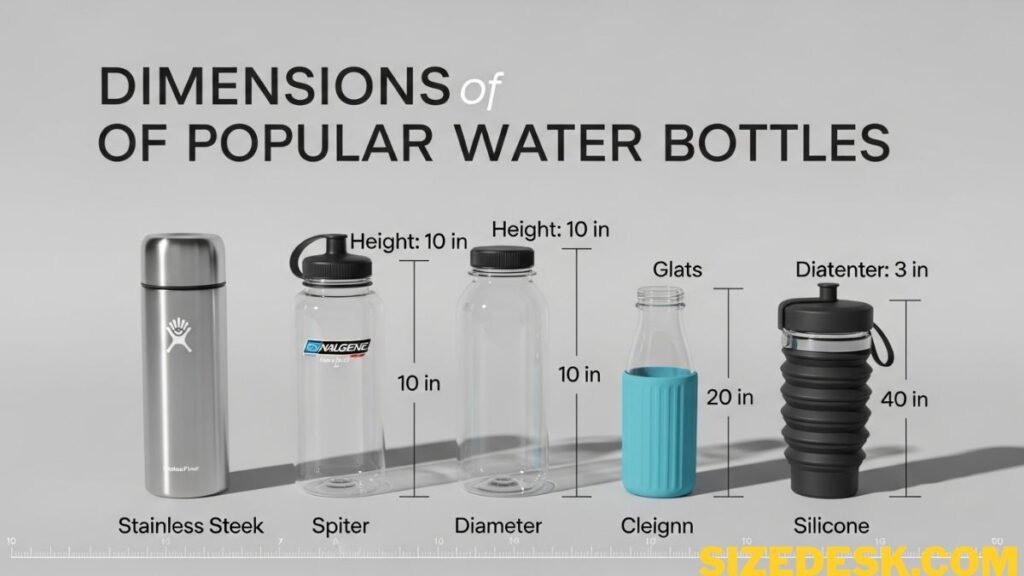
Popular water bottle sizes come in a range of dimensions suited for different needs. The standard 16.9 oz (500 ml) bottle is usually about 8 inches tall and 2.5 inches in diameter. This size is lightweight, easily portable, and fits in most car cup holders or gym bag pockets. It’s the go-to option for daily hydration and quick sips on the go.
Larger bottles, like the 1 liter water bottle, typically measure 10 to 11 inches tall with a 3-inch diameter. These bottles hold more water, reducing the need for frequent refills. They’re perfect for extended activities such as long hikes, workouts, or outdoor adventures, providing a greater water volume without the bulk of much larger containers.
Read Also: How Much Is 10 Grams? 17 Most Common Things That Weigh About 10 Grams
Other Common Sizes with Precise Measurements
In addition to the standard 16.9 oz (500 ml) bottle, there are other common sizes that cater to various hydration needs. A 12 oz bottle is compact and ideal for kids or those looking for a quick refreshment during their daily activities. This bottle usually measures around 7 inches tall with a 2.5-inch diameter, making it easily portable.
On the other end of the spectrum, 2-liter bottles are much larger and designed for people who require more water throughout the day. These bottles are typically 12.5 inches tall with a 4-inch diameter. They’re great for family outings, picnics, or long road trips, offering ample hydration without needing to refill constantly.
Bottle Dimension Comparison
Bottle dimension comparison helps you understand how different sizes impact portability and usability. For example, while a 500 ml water bottle is a compact option that fits easily in a bag, a 2-liter bottle is much bulkier and requires more space. The larger diameter and height of the 2-liter bottle provide greater stability when placed on flat surfaces but make it harder to carry.
A 1-liter water bottle sits somewhere between these two extremes, offering a good balance of size and portability. It’s taller than a 500 ml bottle but less cumbersome than a 2-liter bottle. This middle-ground size is ideal for people who want more water without the added bulk of very large bottles, making it a versatile choice for various activities.
Choosing the Best Water Bottle Size for Different Activities
Choosing the right water bottle size depends largely on your activity and how long you expect to be away from a water source. If you’re going for a short run or to the gym, a 500 ml bottle is ideal. It’s lightweight, easy to carry, and provides enough hydration for quick workouts. This size is also perfect for kids or as a daily water bottle.
However, for longer activities like hiking, traveling, or a day at the beach, you might prefer a 1-liter bottle or larger. These bottles offer more water, reducing the need to constantly refill. Additionally, the 2-liter bottles are great for family outings or group events where multiple people can share hydration throughout the day.
Average Water Bottle Height and Diameter
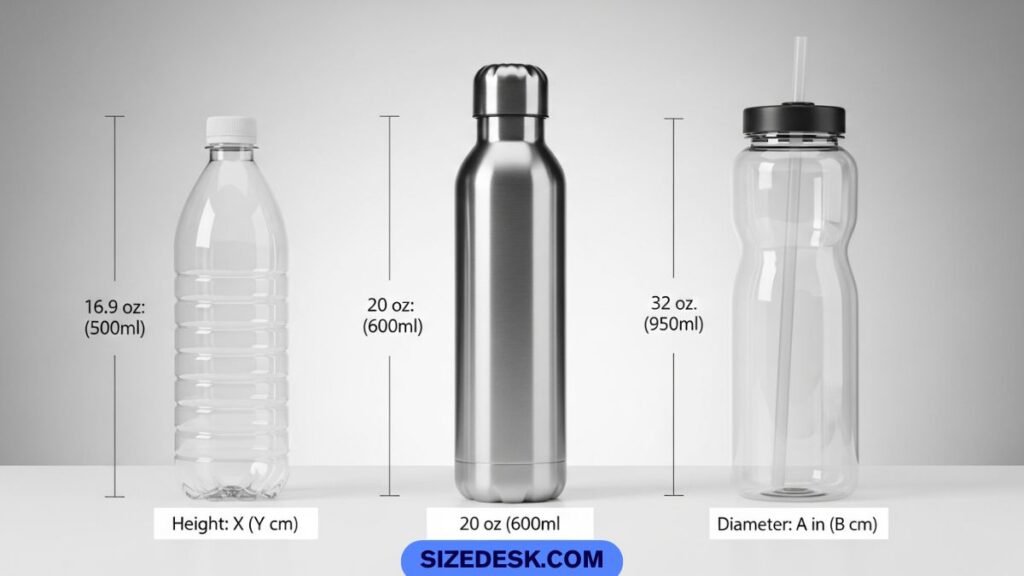
The average water bottle height usually ranges between 8 to 10 inches, depending on capacity and design. Smaller bottles are shorter, while larger reusable bottles are taller. Diameter typically falls between 2.5 to 3 inches for easy grip and portability.
Height and diameter matter because they affect comfort and storage. Bottles with slim diameters fit better in car cup holders and backpack pockets. Taller bottles may hold more water but can feel bulky, so choosing balanced dimensions improves everyday usability.
Water Bottle Size Chart (Inches & Centimeters)
A water bottle size chart helps compare measurements in both inches and centimeters. For example, a standard 16 oz bottle is about 8 inches tall and 20 centimeters high. Charts make it easier to visualize real-world bottle sizes.
Using inches and centimeters together benefits global users. Some countries prefer metric units, while others use imperial measurements. Size charts remove confusion and help buyers select the right bottle for travel, gym use, or daily hydration needs.
Standard Water Bottle Volume by Type
Water bottle volume varies by type, such as disposable, reusable, or sports bottles. Disposable plastic bottles commonly hold 16.9 oz (500 ml). Reusable bottles often range from 20 oz to 32 oz, offering better hydration capacity.
Specialized bottles like insulated or hiking bottles usually hold more water. These types are designed for long usage periods, reducing refill needs. Choosing the right volume depends on activity level, climate, and personal hydration habits throughout the day.
Differences Between Plastic and Steel Bottle Sizes
Plastic water bottles are usually lighter and slightly slimmer than steel bottles. They often have thinner walls, allowing more internal volume without increasing external size. This makes plastic bottles easier to carry and fit into smaller spaces.
Steel bottles have thicker walls due to insulation and durability. As a result, they may look larger but hold slightly less liquid than plastic bottles of the same height. However, steel bottles offer better temperature control and long-term use benefits.
Common Water Bottle Sizes Explained
Common water bottle sizes include 12 oz, 16 oz, 20 oz, and 32 oz. Smaller sizes are ideal for kids or short outings, while larger bottles suit workouts, hiking, or long workdays where frequent refilling is inconvenient.
Understanding these sizes helps match bottles to daily needs. A 16 oz bottle works well for casual hydration, while a 32 oz bottle supports active lifestyles. Choosing the right size improves comfort, hydration consistency, and overall user satisfaction.
How Bottle Shape Affects Water Bottle Dimensions
The shape of a bottle can change how its dimensions feel in everyday use, even when the capacity stays the same. Two bottles might both hold 24 ounces, but their height and width can look very different depending on the design.
Tall, slim bottles are often easier to carry and fit better in cup holders or backpack pockets. These designs focus on portability and are common in sports or travel bottles. On the other hand, shorter and wider bottles tend to feel more stable on a desk or table and may have a larger opening for easier cleaning.
Bottle shape also affects grip comfort. Some bottles include curves or textured surfaces so they are easier to hold. Even though the internal volume stays the same, the outer dimensions can vary depending on these design choices.
Do Water Bottle Dimensions Affect Cup Holder Fit?
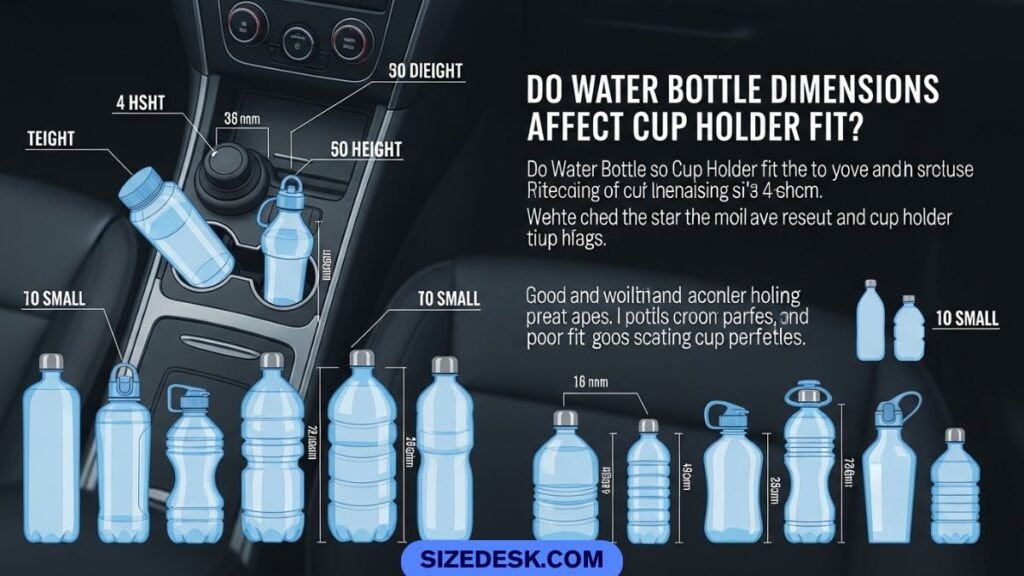
Yes, bottle dimensions play an important role in whether a bottle fits into a standard cup holder. Most car cup holders are designed to hold bottles with a diameter of about 2.7 to 3 inches.
Slim bottles usually fit easily in cup holders because they stay within this range. However, wider bottles especially large insulated ones may not fit properly. Even if the bottle holds the same amount of water, a wider design can prevent it from sitting securely.
Height can also matter in certain situations. Extremely tall bottles may wobble or tilt if the cup holder is shallow. For daily travel, bottles designed with a narrow base often work best.
Reusable Water Bottle Sizes vs Disposable Bottle Sizes
Reusable and disposable bottles often differ in their dimensions, even when they hold similar amounts of water.
Disposable bottles are typically designed to use the least amount of plastic possible. This means they often have thinner walls and slightly smaller external dimensions. A standard disposable bottle holding 16.9 ounces is usually slim and lightweight.
Reusable bottles, especially stainless steel or insulated ones, have thicker walls for durability and temperature control. Because of this, they may appear larger than disposable bottles even when they hold the same amount of liquid.
Another difference is shape. Reusable bottles often come in wide-mouth designs for easier cleaning and ice cubes, while disposable bottles usually have narrow openings.
Tips for Measuring a Water Bottle at Home
If you want to know the exact dimensions of your bottle, you can measure it easily at home with simple tools.
First, place the bottle on a flat surface. Use a ruler or measuring tape to measure the height from the bottom to the top of the cap. This gives you the full height of the bottle.
Next, measure the diameter by checking the width across the widest part of the bottle. If the bottle is round, measuring straight across the center provides the most accurate result.
You can also check the capacity by filling the bottle and pouring the water into a measuring cup. This helps confirm how many ounces or milliliters the bottle actually holds.
FAQ’s
Is a Water Bottle 8 Inches?
The height of a water bottle can vary, but many common bottles, such as the 16.9 oz size, are around 8 inches tall.
How Long Is a 16.9 oz Water Bottle in Inches?
A typical 16.9 oz water bottle is about 8 inches tall. This size is a standard for single-use plastic bottles and is popular for everyday hydration.
How Long Is a 12 oz Water Bottle?
A standard 12 oz water bottle is usually around 7 inches in height. This size is often used for smaller servings of water or for kids’ lunch boxes.
How Long Is a 500ml Water Bottle in Inches?
A 500 ml water bottle (which is equivalent to 16.9 oz) is generally about 8 inches tall. This size is commonly seen in convenience stores and is a popular choice for portable hydration.
What is the most common water bottle size?
The most common disposable bottle size is 16.9 ounces. Reusable bottles are often slightly larger, typically ranging from 20 to 24 ounces.
Why do some bottles look larger but hold the same amount?
Bottle shape and material affect appearance. Insulated bottles have thicker walls, which makes them look bigger even when they hold the same amount of water.
How do I know if a bottle fits in a cup holder?
Most cup holders fit bottles with a diameter of about 2.75 to 3 inches. Slim bottles are usually designed to match this size.
Conclusion
In conclusion, understanding water bottle dimensions is important when choosing the right bottle for your needs. The size of the bottle affects how much water it holds and how easy it is to carry. Bottles come in many different sizes, from small ones like the 8 oz to larger ones like the 2-liter bottles. Knowing the height, diameter, and capacity of a bottle helps you pick the perfect one for any activity.
The right water bottle dimensions also make a big difference in convenience. Smaller bottles fit easily in bags or cup holders, while larger bottles offer more water for longer trips or workouts. Choosing the right size will help you stay hydrated throughout the day. With the right information on water bottle dimensions, you can make better choices for staying healthy and hydrated.

