

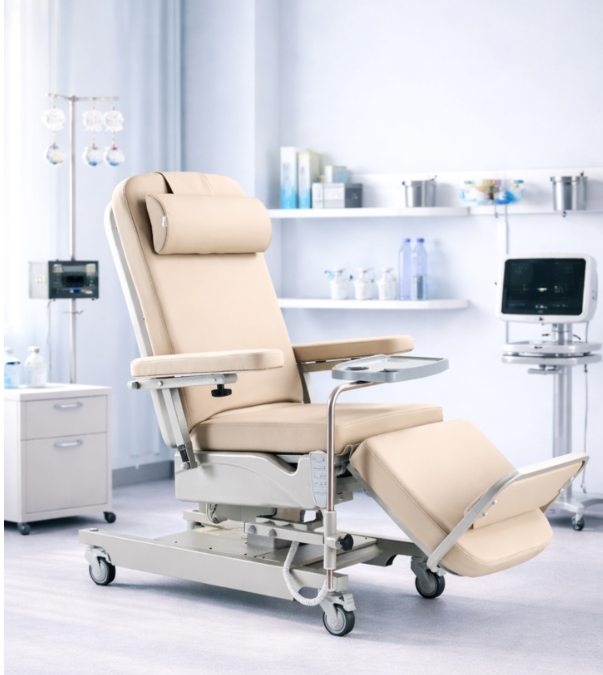
Most seating decisions in a renal unit at a clinic begin with comfort or clinical use, rarely with both. That split shapes how the room works for years afterwards. Dialysis chairs sit at the centre of every session, and a well-chosen one supports the patient for hours while nursing staff work comfortably around it.
A single specification can answer both sides at once. Dialysis chairs that combine electronic positioning with sensible accessory placement give patients a stable seat for the full session and give nursing staff quicker access to the arm and the line. Treating the two requirements as one brief produces a treatment room that works better on every shift.
Seating Picked for One Group Falls Short in Daily Use
Comfort Led Choices That Limit Clinical Access: A chair selected only for softness and deep recline often sits at a height that forces staff to bend for cannulation and line checks. The seat may feel generous, yet the working posture around it becomes awkward. Over a full shift, that repeated bending slows movement between stations and adds to fatigue.
Function Led Choices That Overlook Session Length: Equipment chosen purely for clinical convenience tends to ignore what four hours in one position feels like. In everyday practice, renal teams regularly see patients shift and resettle on seating never intended for extended treatment. Those small movements interrupt the session and pull staff away from other bays during the busiest hours.
Features That Serve the Patient and the Team at Once
Armrests That Steady the Treated Limb: Wide, firm armrests hold the forearm in a settled position so the cannulation site stays visible and reachable for the whole session. That single detail supports safer vascular access and reduces how often a nurse repositions the limb. Patients also settle better when the arm has proper support beneath it.
Height Control That Protects Working Posture: Electronic height adjustment lets the chair meet the nurse rather than the reverse, which matters across dozens of interactions each day. Sound occupational ergonomics in a renal unit depends on that adjustment, since repeated stooping at a fixed seat height wears staff down. Lower access heights also help patients transfer safely.
Integrated Accessories Turn a Chair into a Working Treatment Station
Holders That Keep Essentials Close: An integrated IV stand holder keeps the drip stand fixed to the chair rather than loose beside it, so the line stays clear as the chair moves. A side tray gives the nurse a stable surface for swabs and dressings at the point of care, which cuts short trips to the trolley.
A Tablet Holder That Eases Long Sessions: A tablet holder mounted to the chair lets the patient read or watch without gripping a device for hours, which keeps the arm still. Dialysis chairs fitted with these additions and a responsive electronic positioning system ask less of both people in the bay, and the room stays calmer through a long afternoon.
Electronic Adjustment Compared with Manual and Fixed Seating
Manual Chairs and the Effort They Ask For: Manual recline and crank height cost less at purchase and need no power supply, which suits low-volume units with shorter sessions. The trade-off shows up in effort, because every adjustment is made by hand while the patient stays seated. Staff in busy units then make fewer changes than patients would like.
Where Motorised Positioning Earns Its Cost: Motorised dialysis chairs pay back in units running long sessions across several shifts, since one handset press replaces a two-person repositioning task and holds the setting precisely. Fixed recliners remain reasonable for short observation seating, though they offer no answer when a patient needs the legs raised or the backrest reclined during treatment.
The Longer View on Cost, Wear and Replacement Cycles
Postponed Replacement Narrows Later Options: Units that defer a seating upgrade tend to shape their routines around the limits of what they already own, and those workarounds grow harder to unpick each year. Upholstery thins under daily disinfectant, frames loosen, and fitting accessories to older seating rarely works well. The eventual purchase then happens under time pressure.
Material Choices That Decide the Service Life: Precision-welded steel frames and disinfectant-resistant upholstery decide how a chair holds up after five years of daily cleaning. Seating that survives that routine keeps its appearance and its adjustment accuracy, which spreads the original cost across far more sessions than a cheaper alternative usually manages over the same period of use.
Points That Deserve Attention in a Seating Specification
Details Worth Confirming Ahead of Delivery: Specification sheets look similar until the working details are compared side by side. The strongest dialysis chairs answer the needs of the person seated and the person working within one frame, and the list below covers what separates one option from another once the chairs are in daily use in the unit.
- Confirm the backrest releases flat quickly when clinical access is needed.
- Measure the lowest seat height against the mobility of your patients.
- Ask how the upholstery holds up against the disinfectant used daily.
- Compare castor quality and braking, because these chairs move often.
- Check motor warranty terms separately from the frame warranty period.
Seating That Serves the Whole Room
A treatment room works best when the seating answers both people using it, and that balance is decided at the specification stage rather than after delivery. Every year spent working around unsuitable seating adds cost that never appears on an invoice. Speak with a manufacturer’s technical team about your unit’s layout and session profile, and request a specification review.

