

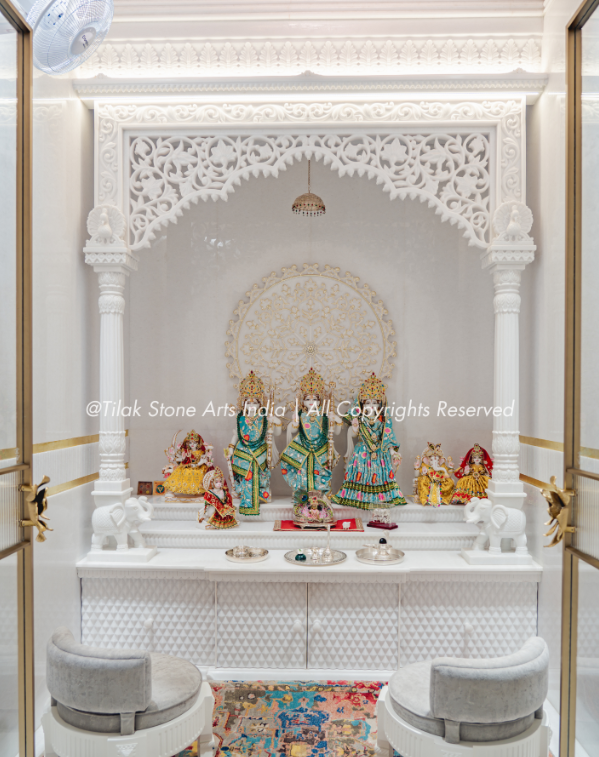
A prayer corner often gets decided last, once the sofa, the wardrobes and the kitchen have claimed their space in the house. What remains is a leftover niche rather than a considered space. Good Indian pooja room design starts earlier, while direction, daylight and the quiet around the room can still be arranged with intent.
Homeowners rarely lack devotion. They lack a plan that treats the shrine as architecture rather than décor. Indian pooja room design works best when Vastu guidance and stone selection are settled alongside daily use, well before walls close and electrical routes are fixed. That one shift turns a cramped alcove into a room the household enjoys.
Sacred Corners That Feel Wrong Once Furniture Arrives
Rooms Planned Last Rarely Fit: A shrine squeezed in after the floor plan is frozen often ends up facing a bathroom wall or a busy corridor. The result is a space people pass through instead of pausing in. Sound carries from the television, shoe racks creep closer, and morning prayer starts to feel rushed rather than settled.
Delay Narrows the Choices: Every month a decision is postponed, the options shrink. Once tiling and false ceilings are complete, a designer can no longer move a niche sideways or drop a concealed light channel into the slab. Designers who work on sacred spaces daily see this pattern often, and the corrective work costs more than early planning would have.
Setting Direction and Deity Placement at the Drawing Stage
Direction Fixed on Paper: The north-east corner remains the most widely followed placement for a home shrine, since it catches soft early light and sits away from household traffic. The Vastu Purusha Mandala gives a grid-based way of reading a floor plate, so the shrine and the devotee’s seat can both be positioned with reason rather than habit.
Deity Height Against Seated Eye Level: Idols sit best slightly above the eye level of a seated devotee, which usually places the platform between two and three feet from the floor. Careful Indian pooja room design also keeps the deity clear of a direct line with the main door, and leaves enough depth in front for a lamp tray and folded knees.
Marble Detailing Shaped Around Ritual, Not Ornament
Stone Chosen for How It Holds Light: Vietnam white marble is favoured for shrines because its close grain carries a soft, even glow under lamplight and resists the yellowing that dulls softer stones. Wonder white brings a warmer cast for larger surrounds, and onyx panels can be back-lit where a household wants a quiet sense of depth behind the idol.
Carving and Light as One Detail: Hand-carved jaali screens and inlay borders read very differently depending on how they are lit. A layered lighting scheme, warm wash across the stone with a tighter beam on the idol, lets carving depth show without glare. Families often ask for motifs tied to their Kuldevta, and those preferences belong in the drawing, not outside it.
Ready-Made Units Compared with Stone Cut for the Room
Ready-Made Mandirs Suit Standard Walls: A factory-finished unit arrives quickly, costs less at purchase and works reasonably in a flat with square, standard-height walls. The trade-off is fit. Fixed widths rarely match an existing alcove, storage sits wherever it was convenient to build, and the carving vocabulary belongs to a catalogue rather than to the family living with it.
Made-to-Measure Work Answers the Room: Custom fabrication takes longer and asks for decisions early, which is its honest cost. What it returns is precision. Considered Indian pooja room design lets the platform height and screen proportion follow the room’s real dimensions, and it allows Vastu direction to be respected without cutting into the circulation space a household crosses every day.
Stone That Ages Well in Daily Use
Marble Rewards Small Habits: A shrine surface meets oil, ash, turmeric and camphor smoke almost daily, so sealing and prompt wiping matter more than any expensive cleaning product. Sealed marble resists staining for years, and a matt-finished surface hides light scratching better than a high polish in a space where lamps and thalis are moved several times a day.
A Fitted Shrine Holds Value: Buyers in Indian metros notice a properly built prayer space, and a well-proportioned marble mandir reads as permanent architecture instead of removable furniture. Stone also holds up where plywood units swell or loosen at the joints after a few humid monsoons, which is why the initial spend tends to settle over the life of the home.
Points Worth Settling Before the First Slab Is Cut
Decisions Cheapest to Make Early: Most regret in a prayer space traces back to something agreed too late. A short planning conversation about direction and everyday routine gives Indian pooja room design a firm base, and it lets the final drawing carry a family’s actual requirements rather than a template drawn for someone else’s flat.
- Confirm the shrine’s direction before electrical points and ceiling lines are finalised.
- Measure the seated eye level of whoever prays most often at home.
- Check that no idol faces a toilet wall or sits under a staircase.
- Allow ventilation for lamp and incense smoke so the stone stays clean.
- Ask for a scaled drawing and a stone sample before cutting begins.
A Sacred Space Worth Getting Right the First Time
A prayer room planned with care holds its calm for decades, and the stone only improves as the household grows around it. Every season of delay hardens the layout and quietly removes available choices. Speak to a specialist mandir designer while the plan is still on paper, and book a design consultation before production begins.

