

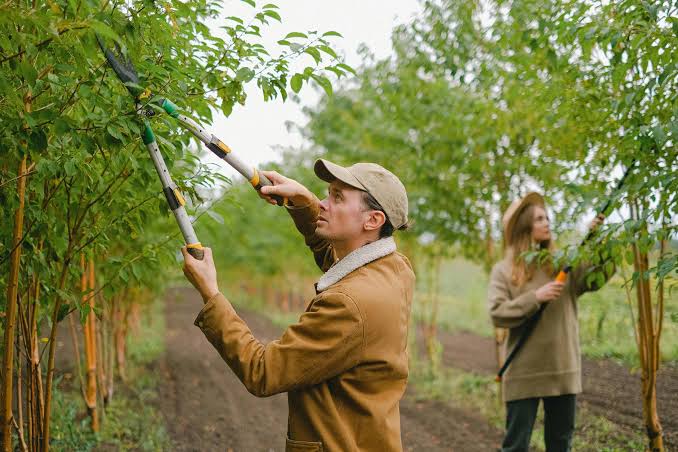
Trees provide shade, beauty, privacy, wildlife habitat, and numerous environmental benefits, but they also require appropriate care to remain healthy and structurally sound. As trees grow, branches can become crowded, damaged, weak, or poorly positioned. Dead limbs may fall during storms, branches can interfere with buildings and utility infrastructure, and excessive growth can reduce sunlight and air circulation within the canopy. Regular tree trimming can help manage these issues while supporting the long-term health and appearance of trees. However, trimming is more than simply cutting away branches. The timing, technique, equipment, and amount of growth removed can all affect how a tree responds.
Proper trimming should begin with an understanding of the tree’s structure and condition. Removing too many branches at once can place unnecessary stress on a tree, while making improper cuts can create wounds that are slow to close or more vulnerable to decay. For this reason, tree care should focus on making purposeful cuts that address specific concerns without unnecessarily changing the natural form of the tree. When large, mature, damaged, or difficult-to-access trees are involved, professional assistance can help reduce risks to both the tree and surrounding property.
Understanding Why Trees Need Trimming
Trees naturally develop branches as they grow, but not every branch remains beneficial throughout the tree’s life. Some limbs become dead or damaged, while others cross and rub against nearby branches. Branches may also grow toward roofs, windows, fences, driveways, walkways, or other structures.
Trimming can help remove problematic growth and improve the overall arrangement of the canopy. It may also be used to reduce certain conflicts between trees and surrounding property. However, trimming should not be performed simply because a tree has become large. Mature trees require their leaves and branches for photosynthesis and energy production, so unnecessary removal can weaken the tree.
The objective should be selective pruning rather than excessive cutting. A well-maintained tree can retain its natural shape while having problematic branches removed or reduced where appropriate.
Removing Dead and Damaged Branches
Dead branches are among the most common reasons for trimming. Because dead wood no longer contributes to the tree’s growth, removing it can reduce the possibility of branches breaking unexpectedly.
Damaged limbs can also present problems. Cracks, splits, broken branches, and storm damage may create weak points that become more dangerous over time. Some damaged branches may require immediate attention, particularly when they are hanging over areas used by people or vehicles.
The condition of a branch should be evaluated before cutting. A branch that appears damaged from the ground may have additional structural problems that are not immediately visible. Large branches can also be heavy and unpredictable when cut, making professional assessment particularly important when they are near structures or power lines.
Improving Tree Structure
Young trees can benefit from structural pruning because early decisions can influence their future growth. Removing competing leaders, poorly attached branches, or problematic growth patterns can help encourage a stronger structure as the tree matures.
The objective is not to create an artificially symmetrical tree. Natural variation is expected, and different species have different growth habits. Instead, structural pruning should encourage appropriately spaced branches and reduce the development of weak attachments.
For mature trees, structural corrections can be more complicated because large branches may already have significant weight and leverage. Extensive changes should therefore be approached carefully.
Improving Airflow and Light
Dense canopies can sometimes reduce air movement and sunlight penetration. Selective removal of certain branches may improve circulation through the canopy and allow more light to reach interior portions of the tree.
However, thinning should not be excessive. Removing too much foliage can expose previously shaded branches and bark to intense sunlight, potentially creating additional stress.
A balanced canopy is generally preferable to a heavily thinned one. Trimming should focus on specific structural or maintenance objectives rather than removing large quantities of healthy foliage without a clear reason.
Keeping Branches Away From Structures
Branches that grow close to buildings can create maintenance and safety concerns. Contact with roofs can damage roofing materials, while branches rubbing against siding or windows may cause physical wear.
Branches near gutters can also contribute to debris accumulation, particularly when leaves and small twigs fall onto the roof. Maintaining appropriate clearance can make building maintenance easier.
Trees growing near walkways and driveways may require selective trimming to maintain adequate clearance for pedestrians and vehicles. The required clearance depends on the property and tree, so cuts should be planned rather than made indiscriminately.
Managing Trees Near Utility Lines
Trees growing near overhead utility lines require special caution. Cutting branches around electrical lines can be extremely dangerous because branches, ladders, tools, and equipment may come into contact with energized infrastructure.
Property owners should not attempt to trim branches that are touching or growing into electrical lines. Qualified professionals with appropriate training and equipment should handle such situations, while utility providers may also have specific procedures for vegetation near their infrastructure.
The risks associated with electrical contact are severe, so safety should take priority over appearance or convenience.
Choosing the Right Time to Trim
The ideal timing for trimming depends on the tree species, climate, objective of the pruning, and local growing conditions. Some trees can be trimmed during dormant periods, while others may respond differently depending on the season.
Dead, broken, or hazardous branches can require attention regardless of the normal pruning season because leaving a dangerous limb in place may create a greater risk.
Flowering trees also require consideration because trimming at the wrong time can remove developing flower buds. Understanding the tree’s growth cycle can therefore help preserve both health and appearance.Rather than applying one seasonal rule to every tree, pruning decisions should take the individual tree and the intended outcome into account.
Using Proper Cutting Techniques
Cutting technique has a significant influence on how a tree responds to pruning. Branches should generally be removed in a way that avoids unnecessary damage to the trunk or remaining branch structure.
Large branches may require a series of cuts to reduce their weight safely before the final cut is made. This approach can help prevent heavy limbs from tearing bark as they fall.
Cuts should also avoid leaving excessively long stubs. At the same time, cutting too close to the trunk can damage the branch collar, which plays an important role in the tree’s natural response to a pruning wound.
Because different branches require different approaches, anyone performing significant trimming should understand tree biology and proper pruning methods rather than relying solely on general cutting practices.
Avoiding Excessive Trimming
One of the most common tree-care mistakes is removing too much growth at once. Trees depend on foliage for energy production, so excessive pruning can reduce their ability to support healthy growth.
Heavy cutting can also stimulate vigorous but weakly attached regrowth in some situations. This new growth may create another structural problem rather than solving the original one.
A better approach is usually to identify the specific branches that need attention and remove only what is necessary. If substantial reduction is required, it may be better to divide the work over time depending on the tree’s condition and the objective.
Recognizing Signs of Tree Stress
Trees can show signs of stress through changes in foliage, bark, growth patterns, or branch condition. Sparse leaves, premature leaf drop, dead branches, unusual discoloration, fungal growth, cavities, and cracks may indicate underlying problems.
Trimming alone does not necessarily solve these conditions. A tree suffering from root damage, disease, pests, drought, soil problems, or structural defects may require a broader assessment.
Before removing large amounts of growth, it is useful to determine whether the visible problem is caused by a deeper issue. Removing branches from a stressed tree without addressing the underlying cause can sometimes make recovery more difficult.
Tree Trimming After Storm Damage
Severe weather can leave trees with broken branches, hanging limbs, split trunks, or partially uprooted root systems. Storm-damaged trees can be particularly hazardous because structural weaknesses may not be obvious.
Property owners should avoid standing beneath damaged limbs or attempting to pull down large hanging branches. Even branches that appear loosely attached can move unexpectedly.
After a significant storm, professional inspection can help determine which branches are safe to remove and whether the tree itself remains structurally stable. A damaged tree may require cabling, bracing, selective pruning, removal, or continued monitoring depending on its condition.
Equipment and Safety
Small branches may sometimes be manageable with basic hand tools, but larger trees require specialized equipment. Chainsaws, ladders, ropes, lifts, and other equipment can introduce significant risks when used improperly.
Falls are a major concern when trimming at height. Falling branches can also injure people, damage vehicles, break windows, or affect nearby structures.
Personal protective equipment can reduce some risks, but protective gear does not replace training and experience. Professionals who regularly perform tree work understand how to assess branches, control cuts, manage falling material, and work safely around obstacles.Homeowners should recognize their limitations and avoid attempting high-risk work simply to save time or money.
Hiring a Tree Care Professional
For large trees, complex pruning, storm damage, or branches near structures and utility lines, hiring a qualified tree-care professional can provide a safer solution. Before selecting a service provider, property owners should consider experience, insurance, qualifications, references, and the specific type of work being proposed.
A reputable professional should be able to explain why particular branches need to be removed and what the expected result will be. Be cautious of recommendations that involve unnecessary topping or removal of large quantities of healthy growth without a clear justification.
A written estimate can also help clarify the scope of work, cleanup responsibilities, equipment requirements, and other costs.
Understanding Tree Topping
Tree topping involves cutting major branches back to stubs or significantly reducing the tree’s canopy. Although it may appear to be a quick way to reduce height, it can create several long-term problems.
Large cuts can expose extensive areas of wood and increase the tree’s vulnerability to decay and other damage. Rapid regrowth may also produce weakly attached branches that require additional maintenance.
If a tree is too large for its location, structural pruning, selective reduction, or another professionally recommended approach may be more appropriate. In some situations, replacement with a species better suited to the available space may be worth considering.
Maintaining Young Trees
Regular care during the early years of a tree’s development can reduce the need for major corrective work later. Young trees should be inspected for competing leaders, crossing branches, weak attachments, and growth that may eventually interfere with buildings or walkways.
Small structural corrections are generally easier to make than large cuts on a mature tree. Establishing good branch spacing and a suitable central structure early can support stronger development.However, young trees should still retain enough foliage for healthy growth. Pruning should be conservative and purposeful.
Protecting Trees During Construction
Construction projects can damage trees even when no branches are removed. Soil compaction, root disturbance, trenching, grading changes, and physical damage to trunks can affect tree health.
When construction is planned near mature trees, protective measures should be established before equipment enters the site. Root zones should be protected from unnecessary disturbance, and heavy machinery should be kept away from sensitive areas whenever possible.
If roots must be exposed or affected, professional guidance can help determine the safest approach. Protecting the root system is particularly important because serious root damage may not become visible until months or years later.
Long-Term Maintenance Planning
A proactive maintenance schedule can make tree care more manageable. Instead of waiting for branches to become hazardous, property owners can periodically inspect trees for deadwood, structural problems, excessive growth, and signs of disease or pest activity.
The frequency of inspection depends on tree age, species, location, condition, and surrounding risks. Trees near buildings, roads, play areas, and other frequently occupied spaces may deserve more regular attention.
Maintaining records of previous pruning and inspections can also help track changes over time. This information can be useful when working with a professional to develop a long-term care plan.
Cost Factors
The cost of tree trimming can vary considerably depending on the tree’s height, size, species, condition, accessibility, number of branches, equipment requirements, and complexity of the work. Trees near structures or utility lines may require additional safety measures and specialized equipment.
Storm-damaged trees can also be more expensive to address because broken branches and unstable structures require careful handling. Cleanup and disposal of branches may be included in the service or charged separately.
Property owners should request a clear estimate before work begins. Comparing providers based solely on price can be misleading if the services included in each estimate are different.
Final Thoughts
Proper tree trimming is an important part of maintaining healthy, attractive, and structurally sound trees. Removing dead or damaged branches, managing problematic growth, maintaining suitable clearance, and correcting structural issues can help reduce risks while supporting long-term tree health.
However, trimming should always be purposeful. Removing too much foliage, making improper cuts, or attempting dangerous work without suitable training can create additional problems. The natural structure and biological needs of the tree should guide every pruning decision.
Property owners can support healthy trees through regular inspection, appropriate watering, protection from construction damage, careful monitoring, and timely professional assessment when concerns arise. Special caution is necessary for large trees, storm-damaged trees, and trees located near power lines or buildings.
For routine maintenance, understanding the basic principles of pruning can help property owners make informed decisions. When the work involves significant height, heavy branches, structural concerns, or difficult access, professional assistance can provide a safer and more precise solution.
Ultimately, tree trimming should be viewed as a long-term investment in tree health and property safety rather than simply a way to make a tree look smaller. Thoughtful pruning can preserve natural form, reduce hazards, improve clearance, and support healthy development when it is performed at the appropriate time and with suitable techniques. Consistent care can help trees remain valuable features of a property for many years while reducing the likelihood of avoidable structural and maintenance problems.

