

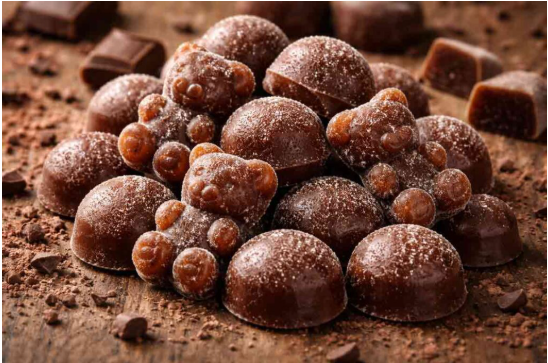
Mushroom gummies combine the familiar structure of confectionery with mushroom-derived ingredients. Although they may resemble ordinary fruit gummies, their formulations can include several additional components, including mushroom powders, extracts, flavoring systems, sweeteners, and texturizing agents.
The term “mushroom gummy” also covers a broad range of products. Some formulations contain non-psychoactive mushrooms commonly associated with functional foods, while others may use terminology connected with psychoactive mushroom compounds. These categories should be considered separately because their ingredients, labeling requirements, and legal status can differ.
Understanding how these products are formulated and labeled provides a useful way to interpret what is actually contained in a particular gummy.
The Basic Structure of a Mushroom Gummy
A gummy is built around a carefully balanced food matrix. The primary components generally include a liquid phase, sweeteners, flavoring ingredients, and a material that provides the characteristic gel structure.
Depending on the recipe, gelatin, pectin, starch, or another texturizing ingredient may be used.
The mushroom-derived component is incorporated into this broader system rather than existing as the entire product.
Other ingredients can influence sweetness, acidity, color, firmness, shelf stability, and mouthfeel. Consequently, the final characteristics depend on the complete formulation rather than the mushroom ingredient alone.
Choosing the Mushroom Ingredient
The first major formulation consideration is the type of mushroom being used.
Specialty food products commonly feature mushrooms such as lion’s mane, reishi, cordyceps, and turkey tail. These species have different natural compositions and sensory characteristics.
A product containing one species is different from a formulation containing a combination of several mushrooms.
The label should ideally identify the specific mushroom rather than simply using the generic term “mushroom.”
This distinction is particularly useful because research and nutritional information relating to one species should not automatically be applied to every mushroom-derived ingredient.
Powder, Extract, or Blend?
The physical form of the mushroom ingredient can affect how it is incorporated into a gummy.
Mushroom Powder
Powder consists of dried mushroom material processed into smaller particles. Since physical mushroom material remains present, it can contribute to the color, flavor, and texture of the finished gummy.
Particle size can also influence how evenly the ingredient is distributed.
Mushroom Extract
An extract is produced through additional processing of mushroom material. It can have different physical and compositional characteristics from a simple powdered mushroom.
The word “extract” alone does not establish a specific concentration or effect. Additional product information is needed to understand the exact formulation.
Mushroom Blend
A blend contains multiple mushroom-derived ingredients. Several species may be combined, or different preparations may be included in one product.
The phrase “blend” does not necessarily reveal the proportion of each component, making the full ingredient declaration particularly useful.
How the Gummy Gets Its Texture
Texture is one of the defining characteristics of a gummy.
Gelatin can produce a firm, elastic structure, while pectin is frequently used in plant-based gummy formulations. Other texturizing materials can also be used depending on the recipe.
Moisture, acidity, sugar concentration, and processing conditions all influence the finished consistency.
Adding mushroom-derived material can introduce another formulation variable. Powders contain solid particles, while extracts may interact differently with the surrounding gummy mixture.
The final texture is therefore the result of several ingredients working together.
The Importance of Sweeteners
Sweeteners provide the characteristic taste of confectionery, but their role goes beyond sweetness.
Sugar and syrups can influence moisture retention, firmness, chewiness, and stability. Alternative sweeteners may also be used in some formulations.
The sweetening system can therefore affect both the sensory experience and physical structure of the gummy.
When reading a label, examining the sweeteners can help explain why two products with similar shapes have different textures or levels of sweetness.
Acidity and Flavor Development
Many gummies combine sweetness with a tart or acidic component.
Food acids such as citric acid can contribute a sour sensation and help shape fruit-based flavor profiles.
Flavoring systems can include berry, citrus, tropical fruit, apple, grape, or other profiles.
These flavors may also help balance natural characteristics from mushroom-derived ingredients. Some mushroom materials can have earthy, woody, or bitter notes that interact differently with sweet and acidic ingredients.
The finished flavor is therefore determined by the complete recipe.
Colors and Appearance
Color is another part of gummy formulation.
Different colors may be used to distinguish flavors, product varieties, or shapes. Depending on the formulation, colors can come from different permitted food-coloring sources.
Visual appearance does not establish what mushroom ingredient is present.
A brightly colored gummy may contain a mushroom powder or extract, but the color itself provides no reliable information about the species or preparation.
The ingredient declaration remains the appropriate source for that information.
Understanding Functional Mushroom Gummies
Some mushroom gummies are associated with the functional-food category.
Lion’s mane, reishi, cordyceps, and turkey tail are frequently discussed in this context.
The phrase “functional mushroom” is broad and generally relates to nutritional, traditional, or functional-food interest. It should not automatically be interpreted as evidence of a specific medical outcome.
Scientific studies may investigate a particular mushroom species, extract, compound, or preparation. A finished gummy can contain a different ingredient form and concentration.
Research should therefore be interpreted in relation to the specific preparation being studied.
Psychoactive Mushroom Terminology
A separate group of products is associated with psychoactive mushroom compounds.
These products should not automatically be grouped with ordinary gummies containing non-psychoactive functional mushrooms.
Psychoactive mushroom compounds can affect perception, cognition, mood, and sensory experiences. Their legal status varies significantly between jurisdictions.
Informal terminology can create additional uncertainty. A phrase such as Shroom gummy may be used broadly and does not, by itself, identify the exact mushroom, compound, or formulation.
When psychoactive ingredients may be involved, specific product information and applicable local regulations are more meaningful than informal terminology.
How Product Labels Are Organized
A product label can contain several different types of information.
The ingredient declaration identifies the components used in the formulation. This may include the mushroom species, mushroom preparation, sweeteners, gelling agents, flavors, acids, colors, and other ingredients.
Other parts of the packaging may provide net quantity, storage instructions, date information, allergen statements, manufacturer details, and applicable warnings.
Each section serves a different purpose.
The front of a package may provide a simplified product description, while the ingredient panel offers considerably more technical information.
Why Ingredient Order Matters
Ingredients on packaged foods are generally presented according to applicable labeling rules, which can provide useful information about the composition.
However, ingredient order alone does not necessarily reveal the exact quantity of every component.
A label mentioning several mushroom ingredients can therefore establish their presence without necessarily explaining their precise proportions.
When a product provides additional information about individual ingredients, that material can help clarify the formulation further.
Reading the Mushroom Portion of a Label
When examining a mushroom gummy, start by looking for the mushroom’s specific name.
Next, identify whether the ingredient is described as powder, extract, blend, or another preparation.
This helps distinguish between different types of mushroom-derived materials.
A product described simply as “mushroom gummies” does not necessarily provide enough information to establish which species or preparation it contains.
The more specific the ingredient declaration, the easier it is to understand the product category.
Allergen Information Is Separate
Mushroom ingredients are not necessarily the main allergen consideration in a gummy.
Other components can introduce allergens. Depending on the recipe, these may include soy, dairy-derived ingredients, nuts, or other substances.
Manufacturing facilities can also handle multiple allergenic ingredients.
The allergen statement should therefore be reviewed separately from the mushroom ingredient list.
This is especially important for individuals who need to avoid particular foods or ingredients.
Storage and Shelf-Life Information
Gummies can be sensitive to environmental conditions.
Heat can soften the confection, while humidity may affect firmness, stickiness, and surface texture.
The stability of a mushroom powder or extract can also depend on its preparation.
Packaging helps protect the finished product, while storage instructions provide guidance specific to the formulation.
Date markings can provide additional information about product quality or shelf life under the relevant labeling system.
Brand Names Do Not Replace Ingredient Information
Brand terminology can identify a product range, but it should not be treated as a complete technical description.
For example, boom mushroom bars official may be used as a brand-related search phrase or product reference. The brand name can provide context, but it does not necessarily establish the ingredients of every individual product.
A company may produce several products with different mushroom species, flavors, formats, and formulations.
For that reason, product-specific labeling remains more useful when determining composition.
Distinguishing Marketing Terms From Technical Terms
Specialty food packaging can contain descriptive expressions such as “natural,” “functional,” “infused,” “specialty,” or “enhanced.”
These phrases may communicate how a product is positioned but do not necessarily identify a specific ingredient or establish a scientific effect.
Technical terms provide more useful information.
For example, “powder” describes an ingredient form, “extract” describes a type of preparation, and “blend” indicates multiple ingredients.
Understanding this distinction helps prevent broad marketing language from being confused with precise formulation information.
How Mushroom Gummies Differ From Chocolate
Mushroom gummies and mushroom chocolates may contain similar mushroom-derived ingredients, but their food structures are very different.
Chocolate relies primarily on cocoa solids and cocoa butter. Gummies depend on gelling agents, sweeteners, moisture, and acidity.
Chocolate generally has a firm structure that melts with heat. Gummies are designed to remain soft and chewy.
These differences affect manufacturing, storage, ingredient distribution, and sensory characteristics.
The same mushroom powder may therefore behave differently depending on which confectionery format contains it.
Why Transparent Labeling Is Important
The mushroom confectionery category includes products with very different formulations.
Clear labeling helps distinguish mushroom species, ingredient forms, supporting ingredients, allergens, and product categories.
This is especially important when informal terminology overlaps with products associated with psychoactive compounds.
As the category develops, detailed ingredient declarations can make it easier to distinguish between functional mushroom foods and other mushroom-related products.
Frequently Asked Questions
What are mushroom gummies?
They are gummy confectionery products containing mushroom-derived ingredients such as powders, extracts, or blends.
What does “Shroom gummy” mean?
It is an informal term that can describe mushroom-related gummies but does not identify a specific mushroom or formulation.
What is mushroom powder?
It is dried mushroom material processed into smaller particles.
How is mushroom extract different?
Extracts undergo additional processing and can have different characteristics from powdered mushroom material.
What creates a gummy’s texture?
Ingredients such as gelatin, pectin, starch, and other texturizing systems help create the characteristic consistency.
Are all mushroom gummies psychoactive?
No. Many contain non-psychoactive mushrooms associated with functional-food applications.
Can mushroom gummies contain allergens?
Yes. Supporting ingredients can introduce allergens such as dairy, soy, or nuts.
What information should be checked first?
Review the mushroom species, ingredient form, complete ingredient list, allergen statement, storage information, and applicable warnings.
Conclusion
Mushroom gummies are carefully structured confectionery products in which mushroom-derived ingredients are combined with sweeteners, gelling agents, flavors, acids, colors, and other components. The final formulation can vary significantly depending on the mushroom species and whether the ingredient is supplied as a powder, extract, or blend.
Label terminology also requires careful interpretation. Terms such as “mushroom,” “functional,” “infused,” and “shroom” can describe broad categories rather than precise ingredients.
The most reliable way to understand a particular product is to examine its complete labeling rather than relying solely on the product name. Looking at the mushroom species, preparation, gummy structure, supporting ingredients, allergens, storage information, and relevant warnings provides a much clearer picture of how modern mushroom gummies are formulated and categorized.

