

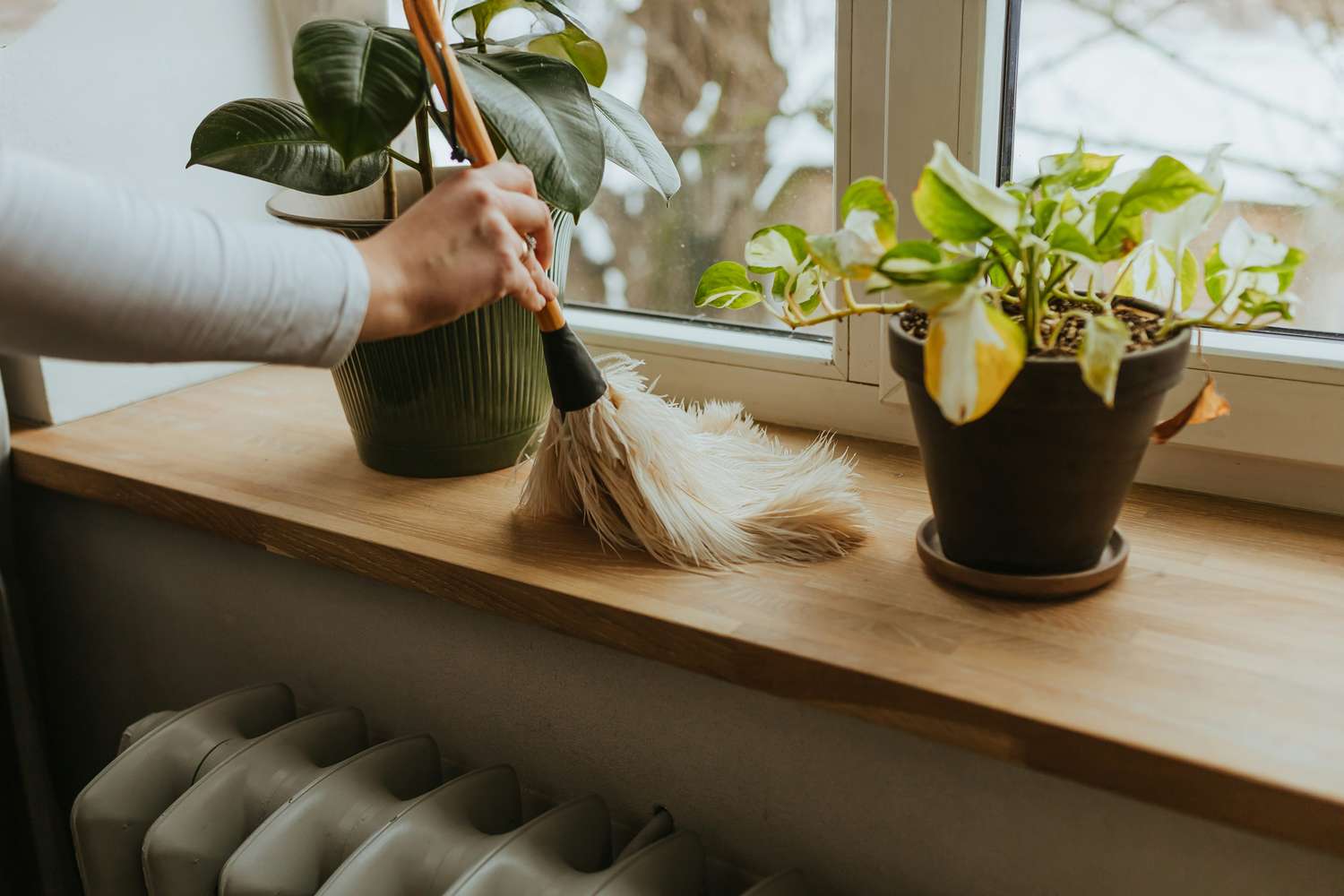
Household dust is rarely just dirt. It’s actually a mixture of pollen, pet dander, mold spores, dust-mite particles, fibers, and skin cells that settle on every surface in a home. Because these particles are constantly being generated and redistributed, a consistent cleaning routine generally does more to keep a home comfortable than occasional, intensive cleaning sessions. Many households now use automated floor-cleaning tools, such as a robot vacuum, to help maintain floors between deeper cleaning sessions. These devices can be a useful part of a broader routine, but they’re only one piece of a larger strategy that also involves fabrics, humidity, ventilation, and frequently touched surfaces.
A consistent cleaning routine is more effective than sporadic deep cleaning.
Key takeaway: Reducing household dust is about creating sustainable habits across multiple areas of the home — not relying on a single tool, product, or weekly deep clean.
It’s also worth setting expectations early: reducing dust and allergens is realistic, but eliminating them entirely isn’t. Dust management is a practical home-maintenance issue, not a medical treatment, though it can meaningfully support comfort for people with sensitivities.
Identify the Main Sources of Dust in Your Home
Common household contributors
Dust accumulates from a combination of outdoor particles, skin cells, textile fibers, soil, and pollen, along with pet dander if animals are present. How much dust a home generates depends on several factors, including foot traffic, pets, the presence of carpeting or upholstered furniture, how often windows are opened, general clutter, and local climate conditions.
Areas where dust collects
Some areas collect dust faster than others, and they’re often overlooked during routine cleaning:
- Baseboards and moldings
- Under furniture
- Curtains and blinds
- Shelves and electronics
- Upholstery and rugs
- Bedding and soft toys
A home with pets and carpeted floors will typically need more frequent attention than one with hard flooring and minimal fabric furniture. Observing where dust builds up fastest in your own space is a practical way to prioritize cleaning efforts. It’s also worth noting that health effects from dust vary by particle type and individual sensitivity — dust itself isn’t inherently hazardous for most people.
Use the Right Order of Cleaning
Cleaning in the wrong order can undo earlier effort. A practical sequence looks like this:
- Declutter surfaces and floors.
- Dust higher surfaces first.
- Clean floors afterward.
- Finish with targeted cleaning of high-touch surfaces.
Dry dusting can scatter particles into the air rather than remove them, so a damp microfiber cloth is often more effective at trapping dust. Always adapt methods to the surface material and follow manufacturer instructions.
It helps to distinguish cleaning — removing dirt, debris, and many germs — from disinfecting, which uses a specific product to destroy certain germs after cleaning. High-touch surfaces may need more frequent attention, particularly during illness. Guidance from the U.S. Environmental Protection Agency and the Centers for Disease Control and Prevention offers useful, evidence-based direction on indoor particulates, ventilation, and safe cleaning practices.
Create a Floor-Care Routine That Fits Your Home
Match the method to the flooring
Carpets and rugs, hardwood and laminate, and tile or sealed stone each require different care. Entryways and high-traffic areas typically need more frequent attention than low-traffic rooms. Using mats at entrances and removing outdoor footwear can meaningfully cut down on tracked-in soil.
Combine frequent maintenance with periodic deep cleaning
Frequent light cleaning prevents visible buildup, especially in entryways, kitchens, dining areas, pet sleeping spaces, and under furniture. Automated tools, like a robot vacuum, can support regular floor maintenance, but they don’t replace manual cleaning of stairs, upholstery, corners, baseboards, or spills.
Choose based on your home:
– Pets: prioritize hair collection and frequent floor checks.
– Allergies: minimize dust disturbance and maintain fabrics carefully.
– Young children: focus on floors and frequently touched surfaces.
– Small spaces: concentrate on entryways, kitchens, and soft furnishings.
Reduce Dust in Fabrics, Bedding, and Upholstery
Textiles trap dust and allergens more readily than hard surfaces do. Washing bedding regularly, cleaning washable curtains and covers, vacuuming upholstery, and limiting unnecessary soft clutter all help. Soft toys should be washed or cleaned according to their care instructions.
People with dust-mite sensitivities may benefit from allergen-proof mattress and pillow encasements. Humidity control can also limit dust-mite growth, though indoor air shouldn’t be made excessively dry or damp. The EPA and the American Lung Association both offer guidance on indoor air quality, and anyone with persistent symptoms should consult a healthcare professional.
Improve Indoor Air Quality Without Overcomplicating Cleaning
Cleaning is only one part of air-quality management. Ventilation when conditions allow, moisture control, regular filter maintenance for heating and cooling systems, and avoiding indoor pollutants like smoke all contribute. HEPA filtration refers to high-efficiency particulate filtration, but its real-world effectiveness depends on the whole device, correct use, and room conditions. Larger particles often settle on surfaces before filtration can capture them, which is why physical cleaning remains essential.
Cleaning Safety and Common Mistakes to Avoid
Never mix bleach with other cleaning products. Always follow label instructions for dilution, contact time, ventilation, and protective equipment. Visibly dirty surfaces should generally be cleaned before they’re disinfected.
Common mistakes include using too much product, spraying electronics directly, neglecting the cleaning tools themselves, unnecessarily stirring up dust, and disinfecting surfaces that don’t really need it. Rely on official guidance rather than unverified online trends — “natural” doesn’t automatically mean safe or effective.
Build a Sustainable Weekly Cleaning Schedule
Frequent tasks
- Address spills promptly
- Check entryways and high-traffic floors
- Wipe commonly touched surfaces
- Ventilate rooms as appropriate
Weekly or periodic tasks
- Clean floors by material type
- Dust surfaces using a particle-trapping method
- Wash bedding and clean rugs or upholstery
- Inspect corners, vents, and areas beneath furniture
A household might manage five minutes of daily upkeep alongside one longer weekly session — adjusting frequency based on pets, allergies, or household size rather than sticking to a fixed schedule.
How to Tell Whether the Routine Is Working
Useful indicators include less visible dust, reduced entryway buildup, and fewer recurring crumbs or hair deposits. Visible cleanliness, however, doesn’t measure airborne pollutants or diagnose allergy triggers. If cleaning causes irritation or surface damage, reassess your methods, and consult a healthcare professional for ongoing respiratory symptoms.
A Practical, Sustainable Approach to a Lower-Dust Home
Reducing household dust comes down to identifying its main sources, cleaning from high surfaces downward, matching methods to flooring and fabrics, and controlling humidity and ventilation. No single tool replaces a complete maintenance plan — the most effective routine is one that’s evidence-informed, safe for your home’s materials, and realistic enough to maintain consistently.

