

A new contractor enters the construction industry. They’ve heard fire watch mentioned multiple times. Sprinkler systems are down. Hot work is happening. Fire marshal requires fire watch. But what does that actually mean? What does a fire watch guard do? Why is it so important? The answers matter because fire watch is critical to construction safety and legal compliance.
Fire watch is a specific fire safety deployment. It’s required by code when fire protection systems are impaired or during high-risk activities. Understanding the core functions and why they matter helps contractors understand fire watch value instead of viewing it as unnecessary cost.
Understanding what is a fire watch and what guards actually do during deployment clarifies why fire watch is mandatory and why it’s not optional compliance work.
What Guards Actually Do During Fire Watch
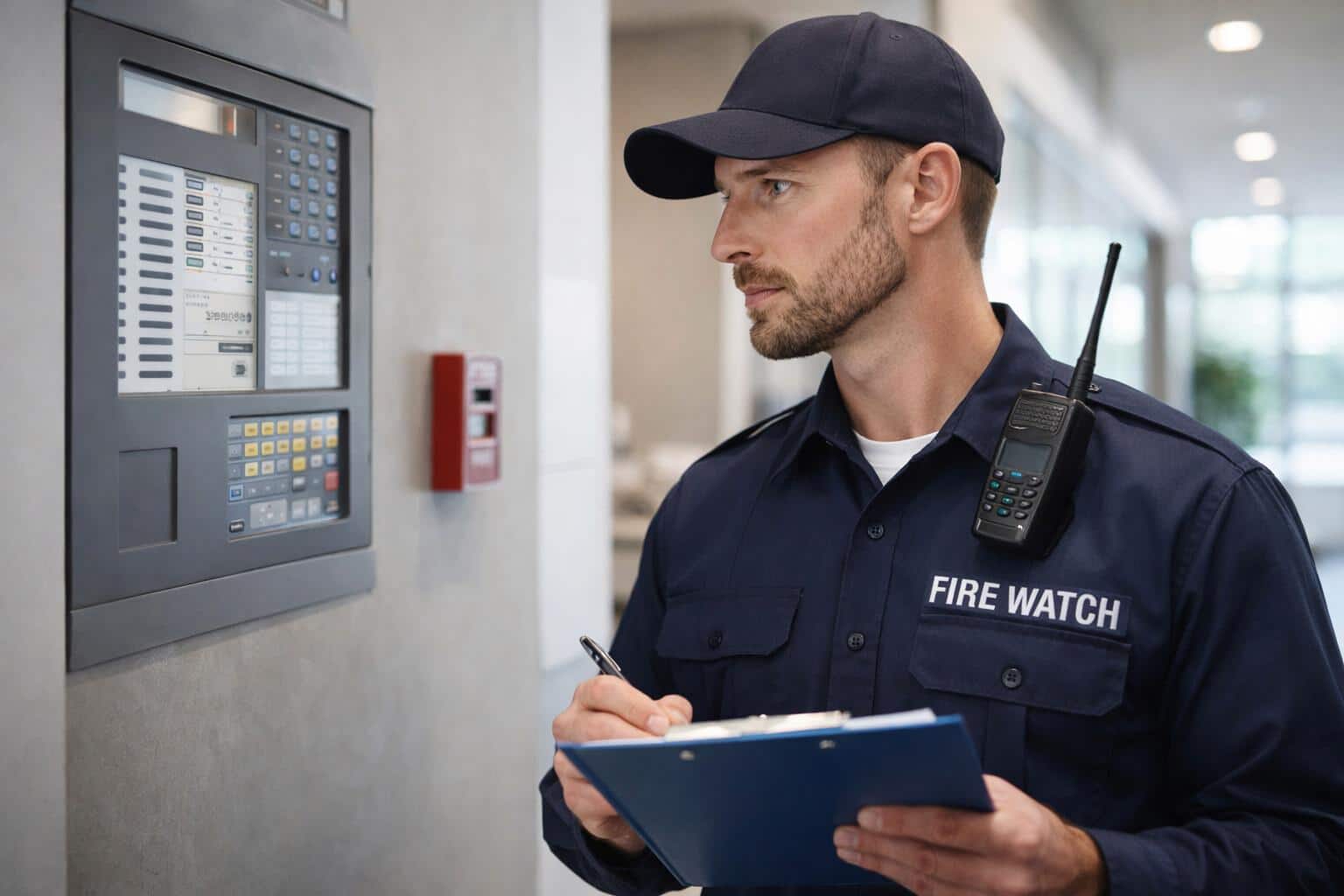
A fire watch guard’s job is focused and specific. The guard is positioned to watch for fire indicators during times when normal fire detection is unavailable. The guard recognizes early fire signs. The guard calls 911 immediately if fire is detected. The guard maintains detailed logs documenting the watch period.
The guard is also present to provide immediate response if fire starts. While waiting for emergency services to arrive, the guard attempts to suppress the fire using available equipment. The guard also helps with evacuation if occupants need to leave the building. The guard serves as first responder until official fire services arrive.
The guard’s presence also serves a prevention function. Hot work contractors know a guard is watching. That awareness encourages compliance with fire safety procedures. Contractors are less likely to take risks when they know someone is actively monitoring.
Core Responsibilities Guards Execute
Fire watch responsibilities are specific and non-negotiable.
Core responsibilities during fire watch deployment:
- Continuous observation of work area and surrounding spaces
- Recognition of early fire indicators (smoke, smell, heat, sparks)
- Immediate 911 notification at first sign of fire
- Attempt to suppress small fires using available equipment
- Clear communication with work crews and property management
- Detailed time-stamped documentation of watch period
- Monitoring of weather conditions affecting fire risk
- Positioning to optimize visibility of potential fire sources
- Knowledge of building evacuation routes and assembly points
- Understanding of fire protection systems and their status
- Coordination with emergency responders upon arrival
- Alertness maintenance throughout entire watch period
- Knowledge of hot work procedures and equipment requirements
Why Fire Watch Matters
Fire watch prevents fires. That’s the basic function. But understanding the real-world consequences of inadequate fire watch makes clear why it’s important.
Without fire watch, a small fire that a guard would detect and suppress grows unchecked. A fire during construction can spread fast because protective barriers don’t exist. A fire in a building with impaired sprinkler systems has no automatic suppression. The fire grows. The consequences escalate. Property damage becomes catastrophic. Life safety risk increases.
Insurance companies understand fire watch value. They price fire watch as mandatory requirement, not optional expense. They refuse to cover losses if fire watch wasn’t present during high-risk work. That pricing reflects real risk and real consequences.
Fire marshals also understand fire watch value. They order fire watch when they recognize situations where fire risk exceeds normal protection capability. The order is legal mandate, not suggestion.
Why Training and Experience Matter
Not every guard can do fire watch. Fire watch requires training on fire behavior. Training on early fire detection. Training on emergency response. A general security guard lacks this training. A guard with fire watch certification has the specific knowledge necessary.
Experience also matters. An experienced fire watch guard recognizes patterns. Understands fire spread. Knows when to escalate. A new guard might miss subtle indicators. Might not recognize early fire signs. Might respond slower.
Guard services that specialize in fire watch maintain trained, experienced rosters. They understand that fire watch quality matters.
Planning Fire Watch Deployment
Contractors need to understand that understanding what is a fire watch means understanding its value and its requirements. Fire watch isn’t optional. Fire watch isn’t general security. Fire watch is specialized fire safety deployment with specific training requirements.
When fire watch is required, book trained, experienced guards. Confirm they understand the specific work environment. Confirm they know fire code requirements. Confirm they’re positioned appropriately.
Fire Watch Is Foundational Fire Safety
Fire watch prevents fires during construction and system impairment. That prevention protects people and property. Understanding what fire watch is and why it matters clarifies why it’s non-negotiable requirement in construction and facility operations.

