

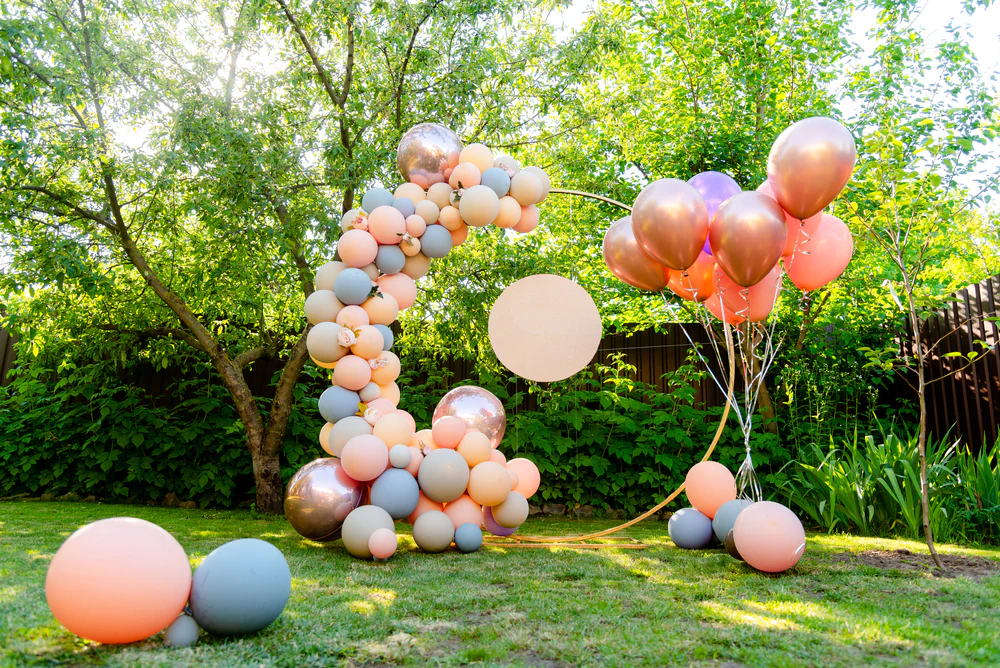
There’s a version of party decor that reads as trying too hard, and there’s a version that just feels right, and the line between them usually comes down to restraint rather than volume. A room stuffed floor-to-ceiling with every balloon color imaginable can actually read as more chaotic than celebratory, while a carefully chosen cluster in two or three complementary tones often makes a stronger visual statement than sheer quantity ever could. Balloon decorations work best when they’re treated as a design element with intention behind the color and placement choices, not as filler meant to cover every inch of visible wall and ceiling space.
Color coordination matters more than people initially expect, and this doesn’t mean everything needs to match perfectly. A palette built around two dominant colors plus one accent tends to photograph better and feel more cohesive than a rainbow approach where every color competes for attention simultaneously. This restraint actually gives a space more visual impact, since the eye has a clear focal point rather than bouncing between a dozen different competing colors trying to occupy the same room.
Why Scale and Placement Matter More Than Total Balloon Count
A common instinct treats “more balloons” as automatically better, but scale and placement usually matter more than sheer volume for creating genuine visual impact. A single well-placed oversized balloon cluster near an entrance or focal point often creates more impact than the same number of balloons scattered evenly and thinly across an entire room. Concentrating decor in specific, deliberate spots, an entryway, a photo backdrop, a dessert table, creates visual anchors that guide guests through a space intentionally, rather than diffusing decor so evenly that nothing actually stands out as a clear focal point.
Ceiling height also affects how decor should scale relative to a room. Decorations proportioned well for a standard eight-foot ceiling can look sparse and lost in a venue with vaulted or unusually high ceilings, while decor sized appropriately for a smaller, more intimate space can feel overwhelming if simply transported unchanged into a much larger room. Matching scale to the actual dimensions of a specific venue, rather than treating decor as one-size-fits-all regardless of where it’s actually being installed, produces noticeably better results than a generic approach applied without regard for the space’s actual proportions.
How Timing Affects What Decorations Actually Look Like on the Day
These arrangements don’t stay static from the moment of installation through the actual event, and understanding this timeline matters for planning realistic setup schedules. Latex balloons gradually lose a small amount of buoyancy over time, meaning decor installed too far in advance of an event can look slightly less full and vibrant by the time guests actually arrive, compared to how it looked immediately after setup. This natural deflation happens gradually enough that same-day or day-before installation generally produces the best visual result for whatever moment actually matters most.
Outdoor installations face additional timing pressure, since heat and direct sunlight accelerate this deflation process considerably compared to indoor, climate-controlled environments. An outdoor arch or display installed too early in the day for an evening event risks looking noticeably less full by the time guests arrive than it did at initial setup, particularly during warmer months when heat exposure compounds the natural deflation process happening regardless of temperature. Planning installation timing around actual event start time, rather than simply completing setup as early as convenient, protects against decorations looking tired or deflated precisely when they need to look their best for arriving guests.

